What Founders Miss When Scoping a SaaS MVP Backend
2026-09-16
SaaS MVP Backend Planning: The Five Critical Architectural Decisions That Prevent Costly Rebuilds
When you're building a SaaS product, the backend decisions you make in the first month determine whether you'll spend the next year shipping features or rewriting your entire architecture. Most founders treat multi-tenancy, authentication, billing infrastructure, background jobs, and deployment as "we'll figure that out later" problems. They're actually structural requirements that become exponentially harder to retrofit.
A 2024 CB Insights report found that architectural issues delay 67% of SaaS products beyond their initial launch timeline. The pattern is predictable: you launch quickly with a simple setup, land your first paying customers, then discover your database can't isolate tenant data or your billing logic can't handle plan upgrades without touching half your codebase. Laravel and PHP give you battle-tested tools to avoid these traps, but only if you use them correctly from day one.
<b>Key takeaways:</b>
- Multi-tenancy must be architected early because retrofitting tenant isolation requires touching every database query in your application
- Deferring billing logic forces expensive database schema rewrites when you need to support subscriptions and plan tiers
- Background job queues prevent your application from becoming sluggish or crashing under light user load
- A monolithic Laravel stack on stable VPS infrastructure reduces decision debt and deployment complexity
- Custom authentication systems lack the security robustness and compliance features business users expect
Why Do Most SaaS MVPs Need a Backend Rebuild Within Twelve Months?
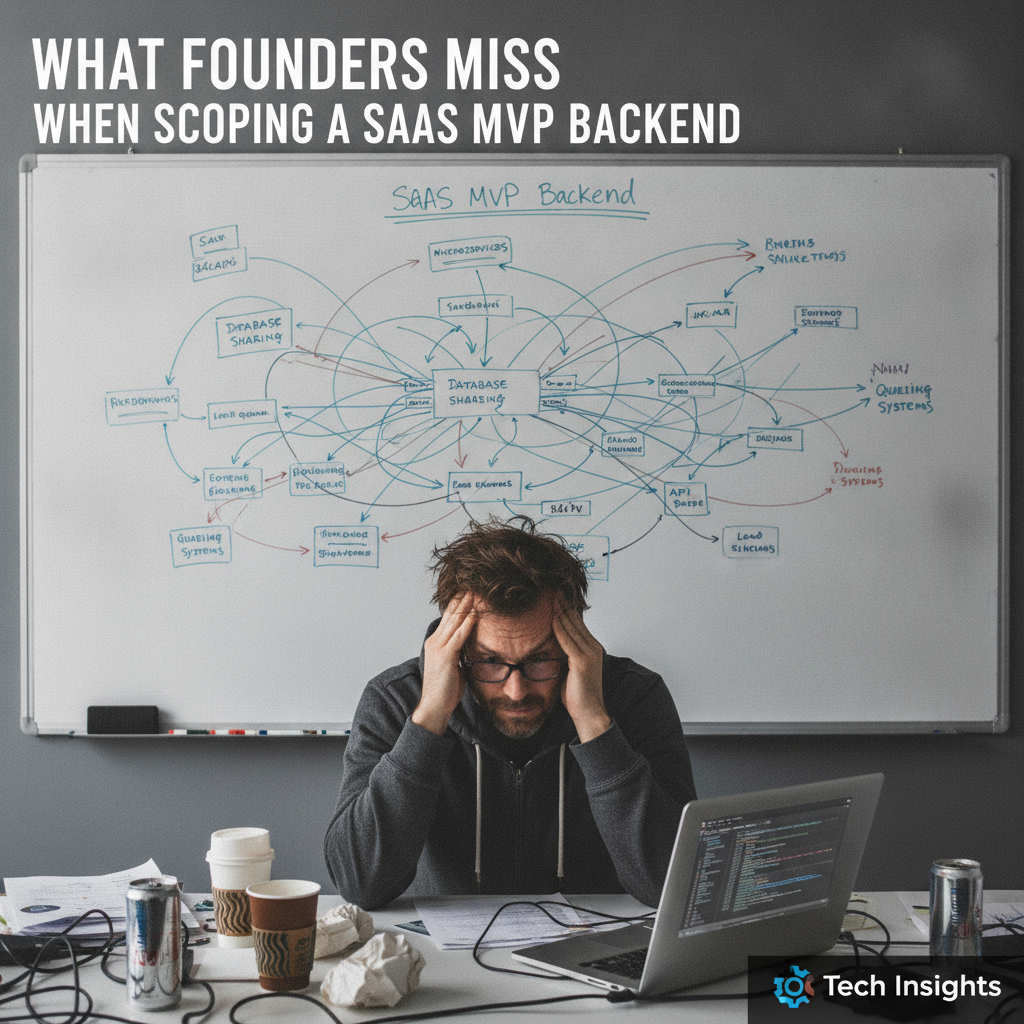
Here's the typical story. A founder launches a minimum viable product. The product gains early traction. Users request new features. The sales team lands the first enterprise client. Then the engineering team delivers bad news: the core architecture cannot support enterprise security requirements or tiered billing without a complete rewrite.
This is the rebuild trap. It happens when foundational decisions force you to start over rather than extend existing code. The DevSquad SaaS Architecture Survey 2025 found that 73% of SaaS founders report spending four to nine months on unplanned architectural rewrites after their initial launch.
Frontend code is malleable. You can swap button styles, navigation menus, and page layouts in days. Backend architecture compounds over time. Design your database relationships poorly on day one, and every feature you add builds on that flawed foundation. Eventually the cost of adding a single new feature exceeds the cost of starting over.
SaaS MVP backend planning isn't about building a finished product. It's about building a foundation that can grow.
> "The most expensive technical debt isn't bad code. It is the wrong architecture. You can refactor code in days. You rewrite architecture in quarters."
> <br>— Sarah Drasner, VP of Developer Experience, Google (LeadDev 2024)
Five specific backend pillars determine whether your product will scale smoothly or require a complete rebuild.
What Is Multi-Tenant Architecture and Why Does It Matter for SaaS?
Multi-tenancy means serving multiple customers from a single software instance while keeping each customer's data completely isolated.
Consumer applications focus on individual users. Business-to-business applications focus on workspaces, teams, or companies. These groups are your tenants.
The common mistake: building user-centric models without tenant ID enforcement. Founders create basic user tables and link resources directly to those users. When a company wants to invite five employees to collaborate on the same data, the system breaks.
Adding tenant isolation later requires touching every database query, migration, and business rule in your application. A fintech startup I worked with needed eight months to retrofit tenant isolation after landing an enterprise client with strict data compliance requirements. Feature development stopped entirely during this period.
Start with a shared database and shared schema architecture. This is the simplest way to launch. You must enforce a `tenant_id` on every query from day one.
Laravel makes this clean through global scopes. A global scope automatically appends a condition to all queries for a specific model. Instead of manually writing filtering logic everywhere in your codebase, Laravel handles it behind the scenes.
If an enterprise client eventually demands their own isolated database, a properly scoped application can migrate data seamlessly. The business logic doesn't change. The OWASP Multi-Tenant Security Guide 2023 confirms that strict data isolation enforced at the framework level is the primary defense against cross-tenant data leaks.
How Should You Handle Authentication and Authorization in a SaaS MVP?
Creating custom login systems to save time or maintain control over the user experience is tempting. Don't do it.
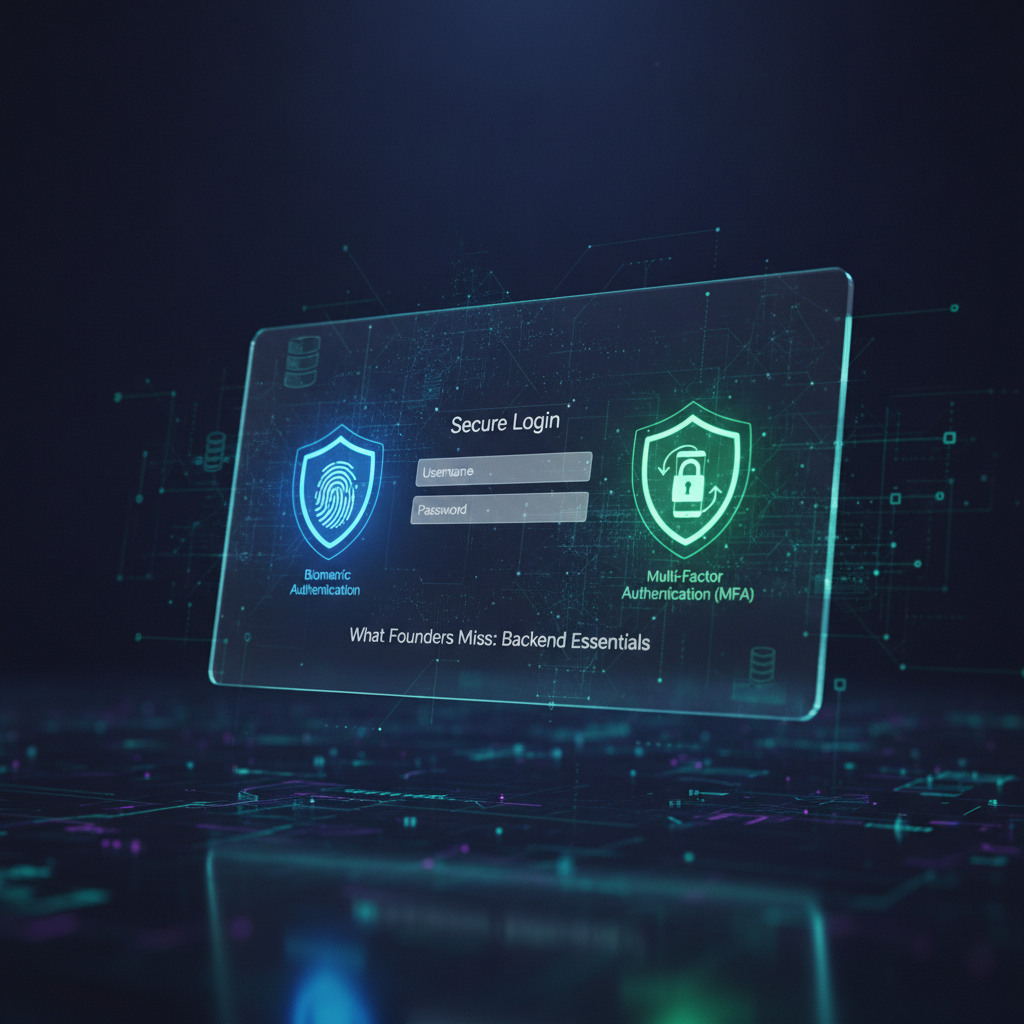
Security is a continuous process requiring ongoing maintenance. A custom-built authentication system typically lacks the resilience modern business users expect. Robust authentication goes far beyond checking an email and password against a database.
A production-ready authentication system must handle password hashing and rotation policies, secure password reset flows with expiring tokens, session management and device tracking, role-based access control, team invitations and workspace switching, and activity logging for compliance audits.
Use established starter kits. Laravel offers packages like Breeze and Jetstream to scaffold secure authentication in minutes. Jetstream includes two-factor authentication, session management, and API token support out of the box.
For API token authentication, Laravel Sanctum provides a lightweight but highly secure system. Define at least two roles immediately: an Admin role that manages billing and team settings, and a Member role that accesses core features. Building these roles early saves significant refactoring when your first customer asks to invite an assistant to their workspace.
Never store passwords in plain text. Laravel uses bcrypt hashing by default. This standard has remained battle-tested for over a decade. Verizon's 2024 Data Breach Investigations Report found that compromised credentials drive the vast majority of web application attacks. Relying on framework-level security tools minimizes this risk.
When you're operating in highly regulated industries like healthcare or finance, you might need specialized providers like Auth0 or Clerk. For standard SaaS applications, Laravel's built-in ecosystem is more than sufficient.
Why Can't Billing Logic Be an Afterthought in Your SaaS MVP Backend?
Founders often plan to handle early customers with manual invoicing. They assume they can add subscription billing once they reach a certain revenue milestone.
Treating billing as a standalone module is a mistake.
Billing touches your entire data model. It interacts with users, teams, plans, feature limits, usage metrics, and invoices. Defer billing and you'll eventually have to tear apart your database schema to insert subscription checks.
Subscription billing requires significant architectural plumbing: recurring payment schedules and webhooks, plan tier management and upgrades, feature entitlements defining what each tier accesses, proration calculations for mid-cycle changes, failed payment retry logic, and dunning management for recovering failed payments.
Integrate payment processors early. Laravel Cashier provides an expressive interface to Stripe subscription billing services. It handles boilerplate billing code perfectly.
Start with a single pricing tier. Keep the pricing simple. But build the underlying structure to support multiple tiers. Cashier handles webhook events from Stripe to update subscription statuses automatically. Store subscription metadata like plan IDs, active status, and billing cycle end dates directly in your database.
If you're checking subscription status with complicated nested logic instead of querying a structured subscriptions table, you're building technical debt.
Retrofitting billing typically requires six to twelve weeks of developer time. It touches nearly half of your codebase. Stripe's 2024 SaaS Billing Best Practices guide notes that decoupling billing logic from core product features reduces go-to-market time for new pricing tiers by 40%. Build the plumbing early, even if you only offer one plan.
What Are Background Jobs and Why Does Your SaaS MVP Need Them?
Your application responds to a user clicking a button. If the application handles the entire request before responding, that's synchronous processing.
Running heavy tasks in the main web request cycle is a mistake.
When users request a large CSV export, synchronous processing forces them to stare at a loading spinner. If the task takes longer than the server timeout limit, the application crashes. Your app will feel sluggish under light load.
Any task that takes longer than half a second should move to a background job. Examples: sending transactional emails like welcome messages or password resets, processing large data imports from Excel files, generating PDF invoices or complex reports, calling third-party APIs with slow response times, generating image thumbnails, and aggregating analytics data for dashboards.
Use Laravel's built-in queue system from day one. Start with a simple database queue driver during local development. For production, Redis is the standard queue driver. It's fast, simple, reliable, and scalable.
Dispatching a job in Laravel requires a single line of code. You create a job class, define the task, and use the dispatch helper. For production servers, you must configure queue workers. Tools like Supervisor ensure these workers run continuously in the background and restart automatically if they fail.
The performance difference is massive. An email sent synchronously adds up to 800 milliseconds to the request time. A queued email adds less than 10 milliseconds. The user sees an immediate success message while the server handles the heavy lifting in the background.
Infrastructure planning requires accommodating these background workers. Queue workers run as separate processes from your web server. You'll also need monitoring tools. Laravel Horizon provides a dashboard for monitoring Redis queues, tracking job failures, and managing retry logic.
How Complex Should Your SaaS MVP Infrastructure Be?
Infrastructure choices dictate your deployment speed and ongoing maintenance costs.
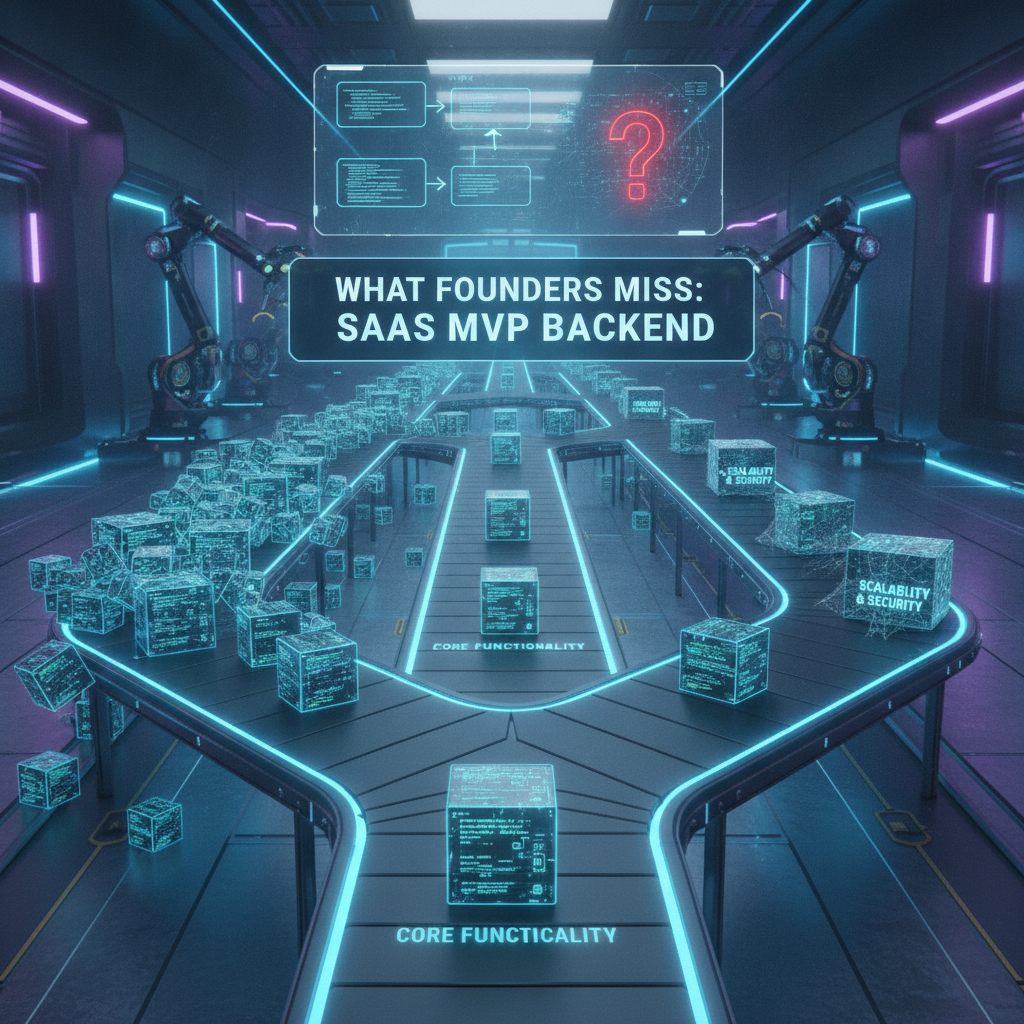
Over-engineering with microservices, Kubernetes, or complex serverless environments before finding product-market fit creates fragility. Most MVPs don't experience the traffic required to justify distributed systems.
The counter-trap is under-engineering. Shared hosting platforms lack the terminal access and custom configuration needed to run modern framework queues or caching layers.
Deploy a monolithic application on a stable virtual private server. Providers like DigitalOcean, Linode, or Hetzner offer robust VPS options.
A standard LEMP stack provides exceptional reliability. This includes Linux Ubuntu, Nginx, MySQL, and PHP 8.2 or higher. Add Redis for caching and background queues. Secure the application with free SSL certificates via Let's Encrypt.
To eliminate DevOps overhead, use server management tools like Laravel Forge. Forge automates server provisioning, repository deployment, and SSL renewals. It connects directly to your version control provider to deploy new code every time you push to your main branch.
For most early-stage products, a standard VPS with 4GB of RAM and 2 CPU cores handles 100 to 1,000 active users effortlessly. This setup typically costs under $80 per month.
The State of SaaS Infrastructure 2025 report by Heavybit found that monolithic applications successfully serve 92% of SaaS companies under $10M in annual recurring revenue.
Start with a monolith. Extract services into separate APIs only when specific performance bottlenecks justify the severe operational overhead of maintaining multiple codebases.
Infrastructure Comparison for SaaS MVPs
| Approach | Setup Time | Maintenance Overhead | Scalability | Best For |
| <b>Monolith (VPS)</b> | Very Fast | Low | High (Vertical) | 90% of early-stage SaaS |
| <b>Serverless</b> | Medium | Medium | Infinite | Spiky, unpredictable traffic |
| <b>Microservices</b> | Very Slow | High | Infinite | Large enterprise teams |
Your SaaS MVP Backend as a Paying Product
At AWcode, our philosophy is simple. A SaaS MVP isn't just a web application. It's a web application that pays rent. Every technical decision must serve the business goal of acquiring and retaining paying customers.
Laravel and PHP foundations support this goal perfectly. The PHP ecosystem has matured into a highly structured, performance-oriented environment. Laravel's extensive first-party package ecosystem means you write significantly less custom code. You don't need to invent a new way to handle subscriptions when Cashier already exists. You don't need to build a queue monitor when Horizon is available.
Proper backend planning provides three massive business benefits. First, you reduce rebuild risk. Structural decisions made correctly eliminate costly rewrites. You avoid telling investors or customers that product development must halt for six months. Second, you speed up execution. Standardized tooling lets you focus your engineering budget on unique business value instead of boilerplate infrastructure. Third, you build for growth. A modular architecture means you add features rather than constantly fixing foundational bugs.
Teams that ignore tenancy, authentication, billing, background jobs, and infrastructure spend up to 60% of their first year post-launch fixing architecture instead of shipping features.
If your founding team lacks experience building multi-tenant SaaS products, the cost of learning through trial and error always exceeds the cost of expert guidance.
The difference between a throwaway prototype and a viable MVP is whether your foundation can scale. Investing two extra weeks in proper architecture saves twelve months of rebuilding later. Your MVP's job isn't to be perfect. Its job is to be scalable.
Need help scoping your SaaS MVP backend to avoid these pitfalls? AWcode specializes in building production-ready, scalable SaaS applications using Laravel and PHP. We help founders make the right architectural decisions from day one so you ship faster and rebuild never. Visit AWcode to see how we turn your SaaS vision into a paying product.
Frequently Asked Questions About SaaS MVP Backend Architecture
How much does it cost to build a SaaS MVP backend?
Development costs range from $15,000 to $75,000 depending on complexity. A properly scoped MVP containing the five foundational pillars typically requires eight to twelve weeks with an experienced Laravel team. Founders taking a do-it-yourself approach should budget four to six months of development time. The primary cost driver isn't the specific feature list. It's whether you architect for growth from day one or plan a complete rebuild later.
Should I use Laravel or another framework for my SaaS backend?
Laravel is uniquely purpose-built for SaaS applications. It offers built-in, first-party support for multi-tenancy patterns, subscription billing, robust authentication, and background jobs. It reduces custom boilerplate code by up to 70% compared to framework-less PHP or microframeworks. While frameworks like Django or Ruby on Rails offer similar mature ecosystems, Laravel provides the widest deployment flexibility and the deepest pool of dedicated SaaS tooling.
Can I start with a simple database structure and add multi-tenancy later?
Technically yes, but practically no. Retrofitting tenant isolation into a live database requires touching every query, relationship, and business rule in your application. You'll likely spend six to twelve months on the migration while new feature development stops completely. Instead, enforce tenant IDs on all queries from day one using Laravel global scopes. This approach gives you strict data isolation without technical debt.
When should I move from a monolithic backend to microservices?
Don't transition to microservices until you hit clear performance bottlenecks that vertical scaling can't solve. Upgrading to a larger server is almost always cheaper than splitting a monolith. For most SaaS companies, this bottleneck point happens around $5 million to $10 million in annual recurring revenue or past 10,000 highly active concurrent users. Premature microservices introduce severe deployment complexity and distributed debugging issues that slow down early-stage product iteration.
What is the minimum infrastructure I need for a production SaaS MVP?
A single virtual private server is sufficient. A $40 to $80 per month instance with 4GB of RAM and 2 CPU cores running Linux, Nginx, MySQL, PHP 8.2 or higher, and Redis is the industry standard. Secure it with free Let's Encrypt SSL certificates. Use automated backup solutions provided by your host. A deployment tool like Laravel Forge manages this setup for $12 per month, allowing you to avoid manual server administration entirely while reliably serving hundreds of concurrent users.