# AWcode — full site
> Concatenated markdown of every public page and recent post on awcode.com. Pulls from the same source that powers the HTML site, so updates flow through automatically.
Generated: 2026-04-25T13:23:21+00:00
Index: https://awcode.com/llms.txt
---
# AWcode — if you can imagine it, we can build it
_A web development agency & startup studio_
We're AWcode — an international team in Pattaya, Thailand, building factory software, SaaS startups, and custom web apps for clients worldwide since 2014.
**If you can imagine it, we can build it.** We've been doing that for clients across 12 countries since 2014 from our HQ in Pattaya.
**What we do**
- **Startup studio** — in-house SaaS products + technical co-founding for external founders.
- **Managed websites** — cash-flow-friendly monthly packages. No $30k sticker shock.
- **Custom software** — bespoke web apps, internal tools, client portals, B2B SaaS.
- **Factory software** — production scheduling, QC, security, operator dashboards.
- **Co-working / office** — hot desks and private offices in central Pattaya.
**Why teams pick us**
1. **We ship.** Our quote is what you pay. We hit milestones or tell you why we won't.
2. **Full-stack on purpose.** Same team designs, builds, deploys, and maintains. No hand-offs.
3. **Cash-flow friendly.** Monthly packages for websites, milestone billing for builds.
**Trusted across 12 countries**
🇹🇭 Thailand · 🇦🇺 Australia · 🇬🇧 United Kingdom · 🇺🇸 United States · 🇸🇬 Singapore · 🇩🇪 Germany. Factory operators, e-commerce founders, agencies — we ship from Chon Buri to the world.
---
**How this page looks on the live site:** On the live site this page appears as the AWcode OS desktop — a retro windowed operating system themed after classic 90s GUIs. The desktop has launchable apps (News, Portfolio, Terminal, Calendar, Minesweeper, Recycle Bin) and a menu bar with a live clock. The plain-text content below is what the site is *about*; the OS is the way we present it.
---
**Canonical HTML version:** https://awcode.com
**About this document:** This is a plain-Markdown mirror of an AWcode.com page, served so that LLMs and agents can read the content without executing the site's retro-OS JavaScript UI. The HTML page at the canonical URL above carries the same content and is also fully indexable.
## Machine-readable
Resources for AI agents, LLMs and integrations:
- [https://awcode.com/llms.txt](https://awcode.com/llms.txt) — index of markdown mirrors
- [https://awcode.com/llms-full.txt](https://awcode.com/llms-full.txt) — every page + post concatenated
- [https://awcode.com/sitemap.xml](https://awcode.com/sitemap.xml) — full sitemap
- [https://awcode.com/robots.txt](https://awcode.com/robots.txt) — crawl + Content-Signal policy
- [https://awcode.com/ai.txt](https://awcode.com/ai.txt) — AI access policy
- [https://awcode.com/openapi.json](https://awcode.com/openapi.json) — OpenAPI 3.1 spec
- [https://awcode.com/.well-known/api-catalog](https://awcode.com/.well-known/api-catalog) — RFC 9264 / 9727 link set
- [https://awcode.com/.well-known/mcp.json](https://awcode.com/.well-known/mcp.json) — MCP discovery
- [https://awcode.com/mcp](https://awcode.com/mcp) — MCP server endpoint (POST JSON-RPC 2.0)
- [https://awcode.com/.well-known/agent-skills/index.json](https://awcode.com/.well-known/agent-skills/index.json) — Agent Skills index
### Public API — concrete examples
- [GET https://awcode.com/api/posts](https://awcode.com/api/posts) — list recent published posts
- [GET https://awcode.com/api/posts/is-wordpress-still-the-go-to-for-budding-startups-in-2026](https://awcode.com/api/posts/is-wordpress-still-the-go-to-for-budding-startups-in-2026) — fetch one post
- [GET https://awcode.com/api/pages/about](https://awcode.com/api/pages/about) — fetch the about page
### Markdown mirrors — concrete examples
- [https://awcode.com/index.md](https://awcode.com/index.md) — homepage
- [https://awcode.com/about.md](https://awcode.com/about.md) — about page
- [https://awcode.com/news/is-wordpress-still-the-go-to-for-budding-startups-in-2026.md](https://awcode.com/news/is-wordpress-still-the-go-to-for-budding-startups-in-2026.md) — one news post
---
# About & team — AWcode
_About AWcode_
Founded 2014. Strong team. One office. Dozens of products.
We started as two developers in an oversized office in Pattaya. A decade later we run a studio, a co-working space, and a handful of SaaS products.
**The team**
- **Mark Walker.** — Founder, CEO, Developer
- **Gemma Purnell** — Co-owner, Marketing
- **Michael Nordstrom.** — Co Owner, Operations
- **Phukao S.** — Senior Developer
- **Joe Gittichai** — Senior Developer
- **Tum** — Developer
- **Ice** — Web & Graphic Design
- **Kaidao** — Accounts & Administration
+ more in development, sales, finance and support. We don't grow fast on purpose.
**What we believe**
- Ship small. Ship often. Ship the ugly version first, then make it pretty.
- Tell clients "no" when they need to hear it. A bad feature costs more than a refused one.
- Work in public. Our roadmap, our prices, our mistakes — all on the website.
- Be a small team that out-ships a big one. We measure ourselves on deployed features, not headcount.
---
**How this page looks on the live site:** Rendered on-site as an About window inside the AWcode OS desktop, with a team photo and studio story.
---
**Canonical HTML version:** https://awcode.com/about
**About this document:** This is a plain-Markdown mirror of an AWcode.com page, served so that LLMs and agents can read the content without executing the site's retro-OS JavaScript UI. The HTML page at the canonical URL above carries the same content and is also fully indexable.
## Machine-readable
Resources for AI agents, LLMs and integrations:
- [https://awcode.com/llms.txt](https://awcode.com/llms.txt) — index of markdown mirrors
- [https://awcode.com/llms-full.txt](https://awcode.com/llms-full.txt) — every page + post concatenated
- [https://awcode.com/sitemap.xml](https://awcode.com/sitemap.xml) — full sitemap
- [https://awcode.com/robots.txt](https://awcode.com/robots.txt) — crawl + Content-Signal policy
- [https://awcode.com/ai.txt](https://awcode.com/ai.txt) — AI access policy
- [https://awcode.com/openapi.json](https://awcode.com/openapi.json) — OpenAPI 3.1 spec
- [https://awcode.com/.well-known/api-catalog](https://awcode.com/.well-known/api-catalog) — RFC 9264 / 9727 link set
- [https://awcode.com/.well-known/mcp.json](https://awcode.com/.well-known/mcp.json) — MCP discovery
- [https://awcode.com/mcp](https://awcode.com/mcp) — MCP server endpoint (POST JSON-RPC 2.0)
- [https://awcode.com/.well-known/agent-skills/index.json](https://awcode.com/.well-known/agent-skills/index.json) — Agent Skills index
### Public API — concrete examples
- [GET https://awcode.com/api/posts](https://awcode.com/api/posts) — list recent published posts
- [GET https://awcode.com/api/posts/is-wordpress-still-the-go-to-for-budding-startups-in-2026](https://awcode.com/api/posts/is-wordpress-still-the-go-to-for-budding-startups-in-2026) — fetch one post
- [GET https://awcode.com/api/pages/about](https://awcode.com/api/pages/about) — fetch the about page
### Markdown mirrors — concrete examples
- [https://awcode.com/index.md](https://awcode.com/index.md) — homepage
- [https://awcode.com/about.md](https://awcode.com/about.md) — about page
- [https://awcode.com/news/is-wordpress-still-the-go-to-for-budding-startups-in-2026.md](https://awcode.com/news/is-wordpress-still-the-go-to-for-budding-startups-in-2026.md) — one news post
---
# Factory software — AWcode
_Factory software_
Production scheduling, quality control, security monitoring, and operator dashboards — built for factories that outgrew Excel.
**What we build**
- **Production scheduling** — drag-and-drop shift and line planning, with conflict detection.
- **Quality control** — digital inspection forms, defect photos, SPC charts by line.
- **Security & compliance** — gate logs, visitor management, audit-ready exports.
- **Operator dashboards** — wall-mounted kiosks in Thai, English, and Burmese.
- **Integrations** — ERP, IoT sensors, barcode scanners, RFID, LINE notifications.
We have worked with numerous factories in Thailand's Eastern Searboard, digitising and automating manual proccesses.
**How it works**
1. **Walk the floor.** Two days on-site with operators and managers. No slide decks, just notes.
2. **Prototype in 6 weeks.** A working, real-data prototype on your WiFi. Your team kicks the tyres before we build.
3. **Ship, host, maintain.** Deployed on your servers or ours. Monthly support, SLAs if you want them.
> Typical build: 8–12 weeks, $10k–$25k USD. Monthly hosting + support from $400.
---
**How this page looks on the live site:** Rendered on-site as a window inside the AWcode OS desktop describing our factory-software work.
---
**Canonical HTML version:** https://awcode.com/factories
**About this document:** This is a plain-Markdown mirror of an AWcode.com page, served so that LLMs and agents can read the content without executing the site's retro-OS JavaScript UI. The HTML page at the canonical URL above carries the same content and is also fully indexable.
## Machine-readable
Resources for AI agents, LLMs and integrations:
- [https://awcode.com/llms.txt](https://awcode.com/llms.txt) — index of markdown mirrors
- [https://awcode.com/llms-full.txt](https://awcode.com/llms-full.txt) — every page + post concatenated
- [https://awcode.com/sitemap.xml](https://awcode.com/sitemap.xml) — full sitemap
- [https://awcode.com/robots.txt](https://awcode.com/robots.txt) — crawl + Content-Signal policy
- [https://awcode.com/ai.txt](https://awcode.com/ai.txt) — AI access policy
- [https://awcode.com/openapi.json](https://awcode.com/openapi.json) — OpenAPI 3.1 spec
- [https://awcode.com/.well-known/api-catalog](https://awcode.com/.well-known/api-catalog) — RFC 9264 / 9727 link set
- [https://awcode.com/.well-known/mcp.json](https://awcode.com/.well-known/mcp.json) — MCP discovery
- [https://awcode.com/mcp](https://awcode.com/mcp) — MCP server endpoint (POST JSON-RPC 2.0)
- [https://awcode.com/.well-known/agent-skills/index.json](https://awcode.com/.well-known/agent-skills/index.json) — Agent Skills index
### Public API — concrete examples
- [GET https://awcode.com/api/posts](https://awcode.com/api/posts) — list recent published posts
- [GET https://awcode.com/api/posts/is-wordpress-still-the-go-to-for-budding-startups-in-2026](https://awcode.com/api/posts/is-wordpress-still-the-go-to-for-budding-startups-in-2026) — fetch one post
- [GET https://awcode.com/api/pages/about](https://awcode.com/api/pages/about) — fetch the about page
### Markdown mirrors — concrete examples
- [https://awcode.com/index.md](https://awcode.com/index.md) — homepage
- [https://awcode.com/about.md](https://awcode.com/about.md) — about page
- [https://awcode.com/news/is-wordpress-still-the-go-to-for-budding-startups-in-2026.md](https://awcode.com/news/is-wordpress-still-the-go-to-for-budding-startups-in-2026.md) — one news post
---
# Startup studio — AWcode
_Startup studio & incubator_
We build startups in-house. We help other founders build theirs.
## Startups we build
### Dive Admin — _Live_
**One-liner:** Scuba Diving
Dive Center Management Software helping organise dive shops
Website: https://diveadmin.com
### Easy Realty — _Live_
**One-liner:** Thai Real Estate
Real Estate Agency platform delivering highly optimised top tier websites, full back office management and a host of AI powered tools
Website: https://easyrealty.app
### Repostra.app — _Live_
**One-liner:** Content Automation
Generate high quality web content with auto repurposing and publish to social media. Marketing team on autopilot
Website: https://repostra.app
### Transporters.io — _Live_
**One-liner:** Group Transport
10 year old SaaS app serving Coach and Minibus hire companies areound the world
Website: https://transporters.io
### Users Loop — _Live_
**One-liner:** Product Management
Platform to help support and manage software products. Built from our needs, now open to the world.
Website: https://usersloop.com
### Vela.Build — _Beta_
**One-liner:** Website Builder
CMS, Managed hosting, DIY/DFY Sites and Developer ecosystem for modern AI assisted website building.
---
**How this page looks on the live site:** Rendered on-site as a window of startup cards inside the AWcode OS desktop.
---
**Canonical HTML version:** https://awcode.com/startups
**About this document:** This is a plain-Markdown mirror of an AWcode.com page, served so that LLMs and agents can read the content without executing the site's retro-OS JavaScript UI. The HTML page at the canonical URL above carries the same content and is also fully indexable.
## Machine-readable
Resources for AI agents, LLMs and integrations:
- [https://awcode.com/llms.txt](https://awcode.com/llms.txt) — index of markdown mirrors
- [https://awcode.com/llms-full.txt](https://awcode.com/llms-full.txt) — every page + post concatenated
- [https://awcode.com/sitemap.xml](https://awcode.com/sitemap.xml) — full sitemap
- [https://awcode.com/robots.txt](https://awcode.com/robots.txt) — crawl + Content-Signal policy
- [https://awcode.com/ai.txt](https://awcode.com/ai.txt) — AI access policy
- [https://awcode.com/openapi.json](https://awcode.com/openapi.json) — OpenAPI 3.1 spec
- [https://awcode.com/.well-known/api-catalog](https://awcode.com/.well-known/api-catalog) — RFC 9264 / 9727 link set
- [https://awcode.com/.well-known/mcp.json](https://awcode.com/.well-known/mcp.json) — MCP discovery
- [https://awcode.com/mcp](https://awcode.com/mcp) — MCP server endpoint (POST JSON-RPC 2.0)
- [https://awcode.com/.well-known/agent-skills/index.json](https://awcode.com/.well-known/agent-skills/index.json) — Agent Skills index
### Public API — concrete examples
- [GET https://awcode.com/api/posts](https://awcode.com/api/posts) — list recent published posts
- [GET https://awcode.com/api/posts/is-wordpress-still-the-go-to-for-budding-startups-in-2026](https://awcode.com/api/posts/is-wordpress-still-the-go-to-for-budding-startups-in-2026) — fetch one post
- [GET https://awcode.com/api/pages/about](https://awcode.com/api/pages/about) — fetch the about page
### Markdown mirrors — concrete examples
- [https://awcode.com/index.md](https://awcode.com/index.md) — homepage
- [https://awcode.com/about.md](https://awcode.com/about.md) — about page
- [https://awcode.com/news/is-wordpress-still-the-go-to-for-budding-startups-in-2026.md](https://awcode.com/news/is-wordpress-still-the-go-to-for-budding-startups-in-2026.md) — one news post
---
# Development — AWcode
_Development_
Bespoke web apps. Built by a team that ships.
**Typical builds**
- **Internal tools** — admin panels, operations dashboards, custom CRMs. Replaces "that one Excel file with the macros".
- **Client portals** — document upload, approvals, status tracking. With audit logs, because auditors.
- **B2B SaaS** — multi-tenant apps with billing, roles, API. White-label friendly.
- **Integrations** — ERP ↔ e-commerce, WhatsApp + LINE automation, payment gateways, government APIs.
**Our stack**
PHP · Laravel · MySQL · Postgres · Redis · AWS · Docker · Android · Iphone · Python · Stripe · Omise.
We pick the boring tool that ships. If you need us in .NET or Rails, we'll talk — but we'll also tell you if it's a bad call.
**Timeline + pricing**
- **Prototype** — 3–5 weeks, $1k–$2k
- **MVP** — 8–14 weeks, $3k–$5k
- **Full build** — 3–8 months, $5k–$50k
---
**How this page looks on the live site:** Rendered on-site as a window inside the AWcode OS desktop describing our bespoke development work.
---
**Canonical HTML version:** https://awcode.com/development
**About this document:** This is a plain-Markdown mirror of an AWcode.com page, served so that LLMs and agents can read the content without executing the site's retro-OS JavaScript UI. The HTML page at the canonical URL above carries the same content and is also fully indexable.
## Machine-readable
Resources for AI agents, LLMs and integrations:
- [https://awcode.com/llms.txt](https://awcode.com/llms.txt) — index of markdown mirrors
- [https://awcode.com/llms-full.txt](https://awcode.com/llms-full.txt) — every page + post concatenated
- [https://awcode.com/sitemap.xml](https://awcode.com/sitemap.xml) — full sitemap
- [https://awcode.com/robots.txt](https://awcode.com/robots.txt) — crawl + Content-Signal policy
- [https://awcode.com/ai.txt](https://awcode.com/ai.txt) — AI access policy
- [https://awcode.com/openapi.json](https://awcode.com/openapi.json) — OpenAPI 3.1 spec
- [https://awcode.com/.well-known/api-catalog](https://awcode.com/.well-known/api-catalog) — RFC 9264 / 9727 link set
- [https://awcode.com/.well-known/mcp.json](https://awcode.com/.well-known/mcp.json) — MCP discovery
- [https://awcode.com/mcp](https://awcode.com/mcp) — MCP server endpoint (POST JSON-RPC 2.0)
- [https://awcode.com/.well-known/agent-skills/index.json](https://awcode.com/.well-known/agent-skills/index.json) — Agent Skills index
### Public API — concrete examples
- [GET https://awcode.com/api/posts](https://awcode.com/api/posts) — list recent published posts
- [GET https://awcode.com/api/posts/is-wordpress-still-the-go-to-for-budding-startups-in-2026](https://awcode.com/api/posts/is-wordpress-still-the-go-to-for-budding-startups-in-2026) — fetch one post
- [GET https://awcode.com/api/pages/about](https://awcode.com/api/pages/about) — fetch the about page
### Markdown mirrors — concrete examples
- [https://awcode.com/index.md](https://awcode.com/index.md) — homepage
- [https://awcode.com/about.md](https://awcode.com/about.md) — about page
- [https://awcode.com/news/is-wordpress-still-the-go-to-for-budding-startups-in-2026.md](https://awcode.com/news/is-wordpress-still-the-go-to-for-budding-startups-in-2026.md) — one news post
---
# Managed websites — AWcode
_Cash-flow-friendly websites_
Professional websites without the $30k sticker shock.
**Three monthly packages**
**Starter — $49 / month**
- 5-page brochure site
- Mobile responsive
- Contact form + basic SEO
- Fair-use hosting
- 1 content update / month
**Growth — $79 / month · ★ Most popular**
- Up to 20 pages
- Blog / news system (this one)
- Booking or quote form
- Advanced SEO + schema
- Managed hosting + backups
- 4 content updates / month
**Revenue — $119 / month**
- E-commerce or membership
- Payment gateway setup
- A/B testing + analytics + heatmaps
- Priority support
- Unlimited reasonable changes
**Why monthly?**
Most small businesses don't have $2k to drop on a one-off build. Monthly means **we stay on the hook** — if it breaks, it's on us. If you outgrow it, we migrate you up a tier. No scope-creep invoices.
---
**How this page looks on the live site:** Rendered on-site as a window inside the AWcode OS desktop describing our managed-website service.
---
**Canonical HTML version:** https://awcode.com/websites
**About this document:** This is a plain-Markdown mirror of an AWcode.com page, served so that LLMs and agents can read the content without executing the site's retro-OS JavaScript UI. The HTML page at the canonical URL above carries the same content and is also fully indexable.
## Machine-readable
Resources for AI agents, LLMs and integrations:
- [https://awcode.com/llms.txt](https://awcode.com/llms.txt) — index of markdown mirrors
- [https://awcode.com/llms-full.txt](https://awcode.com/llms-full.txt) — every page + post concatenated
- [https://awcode.com/sitemap.xml](https://awcode.com/sitemap.xml) — full sitemap
- [https://awcode.com/robots.txt](https://awcode.com/robots.txt) — crawl + Content-Signal policy
- [https://awcode.com/ai.txt](https://awcode.com/ai.txt) — AI access policy
- [https://awcode.com/openapi.json](https://awcode.com/openapi.json) — OpenAPI 3.1 spec
- [https://awcode.com/.well-known/api-catalog](https://awcode.com/.well-known/api-catalog) — RFC 9264 / 9727 link set
- [https://awcode.com/.well-known/mcp.json](https://awcode.com/.well-known/mcp.json) — MCP discovery
- [https://awcode.com/mcp](https://awcode.com/mcp) — MCP server endpoint (POST JSON-RPC 2.0)
- [https://awcode.com/.well-known/agent-skills/index.json](https://awcode.com/.well-known/agent-skills/index.json) — Agent Skills index
### Public API — concrete examples
- [GET https://awcode.com/api/posts](https://awcode.com/api/posts) — list recent published posts
- [GET https://awcode.com/api/posts/is-wordpress-still-the-go-to-for-budding-startups-in-2026](https://awcode.com/api/posts/is-wordpress-still-the-go-to-for-budding-startups-in-2026) — fetch one post
- [GET https://awcode.com/api/pages/about](https://awcode.com/api/pages/about) — fetch the about page
### Markdown mirrors — concrete examples
- [https://awcode.com/index.md](https://awcode.com/index.md) — homepage
- [https://awcode.com/about.md](https://awcode.com/about.md) — about page
- [https://awcode.com/news/is-wordpress-still-the-go-to-for-budding-startups-in-2026.md](https://awcode.com/news/is-wordpress-still-the-go-to-for-budding-startups-in-2026.md) — one news post
---
# Office for rent, Pattaya — AWcode
_Co-working + office, Pattaya_
Hot desks, private offices, meeting rooms.
**Tiers**
**Hot desk — ฿250 / day**
- Any desk, any day, 09:00–19:00 weekdays
- Fibre + printer
**Dedicated — ฿3,000 / month · ★ Most popular**
- Your own desk
- 24/7 keycard access
- Locker + monitor
- Meeting-room credits: 2 hrs/mo
- Mailing address
**Private office — From ฿112,000+ / month**
- 2–8 person rooms
- 24/7 access · Named on door
- Meeting-room credits: 8 hrs/mo
- Company registration address
**The building**
- Three floors, 280 m². 24 desks, 1 meeting room, kitchen.
- 1000 Mbps symmetric fibre (3BB)
- 2 network switches, CCTV.
- Parking for unlimited cars + motorbikes in market next door.
- 2 min walk: 7-Eleven, Morning Market, Night Market, Restaurants.
- 10 min drive: Pattaya Beach Rd, Walking Street, Central Pattaya.
**Tour the space**
Drop in any weekday 10:00–17:00 for a coffee and a look around. No appointment needed, but a heads-up is nice.
📍 Soi 16 Siam Country Club road, East Pattaya· 📞 +66 (0)815 884 380
---
**How this page looks on the live site:** Rendered on-site as a window inside the AWcode OS desktop describing our co-working office in Pattaya.
---
**Canonical HTML version:** https://awcode.com/office
**About this document:** This is a plain-Markdown mirror of an AWcode.com page, served so that LLMs and agents can read the content without executing the site's retro-OS JavaScript UI. The HTML page at the canonical URL above carries the same content and is also fully indexable.
## Machine-readable
Resources for AI agents, LLMs and integrations:
- [https://awcode.com/llms.txt](https://awcode.com/llms.txt) — index of markdown mirrors
- [https://awcode.com/llms-full.txt](https://awcode.com/llms-full.txt) — every page + post concatenated
- [https://awcode.com/sitemap.xml](https://awcode.com/sitemap.xml) — full sitemap
- [https://awcode.com/robots.txt](https://awcode.com/robots.txt) — crawl + Content-Signal policy
- [https://awcode.com/ai.txt](https://awcode.com/ai.txt) — AI access policy
- [https://awcode.com/openapi.json](https://awcode.com/openapi.json) — OpenAPI 3.1 spec
- [https://awcode.com/.well-known/api-catalog](https://awcode.com/.well-known/api-catalog) — RFC 9264 / 9727 link set
- [https://awcode.com/.well-known/mcp.json](https://awcode.com/.well-known/mcp.json) — MCP discovery
- [https://awcode.com/mcp](https://awcode.com/mcp) — MCP server endpoint (POST JSON-RPC 2.0)
- [https://awcode.com/.well-known/agent-skills/index.json](https://awcode.com/.well-known/agent-skills/index.json) — Agent Skills index
### Public API — concrete examples
- [GET https://awcode.com/api/posts](https://awcode.com/api/posts) — list recent published posts
- [GET https://awcode.com/api/posts/is-wordpress-still-the-go-to-for-budding-startups-in-2026](https://awcode.com/api/posts/is-wordpress-still-the-go-to-for-budding-startups-in-2026) — fetch one post
- [GET https://awcode.com/api/pages/about](https://awcode.com/api/pages/about) — fetch the about page
### Markdown mirrors — concrete examples
- [https://awcode.com/index.md](https://awcode.com/index.md) — homepage
- [https://awcode.com/about.md](https://awcode.com/about.md) — about page
- [https://awcode.com/news/is-wordpress-still-the-go-to-for-budding-startups-in-2026.md](https://awcode.com/news/is-wordpress-still-the-go-to-for-budding-startups-in-2026.md) — one news post
---
# Portfolio — AWcode
_Selected work_
Things we've shipped, with people we like.
## Selected projects
### Town Country Property _(2026)_
**Category:** Real Estate
Custom built a leading real estate agents website from scratch, rethinking every element for a unique result
### Holiday Rentals _(2026)_
**Category:** Accommodation
Booking website for rental apartments on an island in paradise
### Daily Diving _(2025)_
**Category:** Scuba Diving
Diving information and community website with everything you need to know to plan your trip.
### Slash App _(2024)_
**Category:** Travel & Lifestyle App
Travel Samui like a pro with all the best info, deals and events
### Done Deal _(2023)_
**Category:** Business Broker
Custom platform to manage buying and selling businesses in Thailand
### Britishop _(2019)_
**Category:** Ecommerce
Built a full custom ecommerce platform for Thailand's leading online expat foods shop.
### Live Soccer TV _(2015)_
**Category:** Sports
Managing various technical aspects for one of the largest football schedules and live scores websites in the world.
### East Coast Real Estate _(2014)_
**Category:** Real Estate
Over a decade building and manageing the website & back office systems
---
**How this page looks on the live site:** Rendered on-site as a gallery window inside the AWcode OS desktop. Each card below is a real project we shipped.
---
**Canonical HTML version:** https://awcode.com/portfolio
**About this document:** This is a plain-Markdown mirror of an AWcode.com page, served so that LLMs and agents can read the content without executing the site's retro-OS JavaScript UI. The HTML page at the canonical URL above carries the same content and is also fully indexable.
## Machine-readable
Resources for AI agents, LLMs and integrations:
- [https://awcode.com/llms.txt](https://awcode.com/llms.txt) — index of markdown mirrors
- [https://awcode.com/llms-full.txt](https://awcode.com/llms-full.txt) — every page + post concatenated
- [https://awcode.com/sitemap.xml](https://awcode.com/sitemap.xml) — full sitemap
- [https://awcode.com/robots.txt](https://awcode.com/robots.txt) — crawl + Content-Signal policy
- [https://awcode.com/ai.txt](https://awcode.com/ai.txt) — AI access policy
- [https://awcode.com/openapi.json](https://awcode.com/openapi.json) — OpenAPI 3.1 spec
- [https://awcode.com/.well-known/api-catalog](https://awcode.com/.well-known/api-catalog) — RFC 9264 / 9727 link set
- [https://awcode.com/.well-known/mcp.json](https://awcode.com/.well-known/mcp.json) — MCP discovery
- [https://awcode.com/mcp](https://awcode.com/mcp) — MCP server endpoint (POST JSON-RPC 2.0)
- [https://awcode.com/.well-known/agent-skills/index.json](https://awcode.com/.well-known/agent-skills/index.json) — Agent Skills index
### Public API — concrete examples
- [GET https://awcode.com/api/posts](https://awcode.com/api/posts) — list recent published posts
- [GET https://awcode.com/api/posts/is-wordpress-still-the-go-to-for-budding-startups-in-2026](https://awcode.com/api/posts/is-wordpress-still-the-go-to-for-budding-startups-in-2026) — fetch one post
- [GET https://awcode.com/api/pages/about](https://awcode.com/api/pages/about) — fetch the about page
### Markdown mirrors — concrete examples
- [https://awcode.com/index.md](https://awcode.com/index.md) — homepage
- [https://awcode.com/about.md](https://awcode.com/about.md) — about page
- [https://awcode.com/news/is-wordpress-still-the-go-to-for-budding-startups-in-2026.md](https://awcode.com/news/is-wordpress-still-the-go-to-for-budding-startups-in-2026.md) — one news post
---
# News & blog — AWcode
_News & blog_
What we're building, breaking, and shipping.
## Recent posts
- **[Is WordPress Still the Go-To for Budding Startups in 2026?](https://awcode.com/news/is-wordpress-still-the-go-to-for-budding-startups-in-2026.md)** _(2026-04-22)_
- **[Optimizing Linux Servers for Fast Web Development | AWcode](https://awcode.com/news/optimizing-linux-servers-for-fast-web-development.md)** _(2026-04-20)_ — Learn essential tips for configuring Linux servers to enhance web development performance.
- **[Top Challenges Faced by SaaS Startups and Solutions | AWcode](https://awcode.com/news/top-challenges-faced-by-saas-startups-and-solutions.md)** _(2026-04-15)_ — Identify common hurdles for SaaS startups and explore practical strategies to overcome them.
- **[The Role of a Startup Studio in Tech Innovation | AWcode](https://awcode.com/news/the-role-of-a-startup-studio-in-tech-innovation.md)** _(2026-04-14)_ — Understand how startup studios like AWcode are driving tech innovation and business growth.
- **[How to Effectively Scale Your SaaS Startup | AWcode](https://awcode.com/news/how-to-effectively-scale-your-saas-startup.md)** _(2026-04-09)_ — Key strategies and techniques for scaling your SaaS startup successfully in today's market.
- **[Laravel vs. WordPress: Choosing the Best for Your SaaS App | AWcode](https://awcode.com/news/laravel-vs-wordpress-choosing-the-best-for-your-saas-app.md)** _(2026-04-09)_ — A comparative analysis to help you decide between Laravel and Wordpress for your next SaaS project.
- **[Demystifying Laravel for New Web Developers | AWcode](https://awcode.com/news/demystifying-laravel-for-new-web-developers.md)** _(2026-04-01)_ — An introductory guide to Laravel, explaining its advantages and use cases for beginners.
- **[The Future of PHP: Trends and Predictions | AWcode](https://awcode.com/news/the-future-of-php-trends-and-predictions.md)** _(2026-04-01)_ — Explore upcoming trends in PHP development and what they mean for web developers.
- **[Essential Tools for Startup Success with AWcode | AWcode](https://awcode.com/news/essential-tools-for-startup-success-with-awcode.md)** _(2026-03-26)_ — Equip your startup with the essential tools and technologies recommended by AWcode for optimal success.
- **[WordPress for Startups: Beyond Blogging | AWcode](https://awcode.com/news/wordpress-for-startups-beyond-blogging.md)** _(2026-03-23)_ — Explore how WordPress can be leveraged as a powerful platform for startups beyond its traditional use.
- **[How to Launch Your SaaS Startup with AWcode | AWcode](https://awcode.com/news/how-to-launch-your-saas-startup-with-awcode.md)** _(2026-03-19)_ — Explore the essential steps and strategies for launching a successful SaaS startup, guided by AWcode's expertise.
- **[Cybersecurity Essentials for Web Developers | AWcode](https://awcode.com/news/cybersecurity-essentials-for-web-developers.md)** _(2026-03-16)_ — Uncover key cybersecurity practices to protect your web applications from common threats and vulnerabilities.
- **[Boost Your Site Speed: Quick Tips for Developers | AWcode](https://awcode.com/news/boost-your-site-speed-quick-tips-for-developers.md)** _(2026-03-13)_ — Find out how to optimize website performance with practical tips that ensure fast loading times and satisfied users.
- **[Building Scalable SaaS Startups: A Guide for New Entrepreneurs | AWcode](https://awcode.com/news/building-scalable-saas-startups-a-guide-for-new-entrepreneurs.md)** _(2026-03-12)_ — Explore essential strategies and technologies like Laravel, PHP, and Linux to effectively build and scale SaaS startups, with insights from AWcode's expertise in startup studio operations.
- **[How AI is Revolutionizing Software Development | AWcode](https://awcode.com/news/how-ai-is-revolutionizing-software-development.md)** _(2026-03-12)_ — Discover the ways artificial intelligence is changing the landscape of software development and what it means for developers.
- **[Building Mobile-First Websites: Best Practices | AWcode](https://awcode.com/news/building-mobile-first-websites-best-practices.md)** _(2026-03-12)_ — Learn crucial techniques for designing and developing effective mobile-first websites to enhance user experience.
- **[Is Laravel or WordPress Better for Your Startup? A Detailed Comparison | AWcode](https://awcode.com/news/is-laravel-or-wordpress-better-for-your-startup-a-detailed-comparison.md)** _(2026-03-12)_ — This blog post will explore the strengths and weaknesses of Laravel and WordPress, helping startups decide which platform best suits their SaaS development needs.
- **[Unleashing the Power of SaaS: A Guide for Startups Using Laravel and PHP | AWcode](https://awcode.com/news/unleashing-the-power-of-saas-a-guide-for-startups-using-laravel-and-php.md)** _(2026-03-11)_ — Explore the essentials of building robust SaaS applications for startups using Laravel and PHP. Discover how AWcode leverages these technologies to create scalable solutions, offering insights from our startup studio experience in Thailand.
- **[Building Scalable SaaS Apps with Laravel: A Guide for Startups | AWcode](https://awcode.com/news/building-scalable-saas-apps-with-laravel-a-guide-for-startups.md)** _(2026-03-11)_ — Explore how AWcode leverages Laravel to develop scalable and efficient SaaS applications, offering insights into the startup studio process and practical advice for budding entrepreneurs in Thailand.
- **[Building a Scalable SaaS Startup: Insights from AWcode's Tech Experts | AWcode](https://awcode.com/news/building-a-scalable-saas-startup-insights-from-awcodes-tech-experts.md)** _(2025-12-10)_ — Explore the essential steps to creating a successful SaaS application using Laravel and PHP, with insights on startup dynamics from AWcode's experienced team. Learn how to leverage Linux for optimal performance and discover why Thailand is an emerging hub for innovative startups.
---
**How this page looks on the live site:** Rendered on-site as a windowed news reader inside the AWcode OS desktop. The list below contains recent posts with titles, dates and excerpts.
---
**Canonical HTML version:** https://awcode.com/news
**About this document:** This is a plain-Markdown mirror of an AWcode.com page, served so that LLMs and agents can read the content without executing the site's retro-OS JavaScript UI. The HTML page at the canonical URL above carries the same content and is also fully indexable.
## Machine-readable
Resources for AI agents, LLMs and integrations:
- [https://awcode.com/llms.txt](https://awcode.com/llms.txt) — index of markdown mirrors
- [https://awcode.com/llms-full.txt](https://awcode.com/llms-full.txt) — every page + post concatenated
- [https://awcode.com/sitemap.xml](https://awcode.com/sitemap.xml) — full sitemap
- [https://awcode.com/robots.txt](https://awcode.com/robots.txt) — crawl + Content-Signal policy
- [https://awcode.com/ai.txt](https://awcode.com/ai.txt) — AI access policy
- [https://awcode.com/openapi.json](https://awcode.com/openapi.json) — OpenAPI 3.1 spec
- [https://awcode.com/.well-known/api-catalog](https://awcode.com/.well-known/api-catalog) — RFC 9264 / 9727 link set
- [https://awcode.com/.well-known/mcp.json](https://awcode.com/.well-known/mcp.json) — MCP discovery
- [https://awcode.com/mcp](https://awcode.com/mcp) — MCP server endpoint (POST JSON-RPC 2.0)
- [https://awcode.com/.well-known/agent-skills/index.json](https://awcode.com/.well-known/agent-skills/index.json) — Agent Skills index
### Public API — concrete examples
- [GET https://awcode.com/api/posts](https://awcode.com/api/posts) — list recent published posts
- [GET https://awcode.com/api/posts/is-wordpress-still-the-go-to-for-budding-startups-in-2026](https://awcode.com/api/posts/is-wordpress-still-the-go-to-for-budding-startups-in-2026) — fetch one post
- [GET https://awcode.com/api/pages/about](https://awcode.com/api/pages/about) — fetch the about page
### Markdown mirrors — concrete examples
- [https://awcode.com/index.md](https://awcode.com/index.md) — homepage
- [https://awcode.com/about.md](https://awcode.com/about.md) — about page
- [https://awcode.com/news/is-wordpress-still-the-go-to-for-budding-startups-in-2026.md](https://awcode.com/news/is-wordpress-still-the-go-to-for-budding-startups-in-2026.md) — one news post
---
# Pricing — AWcode
_Pricing, in public_
Everything we charge, on one page.
Our quote is what you pay. Monthly for anything we host, milestone billing for builds.
**Managed websites (monthly)**
- **Starter — $99/mo** — 5-page brochure, mobile + SEO basics, hosting + 1 update/mo.
- **Growth — $199/mo · ★** — Up to 20 pages + blog, advanced SEO, 10 updates/mo.
- **Revenue — $299/mo** — E-commerce/membership, A/B + analytics, unlimited reasonable changes.
**Custom software (milestone-billed)**
**Project size | Typical scope | Price (USD) | Timeline**
Prototype | 1 app, 3–5 screens, real data | $2k–$3k | 2–4 weeks
MVP | Multi-user SaaS or internal tool | $3k–$8k | 8–14 weeks
Full build | Production system, integrations, SLAs | $5k–$50k | 3–8 months
**Co-working (Pattaya office)**
Hot desk from **฿250/day**, dedicated from **฿3,000/mo**, private offices from **฿12,000/mo**.
**Honest caveats**
Rush work (< 2 weeks) adds 20%. Projects outside Thailand time zones add a 10% coordination fee. We don't do NDAs on pricing — if someone offers you a cheaper quote, tell us.
---
**How this page looks on the live site:** Rendered on-site as a pricing window inside the AWcode OS desktop.
---
**Canonical HTML version:** https://awcode.com/pricing
**About this document:** This is a plain-Markdown mirror of an AWcode.com page, served so that LLMs and agents can read the content without executing the site's retro-OS JavaScript UI. The HTML page at the canonical URL above carries the same content and is also fully indexable.
## Machine-readable
Resources for AI agents, LLMs and integrations:
- [https://awcode.com/llms.txt](https://awcode.com/llms.txt) — index of markdown mirrors
- [https://awcode.com/llms-full.txt](https://awcode.com/llms-full.txt) — every page + post concatenated
- [https://awcode.com/sitemap.xml](https://awcode.com/sitemap.xml) — full sitemap
- [https://awcode.com/robots.txt](https://awcode.com/robots.txt) — crawl + Content-Signal policy
- [https://awcode.com/ai.txt](https://awcode.com/ai.txt) — AI access policy
- [https://awcode.com/openapi.json](https://awcode.com/openapi.json) — OpenAPI 3.1 spec
- [https://awcode.com/.well-known/api-catalog](https://awcode.com/.well-known/api-catalog) — RFC 9264 / 9727 link set
- [https://awcode.com/.well-known/mcp.json](https://awcode.com/.well-known/mcp.json) — MCP discovery
- [https://awcode.com/mcp](https://awcode.com/mcp) — MCP server endpoint (POST JSON-RPC 2.0)
- [https://awcode.com/.well-known/agent-skills/index.json](https://awcode.com/.well-known/agent-skills/index.json) — Agent Skills index
### Public API — concrete examples
- [GET https://awcode.com/api/posts](https://awcode.com/api/posts) — list recent published posts
- [GET https://awcode.com/api/posts/is-wordpress-still-the-go-to-for-budding-startups-in-2026](https://awcode.com/api/posts/is-wordpress-still-the-go-to-for-budding-startups-in-2026) — fetch one post
- [GET https://awcode.com/api/pages/about](https://awcode.com/api/pages/about) — fetch the about page
### Markdown mirrors — concrete examples
- [https://awcode.com/index.md](https://awcode.com/index.md) — homepage
- [https://awcode.com/about.md](https://awcode.com/about.md) — about page
- [https://awcode.com/news/is-wordpress-still-the-go-to-for-budding-startups-in-2026.md](https://awcode.com/news/is-wordpress-still-the-go-to-for-budding-startups-in-2026.md) — one news post
---
# Contact — AWcode
_Get a quote_
Tell us what you need.
---
**How this page looks on the live site:** Rendered on-site as a contact form inside the AWcode OS desktop, protected by Cloudflare Turnstile.
---
**Canonical HTML version:** https://awcode.com/contact
**About this document:** This is a plain-Markdown mirror of an AWcode.com page, served so that LLMs and agents can read the content without executing the site's retro-OS JavaScript UI. The HTML page at the canonical URL above carries the same content and is also fully indexable.
## Machine-readable
Resources for AI agents, LLMs and integrations:
- [https://awcode.com/llms.txt](https://awcode.com/llms.txt) — index of markdown mirrors
- [https://awcode.com/llms-full.txt](https://awcode.com/llms-full.txt) — every page + post concatenated
- [https://awcode.com/sitemap.xml](https://awcode.com/sitemap.xml) — full sitemap
- [https://awcode.com/robots.txt](https://awcode.com/robots.txt) — crawl + Content-Signal policy
- [https://awcode.com/ai.txt](https://awcode.com/ai.txt) — AI access policy
- [https://awcode.com/openapi.json](https://awcode.com/openapi.json) — OpenAPI 3.1 spec
- [https://awcode.com/.well-known/api-catalog](https://awcode.com/.well-known/api-catalog) — RFC 9264 / 9727 link set
- [https://awcode.com/.well-known/mcp.json](https://awcode.com/.well-known/mcp.json) — MCP discovery
- [https://awcode.com/mcp](https://awcode.com/mcp) — MCP server endpoint (POST JSON-RPC 2.0)
- [https://awcode.com/.well-known/agent-skills/index.json](https://awcode.com/.well-known/agent-skills/index.json) — Agent Skills index
### Public API — concrete examples
- [GET https://awcode.com/api/posts](https://awcode.com/api/posts) — list recent published posts
- [GET https://awcode.com/api/posts/is-wordpress-still-the-go-to-for-budding-startups-in-2026](https://awcode.com/api/posts/is-wordpress-still-the-go-to-for-budding-startups-in-2026) — fetch one post
- [GET https://awcode.com/api/pages/about](https://awcode.com/api/pages/about) — fetch the about page
### Markdown mirrors — concrete examples
- [https://awcode.com/index.md](https://awcode.com/index.md) — homepage
- [https://awcode.com/about.md](https://awcode.com/about.md) — about page
- [https://awcode.com/news/is-wordpress-still-the-go-to-for-budding-startups-in-2026.md](https://awcode.com/news/is-wordpress-still-the-go-to-for-budding-startups-in-2026.md) — one news post
---
# Is WordPress Still the Go-To for Budding Startups in 2026?
**Published:** 2026-04-22
# AI Won't Kill SaaS. It Will Force It to Evolve.
A modern data center showing the seamless integration of artificial intelligence into traditional enterprise SaaS architecture.Early 2026 brought a wave of panic to the tech industry. Headlines screamed that artificial intelligence would make software-as-a-service obsolete. CEOs worried about their vendor contracts. Investors hesitated to fund new platforms. The prevailing narrative suggested a terrifying future for developers.
Why pay for expensive enterprise software when AI can build custom tools for free? People called it vibe coding. They imagined a world where anyone could prompt a complete, production-ready application into existence over a lunch break.
Despite the hysteria, AI will not kill SaaS. It is forcing the enterprise software industry through its biggest evolution in a decade.
Artificial intelligence serves as a sorting mechanism rather than an extinction event. At AWcode, we build custom software, launch SaaS products, and engineer complex factory automation systems. We have a front-row seat to this massive architectural shift. Let us separate the signal from the noise and examine what is actually happening in the software market today.
## The Great SaaS Sorting
The market is experiencing a profound filtration process. AI dissolves the weak. It does not destroy the category.
Single-feature wrapper tools are incredibly vulnerable right now. These are products that only existed because custom development used to be highly expensive. Think of simple form builders, basic scheduling utilities, or generic data dashboards. When an AI agent can reliably generate a simple script to organize your calendar or parse a spreadsheet, paying a monthly subscription for that isolated feature makes zero business sense.
However, AI strengthens durable products. Deep workflow platforms remain highly resilient against automation. Systems of record with complex third-party integrations survive because they hold years of specific industry logic.
The market data proves this resilience. Global SaaS spending reached approximately $317 billion in 2025 according to industry analysts. Projections show that number climbing past $500 billion by 2028. The enterprise core is expanding rather than contracting. The fundamental shift lies in what kind of SaaS succeeds, not whether SaaS succeeds as a business model.
## Why Enterprise Software Still Wins
What separates the survivors from the casualties? It comes down to defensibility. Three distinct moats keep enterprise software alive and thriving in the AI-native era.
### Complexity and Deep Integration
Established platforms connect thousands of touchpoints across an organization. Consider a modern factory management system. It does not just display a dashboard. It integrates with inventory databases, supply chain logistics networks, and quality control sensors. It feeds data into financial ERPs and generates automated compliance reports.
Years of industry-specific logic live inside these systems. You cannot replicate that operational depth with a single prompt.
AI can absolutely enhance these connections. It cannot replace the underlying architecture. Our factory automation projects at AWcode prove this reality every day. Clients need systems that handle messy, real-world edge cases. When a machine sensor goes offline or a supply chain shipment is delayed, the software must trigger a precise, reliable cascade of events. AI models guess. Enterprise software executes.
### Compliance and Operational Trust
Regulated industries cannot rely on experimental tools. Medical device manufacturers, financial services firms, and food production facilities require strict operational trust.
These businesses have massive compliance requirements. They need strict auditability to track exactly who changed a record, when they changed it, and why. They require security certifications like SOC 2, HIPAA, or ISO standards. They need proven compliance records and vendor accountability. If a system fails, a business needs a vendor to call, not an AI chat interface to troubleshoot.
AI demos are undeniably flashy. Production-ready, compliant software is actually valuable. A generic code generator cannot sign a Business Associate Agreement or pass a rigorous third-party security audit.
### Network Effects and Ecosystem Lock-in
Many platforms derive their value from the network rather than just the raw features. Communication tools rely on established user bases. Industry-specific marketplaces rely on high liquidity between buyers and sellers. Multi-tenant platforms thrive on deep ecosystem integrations.
The cost of ripping out an integrated system remains prohibitive for most mid-market and enterprise companies. The migration risk vastly outweighs the perceived opportunity of an AI-generated alternative.
"AI can write code, but it cannot replicate a decade of domain expertise, customer trust, and operational reliability baked into production software."
Visual metaphor comparing fragile single-feature AI wrappers to durable, deeply integrated enterprise SaaS platforms.## How Winning SaaS Companies Are Evolving
Smart software companies are adapting to the new reality. We are witnessing three massive trends in how software is designed, priced, and delivered.
### AI Moves from Bolt-On to Foundation
Between 2023 and 2024, every software vendor added AI features to their interface. They slapped a chatbot onto their dashboard and called it innovation.
In 2026, AI serves as the foundational logic layer. Smart SaaS embeds artificial intelligence deeply into background workflows. Instead of an AI-powered search bar, systems now use machine learning for predictive resource allocation. They use it for silent anomaly detection. They use it for automated compliance checks. The best AI in enterprise software is entirely invisible to the end user.
### Death of the Per-Seat Model
The industry is pivoting aggressively away from user-based pricing. Customers now demand outcome-based or usage-based pricing models. They want to pay for the actual value generated rather than the number of logins they manage.
Artificial intelligence accelerates this transition. If AI agents do the heavy lifting, why should a vendor charge per human user? At AWcode, we frequently help our custom SaaS clients design pricing models around delivered outcomes. This aligns the software's cost directly with the client's return on investment.
### Infrastructure Over Interfaces
Winning platforms own the entire workflow. They do not just own the user interface.
A system of action always beats a system of engagement. Deep backend integration matters far more than a pretty frontend design. If your software serves as the ultimate source of truth for critical business data, your product is highly defensible.
## How to Navigate the AI and SaaS Landscape
Business leaders face a complex choice in 2026. Do you build a custom platform, buy an off-the-shelf product, or bridge the gap?
### When to Build Custom Software
You should build custom software when you need proprietary, defensible workflows. If your operational process differentiates your business from your competitors, you should own that process entirely.
Custom software makes sense when industry requirements exceed what SaaS vendors offer. Factory automation is a perfect example. Off-the-shelf software rarely handles custom sensor integration and real-time decision engines with the precision required for a unique manufacturing floor. Building custom gives you a permanent operational advantage.
### When to Buy Existing SaaS
You should buy existing SaaS when the workflow is completely standardized across your industry. You do not need to reinvent accounting processes or email routing.
Buy when the vendor offers proven reliability and deep ecosystem integrations. If speed to market is more critical than customization for a specific non-differentiated process, signing a vendor contract is the correct strategic move.
### The Bridge Strategy for AI-Enhanced Custom Software
The smartest companies use a bridge strategy. They use AI to augment custom-built systems.
You can embed AI into your custom software for maximum efficiency. You use it as an accelerant, not as a replacement for domain logic. The focus must remain on production-ready implementations rather than flashy prototypes. We build systems at AWcode that use AI to enhance workflow automation and operational intelligence. We do this while maintaining the rock-solid stability of traditional enterprise architecture.
Questions to Ask Before Building vs Buying:
- Does this specific workflow differentiate our business in the market?
- Can we trust a third-party vendor with this sensitive data or process?
- Will this software become exponentially more valuable as our business scales?
- Do we have the operational expertise to maintain a custom system long-term?
## From Feature Shop to Workflow Architect
The software development industry has changed. Development agencies can no longer survive by just writing code to specification.
### Our Position on the AI Shift
At AWcode, we are not interested in building fragile AI wrappers. We build durable operational systems. Our primary focus is engineering systems of action that solve messy, complex problems. Whether we are automating a manufacturing facility in Southeast Asia or launching a custom SaaS platform for a global client, we build tools that compound in value over time.
### Why Production-Ready Matters More Than Ever
The current market is flooded with unreliable AI prototypes. Clients are exhausted by impressive tech demos that completely fail in a live production environment.
Our reputation is built on shipping. We hit our milestones. We engineer for the long term. Technical debt matters significantly more in the AI era because systems need to be highly maintainable. As artificial intelligence capabilities evolve over the next five years, your underlying software architecture must be clean enough to adapt.
### Strategic Partnership Over Simple Development
We operate as strategic partners for our clients. We help businesses identify exactly where they should build a custom competitive advantage. We advise them on when to simply integrate an existing SaaS tool. We design systems for deep adaptability. This ensures our clients can incorporate new AI capabilities tomorrow without requiring fundamental rewrites of their core infrastructure today.
The future of business technology is not a binary choice between SaaS or AI. It is both, integrated intelligently.
## AI Will Define What Deserves to Survive
The hysteria is fading into reality. AI will not kill SaaS, but it has permanently changed the definition of valuable software.
The platforms that survive this era will feature deep workflow integrations, heavy compliance infrastructure, and powerful network effects. The casualties will be the single-feature utility tools that relied entirely on the high cost of custom code.
This presents a massive opportunity for smart businesses. You can build or buy software that truly owns your critical workflows. You can leverage artificial intelligence as a powerful accelerant for your operations.
Building software that lasts requires more than just writing modern code. It requires deep strategic thinking about complex workflows, hardware integration, and long-term business value. Whether you are launching a new SaaS startup or fully automating your factory floor, you need an architecture that survives the hype cycle. Let us talk about what makes sense for your specific business. Contact AWcode today.
\*
The SaaS Survival Checklist
- Does your software own a critical, multi-step business workflow?
- Can the platform demonstrate tangible ROI beyond just basic time saved?
- Is the application deeply integrated into existing legacy systems?
- Does the product require significant domain expertise to replicate?
What Production-Ready AI Actually Means
- Consistent, reliable data outputs rather than randomized generative text.
- Graceful error handling for unexpected real-world edge cases.
- Full auditability and explainability for every automated decision.
- Sustained performance under heavy, concurrent user load.
- Clear maintenance pathways for future model upgrades.
Red Flags for Vulnerable SaaS Products
- Single-feature utility tools with simple user interfaces.
- Wrapper products built entirely on top of external vendor APIs.
- Platforms with zero deep integration into broader business ecosystems.
- Workflows easily replicated by a moderately skilled employee with a modern AI chat prompt.
---
**How this post looks on the live site:** Rendered in a windowed news reader inside the AWcode OS desktop, alongside other posts.
---
**Canonical HTML version:** https://awcode.com/news/is-wordpress-still-the-go-to-for-budding-startups-in-2026
**About this document:** This is a plain-Markdown mirror of an AWcode.com page, served so that LLMs and agents can read the content without executing the site's retro-OS JavaScript UI. The HTML page at the canonical URL above carries the same content and is also fully indexable.
## Machine-readable
Resources for AI agents, LLMs and integrations:
- [https://awcode.com/llms.txt](https://awcode.com/llms.txt) — index of markdown mirrors
- [https://awcode.com/llms-full.txt](https://awcode.com/llms-full.txt) — every page + post concatenated
- [https://awcode.com/sitemap.xml](https://awcode.com/sitemap.xml) — full sitemap
- [https://awcode.com/robots.txt](https://awcode.com/robots.txt) — crawl + Content-Signal policy
- [https://awcode.com/ai.txt](https://awcode.com/ai.txt) — AI access policy
- [https://awcode.com/openapi.json](https://awcode.com/openapi.json) — OpenAPI 3.1 spec
- [https://awcode.com/.well-known/api-catalog](https://awcode.com/.well-known/api-catalog) — RFC 9264 / 9727 link set
- [https://awcode.com/.well-known/mcp.json](https://awcode.com/.well-known/mcp.json) — MCP discovery
- [https://awcode.com/mcp](https://awcode.com/mcp) — MCP server endpoint (POST JSON-RPC 2.0)
- [https://awcode.com/.well-known/agent-skills/index.json](https://awcode.com/.well-known/agent-skills/index.json) — Agent Skills index
### Public API — concrete examples
- [GET https://awcode.com/api/posts](https://awcode.com/api/posts) — list recent published posts
- [GET https://awcode.com/api/posts/is-wordpress-still-the-go-to-for-budding-startups-in-2026](https://awcode.com/api/posts/is-wordpress-still-the-go-to-for-budding-startups-in-2026) — fetch one post
- [GET https://awcode.com/api/pages/about](https://awcode.com/api/pages/about) — fetch the about page
### Markdown mirrors — concrete examples
- [https://awcode.com/index.md](https://awcode.com/index.md) — homepage
- [https://awcode.com/about.md](https://awcode.com/about.md) — about page
- [https://awcode.com/news/is-wordpress-still-the-go-to-for-budding-startups-in-2026.md](https://awcode.com/news/is-wordpress-still-the-go-to-for-budding-startups-in-2026.md) — one news post
---
# Optimizing Linux Servers for Fast Web Development | AWcode
**Published:** 2026-04-20
> Learn essential tips for configuring Linux servers to enhance web development performance.
# Optimizing Linux Servers: A 2026 Guide for Web Developers
Your web application works perfectly on your local machine but crawls in production. Users complain about load times. You're left wondering if the problem is your code or your server architecture. Optimizing Linux servers is no longer an optional task for a rainy day. In 2026, it's a competitive necessity. Workload-specific tuning has completely replaced generic configurations. Server optimization directly impacts site performance, user experience, and your team's development velocity. At AWcode, we build custom LAMP stack solutions. We know firsthand that bespoke applications require bespoke server environments to truly shine.
## Why Linux Server Optimization Matters
Modern green energy server roomPerformance is an architectural decision rather than an afterthought. The old one-size-fits-all approach is dead. Workload-specific tuning is the modern standard for deploying fast web applications. Edge-ready architectures now push content closer to global audiences. Green hosting puts pressure on developers to reduce energy consumption through efficient resource use. Container-first deployments demand lean base operating systems to stay agile.
Immutable infrastructure trends like Fedora CoreOS and Flatcar Container Linux changed how we deploy. We treat servers as replaceable components rather than fragile pets. The real-world impact is clear. Optimizing your foundation leads to faster deployment cycles, better resource utilization, and happier clients.
## Essential Performance Pillars for Optimizing Linux Servers
### Kernel and Network Stack Tuning
We start with the brain and nervous system of your server. The BBR (Bottleneck Bandwidth and Round-trip propagation time) congestion control algorithm is crucial for modern high-speed networks. Think of BBR as a smart traffic controller. It keeps data flowing smoothly without creating bottlenecks.
> Quick Win: BBR in 3 Commands
> To enable BBR, simply add these lines to your sysctl configuration:
> `echo "net.core.default\_qdisc=fq" >> /etc/sysctl.d/99-bbr.conf`
> `echo "net.ipv4.tcpcongestioncontrol=bbr" >> /etc/sysctl.d/99-bbr.conf`
> `sysctl -p /etc/sysctl.d/99-bbr.conf`
TCP parameters also dictate how your server handles high concurrency. You need to tune network buffers like `tcprmem` and `tcpwmem`. Connection handling limits and file descriptor limits using the `ulimit` command dictate exactly how many simultaneous users your application can handle. Make these changes persistent by placing them in the `/etc/sysctl.d/` directory.
### Memory Management Optimization
How your server handles memory matters. By default, Linux likes to swap idle memory pages to disk. Tuning the `vm.swappiness` parameter tells Linux when to use slower disk storage instead of fast RAM. Dropping this value to 10 or 20 works well for RAM-rich servers.
Memory-constrained environments benefit from ZRAM. This tool creates a compressed block device directly in your RAM. It trades a tiny amount of CPU power for vastly faster swap space compared to traditional physical disk. You can monitor memory pressure and swap usage using standard tools like `free` and `vmstat`.
### Filesystem and I/O Performance
The foundation of database-heavy applications lies in disk performance. Choosing the right modern filesystem is essential. XFS and ext4 remain the top choices for web servers.
> When to Choose XFS vs. ext4
> Choose XFS for large files and heavy, multithreaded database workloads. Choose ext4 for general web serving and directories containing thousands of tiny files.
You must align your filesystem to a 4KB block size to match modern SSD sectors. Mount options offer quick performance wins. Adding `noatime` and `nodiratime` to your `/etc/fstab` file disables unnecessary disk access tracking. The operating system stops logging exactly when every file was read. This saves thousands of disk operations per second on high-traffic sites.
### System Leanness and Service Optimization
A fast server is a focused server. Audit your running services regularly. Running `systemctl list-unit-files` shows you exactly what starts at boot. Disable common unnecessary services like the Bluetooth daemon, print spoolers, and unused monitoring agents. This minimal install philosophy drastically reduces your attack surface. It frees up CPU and RAM resources while delivering faster boot times.
## Modern Development Workflow Optimizations
Local and production environment parity### Achieving Local and Production Parity
The classic excuse of "it works on my machine" is unacceptable today. Developers must maintain exact environment parity between local setups and production servers. Native Linux backends for development tools like Docker Desktop and WSL2 make this seamless.
Mirroring environments is vital for AWcode's custom LAMP stack work. Container-based development ensures you test against the exact library versions running in production. Infrastructure-as-code takes this further by treating your entire server configuration just like application code.
### Immutable Infrastructure Benefits
Immutable infrastructure sounds complex but the concept is simple. Your servers always boot into the exact same state. You cannot make manual changes to a running server. Instead, you update the configuration file and redeploy a fresh instance. This completely eliminates configuration drift over time. It makes rollbacks trivial during disaster recovery. Security improves drastically because attackers cannot easily modify system files and hide their tracks.
### Edge Optimized Architecture
Web development is rapidly moving to the edge. Edge networks push application logic closer to the end user. This requires lightweight server configurations tailored for edge nodes. Centralized deployments handle heavy database processing while edge servers handle cached delivery and routing. Reducing latency for global users requires this architectural split.
## Practical Optimization Workflow for Web Developers
### Establish Performance Baselines
Are your optimization efforts actually working? You can't answer that without benchmarks. Test performance before touching a single configuration file. Tools like Sysbench test your CPU, memory, and disk. Utilities like iostat and vmstat provide real-time monitoring. Create reproducible test scenarios and document your baseline metrics thoroughly.
### Incremental Tuning Strategy
Patience is your best tool for server tuning. Change only one parameter at a time. Simultaneous changes mask the root cause of performance shifts. If you tune the database and the network stack on the same day, you'll never know which change fixed the latency. The methodology is straightforward: change, measure, document, and repeat. Keep rollback procedures ready when an optimization fails.
> Common Optimization Mistakes to Avoid
> Applying blind copy-paste configurations from outdated forums. What worked for a 2015 mechanical hard drive setup will actively harm a 2026 NVMe SSD server.
### Automate with Infrastructure as Code
Manual configuration doesn't scale. Tools like Ansible and Terraform provide consistency across client deployments. You can version control your server configurations right alongside your web application code. Replicating complex optimizations across development, staging, and production environments happens automatically.
### Visual Management and Monitoring
Efficiency matters in daily operations. Control panels like aaPanel provide visual interfaces for advanced Apache and Nginx tuning. They handle Let's Encrypt automation and offer real-time monitoring dashboards. This creates a balance between granular terminal control and high-level management efficiency. Continuous monitoring lets you adapt to traffic pattern changes. Setting up alerts for performance degradation ensures you catch issues before your clients notice them.
## Security Hardening Without Performance Trade-Offs
Secure and optimized Linux server CPUZero Trust is the baseline standard for enterprise hosting in 2026. Many developers mistakenly believe that robust security features slow down servers. The common practice of disabling SELinux or AppArmor is a massive mistake. These security layers prevent unauthorized access even if your application code is compromised.
The performance impact of proper mandatory access control is negligible. It actually acts as a performance enabler in many cases. It prevents resource exhaustion from compromised services and strictly limits the blast radius of security incidents. Practical hardening involves strict firewall tuning to only open necessary ports. Enforce SSH key-based authentication everywhere and enable automated security updates. Security and performance work together when configured correctly.
## AWcode Recommended Optimization Checklist
Here's a practical, actionable checklist to guide your next deployment.
Before You Start:
- \[ \] Benchmark current performance across CPU, memory, disk, and network.
- \[ \] Document the existing configuration state.
- \[ \] Set up continuous monitoring and alerting platforms.
Kernel and System:
- \[ \] Enable BBR congestion control.
- \[ \] Tune vm.swappiness to a value between 10 and 20 for RAM-rich servers.
- \[ \] Increase file descriptor limits for high-traffic applications.
- \[ \] Configure ZRAM if memory is heavily constrained.
- \[ \] Make all sysctl changes persistent.
Services and Software:
- \[ \] Audit running daemons and safely disable unnecessary services.
- \[ \] Update to a modern filesystem utilizing 4KB blocks.
- \[ \] Configure noatime and nodiratime mount options.
- \[ \] Optimize Apache or Nginx worker processes to match CPU cores.
Development Workflow:
- \[ \] Implement infrastructure-as-code for strict reproducibility.
- \[ \] Mirror the exact production environment locally.
- \[ \] Document all optimization choices and the reasons behind them.
Security:
- \[ \] Configure SELinux or AppArmor instead of disabling them.
- \[ \] Harden SSH access using key pairs.
- \[ \] Configure strict default-deny firewall rules.
- \[ \] Enable automated security patch application.
## Measuring Success Through Key Performance Indicators
Optimization is invisible without the right metrics. You need to track specific indicators to validate your technical work. Watch your server response time, specifically focusing on Time To First Byte. Monitor your concurrent connection handling capacity during peak traffic hours. Track memory usage under load and watch closely for disk I/O wait times. Network throughput and application deployment speed also indicate the overall health of your infrastructure.
Ongoing monitoring relies on built-in tools like top, htop, iotop, and nethogs. Advanced setups benefit from Prometheus paired with Grafana or Netdata dashboards. Application-level insights for complex client deployments often require New Relic or Datadog. Revisit these benchmarks after major traffic increases, during quarterly review cycles, or right before major application updates.
## Sustaining Performance Over Time
Optimizing Linux servers is an ongoing process rather than a one-time task. Small, carefully measured changes compound into massive performance gains. Best practices today emphasize workload-specific tuning over generic default setups.
For AWcode's LAMP stack clients, these optimizations translate directly to superior user experiences and distinct competitive advantages. The investment in server optimization pays dividends. You benefit from faster development cycles, improved client satisfaction, reduced hosting costs, and a rock-solid security posture.
Start with basic benchmarking today. You can't improve what you don't measure. Implement exactly one optimization at a time and watch your application metrics improve. If you need help managing custom server architecture, consider partnering with experienced developers who understand the entire stack from the kernel up to the browser.
---
**How this post looks on the live site:** Rendered in a windowed news reader inside the AWcode OS desktop, alongside other posts.
---
**Canonical HTML version:** https://awcode.com/news/optimizing-linux-servers-for-fast-web-development
**About this document:** This is a plain-Markdown mirror of an AWcode.com page, served so that LLMs and agents can read the content without executing the site's retro-OS JavaScript UI. The HTML page at the canonical URL above carries the same content and is also fully indexable.
## Machine-readable
Resources for AI agents, LLMs and integrations:
- [https://awcode.com/llms.txt](https://awcode.com/llms.txt) — index of markdown mirrors
- [https://awcode.com/llms-full.txt](https://awcode.com/llms-full.txt) — every page + post concatenated
- [https://awcode.com/sitemap.xml](https://awcode.com/sitemap.xml) — full sitemap
- [https://awcode.com/robots.txt](https://awcode.com/robots.txt) — crawl + Content-Signal policy
- [https://awcode.com/ai.txt](https://awcode.com/ai.txt) — AI access policy
- [https://awcode.com/openapi.json](https://awcode.com/openapi.json) — OpenAPI 3.1 spec
- [https://awcode.com/.well-known/api-catalog](https://awcode.com/.well-known/api-catalog) — RFC 9264 / 9727 link set
- [https://awcode.com/.well-known/mcp.json](https://awcode.com/.well-known/mcp.json) — MCP discovery
- [https://awcode.com/mcp](https://awcode.com/mcp) — MCP server endpoint (POST JSON-RPC 2.0)
- [https://awcode.com/.well-known/agent-skills/index.json](https://awcode.com/.well-known/agent-skills/index.json) — Agent Skills index
### Public API — concrete examples
- [GET https://awcode.com/api/posts](https://awcode.com/api/posts) — list recent published posts
- [GET https://awcode.com/api/posts/is-wordpress-still-the-go-to-for-budding-startups-in-2026](https://awcode.com/api/posts/is-wordpress-still-the-go-to-for-budding-startups-in-2026) — fetch one post
- [GET https://awcode.com/api/pages/about](https://awcode.com/api/pages/about) — fetch the about page
### Markdown mirrors — concrete examples
- [https://awcode.com/index.md](https://awcode.com/index.md) — homepage
- [https://awcode.com/about.md](https://awcode.com/about.md) — about page
- [https://awcode.com/news/is-wordpress-still-the-go-to-for-budding-startups-in-2026.md](https://awcode.com/news/is-wordpress-still-the-go-to-for-budding-startups-in-2026.md) — one news post
---
# Top Challenges Faced by SaaS Startups and Solutions | AWcode
**Published:** 2026-04-15
> Identify common hurdles for SaaS startups and explore practical strategies to overcome them.
# The Real Challenges Facing SaaS Startups in 2026
Nine out of ten software startups will fail this year. They won't fail because their product lacks quality. They'll fail because they can't scale efficiently in a market that has fundamentally changed.
The software industry shifted overnight from demanding growth at all costs to requiring efficient, sustainable growth. The traditional startup playbook no longer works. Understanding the top challenges faced by SaaS startups is the first step to building a company that survives and thrives.
Today's founders must tackle capital efficiency, navigate complex AI security risks, master retention, and decode strict compliance laws. AWcode stands as a technical partner that helps founders navigate these complexities from day one.
## How Market Dynamics Have Fundamentally Shifted
The Rule of 40 has replaced vanity metrics as the primary benchmark for success. Your growth rate plus your profit margin must exceed 40 percent. Investors now prioritize this capital efficiency over pure revenue growth alone. If you only have growth but massive financial losses, you'll struggle to raise follow-on funds.
The barrier to entry for building software has dropped significantly. This created unprecedented market saturation. Customer behavior has also shifted. Companies are actively reducing their software stack instead of expanding it.
Think of this new playing field like a marathon that suddenly became an obstacle course. You still need endurance, but you also need agility to clear the new hurdles in your way.
## The Efficiency Mandate and Sustainable Unit Economics
Long sales cycles and high customer acquisition costs eat startup capital much faster than revenue can replenish it. The old model of spending wildly to grow leads directly to cash burn without profitability. Investors now demand concrete proof of efficient scaling before they sign a check.
What are unit economics? It's simply how much it costs to acquire a customer compared to how much that customer pays you over their lifetime. Negative unit economics will compound disastrously at scale. Selling a dollar for ninety cents might generate volume, but it quickly destroys the company.
The solution is building a minimum viable product that proves value instead of aiming for immediate perfection. Focus entirely on core functionality that solves a real pain point. Using modular development approaches helps you avoid over-engineering your platform.
Founders can leverage specialized development partners like AWcode to maintain high technical quality without burning capital on full in-house engineering teams. We focus on custom software development that prioritizes lean architecture and fast iteration cycles.
Capital efficiency isn't about spending less money. It's about spending smarter on the things that directly drive revenue.
Laptop showing financial charts for SaaS business growth## Balancing Innovation with Security in the Age of AI
Artificial intelligence presents massive product enhancement opportunities through automation, deep personalization, and predictive insights. It also introduces entirely new attack vectors and compliance risks.
Security concerns in 2026 are highly specific. Prompt injection attacks use malicious inputs to manipulate how your AI behaves. Shadow AI occurs when employees use unauthorized tools that create severe data leakage risks. Data governance also becomes highly complex when machine learning models are trained on private customer data.
Enterprise customers now require rigorous security audits before they will even review a software contract. A single data breach can prove fatal for a young company legally and reputationally.
How do you protect your product without slowing down development? You must adopt a security-first architecture from day one. Think of security like a building's foundation. You can't add it after the walls are already up.
Implement role-based access controls and strict data encryption as absolute baseline standards. Document your data handling procedures proactively.
AWcode handles custom API development with built-in security protocols. We rely on established modern frameworks like Laravel that embed security best practices at their core. We architect systems with strict compliance requirements in mind from the very start.
Selling to enterprise customers means your security documentation is just as important as your actual product demo.
## Overcoming Market Saturation and Subscription Fatigue
Lowered barriers to entry mean thousands of products compete for the exact same attention. Subscription fatigue is a real phenomenon. Companies actively cut tools they consider nice to have. The average customer now audits their software stack quarterly.
Focusing on acquisition without fixing retention creates a leaky bucket that burns your cash.
Modern buyers don't want to talk to sales until they have verified the value of a product themselves. Traditional outbound sales tactics are losing their effectiveness.
You must shift from feature-focused marketing to outcome-focused marketing. Don't tell a prospect you have fifty features. Show them exactly how your platform saves them ten hours a week. Build interactive tools like ROI calculators, free assessments, or interactive product demos. Let prospects experience real value before they commit to a subscription.
You must also reframe customer success as a primary revenue driver instead of a basic support function. Focus heavily on time-to-value. Create a structured onboarding process that drives immediate wins for the user.
Implement continuous feedback loops using usage data to track feature adoption and identify at-risk accounts before they cancel. A small five percent increase in retention can boost profits substantially.
AWcode builds custom booking systems, relationship management platforms, and data analytics dashboards. We create the interactive value demonstration tools that increase product stickiness and enable proactive customer success.
Your product's ease of use matters much more than your total feature count.
SaaS customer retention dashboard and ROI calculator interface## Turning Regulatory Complexity into a Competitive Advantage
Data privacy laws like GDPR are now table stakes instead of competitive differentiators. New regulations continue to create deep complexity for software founders. The European Accessibility Act requires strict WCAG 2.1 AA conformance for digital products. The EU AI Act heavily governs how AI systems are deployed.
Europe isn't a single unified market. It consists of twenty-seven countries with different languages, distinct business cultures, and specific regulatory nuances. Data residency requirements vary widely by country. Localization goes far beyond simple text translation to include local payment methods and distinct invoicing requirements.
Compliance work is expensive and highly time-consuming. Many founders treat it as an afterthought until their enterprise sales stall out.
The smartest strategy is building compliance into your technical foundation. Compliance isn't a tax on your business. It's a premium feature that enterprise buyers actively require.
Implement data privacy by design. Build to accessibility standards from the very start because retrofitting code is incredibly expensive. Choose hosting infrastructure that clearly supports regional data residency requirements.
AWcode brings deep experience building systems with strict privacy compliance and accessibility standards built directly into the code. The startups that treat compliance as a feature ship it early. They use it to win enterprise deals that their competitors simply can't close.
## Avoiding the Hidden Cost of Rushed Development
Like financial debt, technical debt occurs when you take shortcuts now that you'll pay heavy interest on later. Examples include using quick-fix solutions, skipping documentation entirely, or ignoring future scalability.
This debt compounds over time. Every new feature becomes harder and more expensive to build. It slows down your iteration speed precisely when you need to move the fastest. It can make your entire codebase impossible to maintain without a complete rewrite down the road.
Common sources of technical debt include choosing the wrong technology stack, over-engineering for a scale you don't possess, or lacking automated testing frameworks.
You should partner with technical experts early. Balance the need to move fast with the requirement to move smart. Invest in clean, well-documented code and scalable architecture that can grow alongside your customer base.
Modern frameworks with strong community support like Laravel and React provide an excellent foundation.
AWcode specializes in helping non-technical founders execute complex ideas without accumulating this dangerous technical debt. We take a long-term partnership approach rather than a build-and-disappear mentality.
The right technical foundation lets you move much faster in the long run.
## What to Focus on Now Versus Later
Founders often struggle with prioritization. A simple framework helps clarify exactly what needs your attention based on your specific growth stage.
During the initial MVP stage, your first priority is building fast but building right to avoid technical debt. Focus entirely on your core value proposition instead of feature bloat. Ensure you have basic security and data privacy in place. You can safely defer advanced compliance certifications for now.
When you reach early traction with your first fifty customers, priority shifts to retention and rapid time-to-value. Focus on usage analytics and tightening your feedback loops. Solidify your unit economics. This is the exact time to start planning your compliance roadmap and future security audits.
Once you're scaling and seeking growth capital, your primary focus must be capital efficiency and the Rule of 40 metrics. Build out your customer success infrastructure. Finalize your compliance certifications. Focus heavily on operational automation and process scalability.
Founders planning SaaS product roadmap on a whiteboard## Your Technical Partner from Launch to Scale
Many founders can see a brilliant market opportunity but lack the technical team required to execute it. Hiring a full in-house engineering team too early burns precious capital and creates massive management overhead.
AWcode provides custom software development explicitly tailored to software startup needs. We build highly scalable Laravel applications. We handle custom API development for complex system integrations. We deliver both mobile and web development for a seamless multi-platform presence.
We focus deeply on operational efficiency. We build the precise booking systems, relationship management platforms, and process automation tools that directly improve your capital efficiency metrics. Our technical expertise prevents common pitfalls by utilizing a security-first architecture and delivering exceptionally clean code.
We're not simply developers for hire. We act as technical partners who deeply understand software business models. We advise on technology decisions that directly impact your business outcomes. Our long-term relationship focuses entirely on your steady growth.
We bridge the gap between business vision and technical execution for non-technical founders while maximizing the financial runway for funded startups.
## Building for Sustainable Growth
The fundamental shift in the software industry is permanent. Efficiency matters far more than pure growth rate alone. The hurdles facing founders today are significant, but they're absolutely not insurmountable.
Success requires technical excellence from day one. You must deliver customer-centric value, proactively manage compliance, and focus on retention just as much as acquisition. You need a rock-solid technical foundation to weather unexpected market shifts.
Are you ready to build a resilient software platform? If you need deep technical expertise to navigate these modern market challenges, AWcode can help. Let's talk about your vision.
The startups that will succeed in 2026 and beyond aren't the ones with the largest marketing budgets. They're the ones that build efficiently, deliver clear value quickly, and earn deep customer trust through uncompromising technical excellence.
---
**How this post looks on the live site:** Rendered in a windowed news reader inside the AWcode OS desktop, alongside other posts.
---
**Canonical HTML version:** https://awcode.com/news/top-challenges-faced-by-saas-startups-and-solutions
**About this document:** This is a plain-Markdown mirror of an AWcode.com page, served so that LLMs and agents can read the content without executing the site's retro-OS JavaScript UI. The HTML page at the canonical URL above carries the same content and is also fully indexable.
## Machine-readable
Resources for AI agents, LLMs and integrations:
- [https://awcode.com/llms.txt](https://awcode.com/llms.txt) — index of markdown mirrors
- [https://awcode.com/llms-full.txt](https://awcode.com/llms-full.txt) — every page + post concatenated
- [https://awcode.com/sitemap.xml](https://awcode.com/sitemap.xml) — full sitemap
- [https://awcode.com/robots.txt](https://awcode.com/robots.txt) — crawl + Content-Signal policy
- [https://awcode.com/ai.txt](https://awcode.com/ai.txt) — AI access policy
- [https://awcode.com/openapi.json](https://awcode.com/openapi.json) — OpenAPI 3.1 spec
- [https://awcode.com/.well-known/api-catalog](https://awcode.com/.well-known/api-catalog) — RFC 9264 / 9727 link set
- [https://awcode.com/.well-known/mcp.json](https://awcode.com/.well-known/mcp.json) — MCP discovery
- [https://awcode.com/mcp](https://awcode.com/mcp) — MCP server endpoint (POST JSON-RPC 2.0)
- [https://awcode.com/.well-known/agent-skills/index.json](https://awcode.com/.well-known/agent-skills/index.json) — Agent Skills index
### Public API — concrete examples
- [GET https://awcode.com/api/posts](https://awcode.com/api/posts) — list recent published posts
- [GET https://awcode.com/api/posts/is-wordpress-still-the-go-to-for-budding-startups-in-2026](https://awcode.com/api/posts/is-wordpress-still-the-go-to-for-budding-startups-in-2026) — fetch one post
- [GET https://awcode.com/api/pages/about](https://awcode.com/api/pages/about) — fetch the about page
### Markdown mirrors — concrete examples
- [https://awcode.com/index.md](https://awcode.com/index.md) — homepage
- [https://awcode.com/about.md](https://awcode.com/about.md) — about page
- [https://awcode.com/news/is-wordpress-still-the-go-to-for-budding-startups-in-2026.md](https://awcode.com/news/is-wordpress-still-the-go-to-for-budding-startups-in-2026.md) — one news post
---
# The Role of a Startup Studio in Tech Innovation | AWcode
**Published:** 2026-04-14
> Understand how startup studios like AWcode are driving tech innovation and business growth.
# The Startup Studio Model: How Company Building Changed in 2026
Most startups fail within their first year. This happens not because founders lack good ideas. It happens because they drown in everything else. They have to hire engineers. They have to navigate complex legal frameworks. They have to build their entire operational infrastructure from scratch. What if a model existed that removed these roadblocks entirely? The answer is the startup studio.
We currently have more entrepreneurial talent than at any point in history. Yet traditional startup failure rates still hover around 90 percent. A massive disconnect exists between having a great idea and actually building a viable company. Startup studios bridge this gap. A startup studio is an organization that acts as a serial co-founder. It systematically builds multiple companies in parallel from the ground up. In 2026, these studios are fundamentally reshaping how tech innovation happens. They replace the chaotic early days of company building with a streamlined, repeatable process.
## The Startup Studio Model Explained
A startup studio is essentially a factory for building companies. It uses a repeatable, data-driven methodology to turn raw concepts into thriving businesses. Rather than just giving advice or writing a check, the studio provides a dedicated in-house team. This includes software engineers, product designers, growth marketers, and operations experts.
People often confuse studios with other startup support systems. The distinctions are actually quite simple. Incubators provide physical space and mentorship for early-stage founders. Accelerators take existing startups and push them through a structured, time-bound cohort to prepare them for investors. Venture capital firms provide the money to scale a business that is already running. A startup studio operates completely differently. Studios create companies from day zero. They actively co-found the venture alongside the entrepreneur.
A team collaborating in a startup studio environmentThe true power of a startup studio lies in its shared technical and operational infrastructure. When a founder joins a studio, they instantly gain access to an established tech stack, pre-vetted legal frameworks, and existing vendor relationships. This shared foundation removes a significant portion of the operational overhead that typically kills early ventures. Founders get to focus exclusively on product-market fit and customer acquisition. The studio handles the heavy lifting of company administration.
## Data-Backed Benefits of the Studio Model
The studio model works because it drastically alters the mathematical odds of startup success. Industry research consistently shows that studio-backed ventures achieve critical milestones faster than independent startups.
The timeline to maturity accelerates significantly. Studio-backed companies typically reach major funding milestones in roughly half the time it takes independent ventures to hit those same markers. Investors see improved returns from studio portfolios due to reduced operational overhead and shared infrastructure costs.
This success comes down to a clear multiplier effect. We can break this advantage down into three core areas.
Speed to Market
Studios deploy parallel teams immediately. A founder does not have to spend three months recruiting a lead developer or finding a freelance designer. The talent is already in the building. Pre-validated technology architectures mean the team can begin coding the core product on day one. Existing legal frameworks and vendor relationships bypass weeks of tedious contract negotiations.
Risk Reduction
Studios do not just build blindly. They employ systematic validation processes to test ideas before committing serious resources. A studio might test ten concepts, kill eight of them based on market feedback, and only build the two that show real promise. This portfolio approach spreads risk. It also gives new founders access to the studio's historical data and past learnings.
Resource Optimization
A shared services model covers legal, human resources, and finance tasks across multiple portfolio companies. This creates massive economies of scale for software tools, cloud infrastructure, and administrative costs. Cross-pollination happens naturally. A growth tactic that works for one portfolio company can be instantly shared with the others.
## Four Major Trends Reshaping the Startup Studio Landscape
The studio model has matured rapidly over the last few years. In 2026, four specific trends define the most successful organizations in this space.
From Generalist to Domain Specialist
Generalist studios are struggling to compete today. Building a consumer social app requires completely different expertise than building a logistics platform. The top performers are now deeply embedded in specific verticals. We see studios entirely focused on fintech infrastructure, climate tech, B2B software, or AI-enabled vertical tools. Specialization provides these studios with proprietary data access, deep regulatory knowledge, and powerful network effects within their chosen industry.
AI as Foundational Infrastructure
Artificial intelligence is no longer just a feature tacked onto a product. It is the bedrock of the studio's internal operating model. Leading studios build shared AI systems to accelerate every phase of the pipeline. They use AI for ideation and trend analysis. They deploy automated agents for rapid market validation and customer research. AI writes foundational code during product development and optimizes portfolio management operations. The industry has shifted from building AI products to AI-powered building.
Capital Efficiency Over Moonshot Mentality
The market has firmly corrected away from the hypergrowth-at-all-costs mindset. Investors in 2026 demand sustainable unit economics and clear paths to profitability. This macroeconomic shift aligns perfectly with the natural rhythm of studio models. Studios are highly efficient by design. A philosophy of being profitable from the start has emerged as a primary strategy, replacing the old habit of burning cash to acquire users.
Abstract representation of an AI-powered talent ecosystemFluid Talent Ecosystems
Studios are moving away from having absolutely everyone full-time in-house. They now utilize fluid talent ecosystems. A core strategy team remains permanent, but the studio maintains a roster of rotating fractional executives and domain experts. A seasoned cybersecurity expert might spend two days a week advising one portfolio company, then pivot to help another company the next week. This approach maximizes cost efficiency while giving startups access to world-class talent they could never afford full-time.
## How One Startup Studio Is Redefining Success Metrics
Not all studios operate with the same goals. Language matters deeply in this industry because it signals different outcome expectations. There is a distinct difference between a "venture studio" and a "startup studio." Venture studios typically chase unicorns. They want billion-dollar valuations and are willing to accept high failure rates to find that one massive exit.
AWcode identifies explicitly as a startup studio. They operate on a dual-path philosophy that supports very different definitions of success. One path supports high-growth, venture-backed companies. The second path focuses on building sustainable, profitable, dividend-paying businesses. This flexibility creates incredible freedom for founders.
This philosophy directly addresses the biggest structural flaw in the traditional studio model. This flaw is commonly known as the cap table problem. Many older studios took massive amounts of equity from founders at the very beginning. This early dilution destroyed founder motivation a few years down the line. It also made future fundraising nearly impossible because venture capitalists hate messy cap tables where the actual founders own too little of their own company.
AWcode solved this problem through structural innovation. They implemented buyback clauses. A buyback clause is a simple mechanism that allows founders to increase their equity stake over time by hitting specific performance milestones or buying back shares from the studio out of company profits. This keeps founders highly motivated throughout the entire journey. It also guarantees a much cleaner cap table for future investment rounds.
AWcode never forces square pegs into round holes. Some businesses absolutely need venture capital fuel to capture a massive market quickly. Other businesses function perfectly well through steady, sustainable growth. AWcode supports both paths with equal enthusiasm.
We can see this proven methodology through companies like Transporters.io. This business started as an idea to solve a very specific problem. It is a SaaS solution designed specifically for transport operators to manage bookings, dispatch, and billing. AWcode took this concept through their ideation pipeline, validated the market need, built the technical infrastructure, and launched it. Transporters.io stands as a prime example of turning an industry-specific problem into a highly functional, market-ready software business through the studio model.
## Why Startup Studios Matter Beyond Just Building Companies
The impact of a startup studio extends far beyond the individual founders who walk through its doors. This model delivers immense strategic value to multiple stakeholders across the business landscape.
For Founders and Entrepreneurs
Founders gain access to enterprise-grade infrastructure without giving up total control of their vision. They get to validate and de-risk their ideas before quitting their day jobs or committing their life savings. The studio handles all the operational headaches, from payroll to legal compliance. Founders get immediate connection to the studio's extensive capital networks when it is time to raise outside funds.
For Investors
Venture capitalists and angel investors love studio-backed companies. These startups represent highly vetted, heavily de-risked opportunities. Investing in a studio also provides portfolio diversification from a single check. Investors know that the company benefits from professional management, proven operating procedures, and strict financial oversight from day one. This ultimately leads to a faster time-to-return on their invested capital.
For the Broader Tech Ecosystem
Studios accelerate the entire cycle of innovation. By lowering the barrier to entry for building a tech company, they create more high-quality employment opportunities at a faster rate. They build resilient businesses. A local economy benefits far more from ten profitable, sustainable tech companies than from one failed unicorn attempt that leaves hundreds unemployed.
For Corporate Partners
Large enterprises constantly struggle with internal bureaucracy when trying to innovate. Partnering with a startup studio allows a corporation to externalize its research and development. The enterprise gains access to hungry entrepreneurial talent and fresh ideas. The studio can validate market opportunities in weeks rather than the months or years a corporate committee would require. This frequently leads to highly successful strategic partnerships or eventual acquisitions.
## Why Not Every Startup Should Become a Billion-Dollar Company
A massive cultural shift is happening in tech right now. We call it the "Anti-Unicorn" movement. For the past decade, the industry worshipped the billion-dollar valuation above all else. This unicorn-only thinking actively harms many great businesses.
Forcing a niche software product into a hypergrowth pattern usually ends in disaster. It creates unsustainable burn rates and toxic company cultures. It frequently misaligns the founder's original vision with the aggressive expectations of late-stage investors. Most tragically, it ignores perfectly viable, highly profitable business models just because the total addressable market is not big enough to satisfy a mega-fund.
Visual representation of sustainable business growthThe alternative vision celebrates sustainable growth. A business that generates ten million dollars a year in steady, profitable revenue is a massive success. A dividend-paying tech company is a highly valid outcome. We must recognize founder lifestyle, creative control, and mental health as actual metrics of success. Founders deserve the freedom to choose their own path rather than being locked into a binary outcome of "go big or go bankrupt."
This mindset is crucial in 2026. The market has matured. Investors are fatigued by the growth-at-all-costs narrative that dominated previous cycles. The current economic environment massively favors operational resilience. The industry is finally recognizing that multiple models of success exist.
## Key Questions to Ask Before Partnering with a Startup Studio
Not all startup studios operate with the same ethics, expertise, or terms. If you are an entrepreneur evaluating a studio partnership, you must conduct rigorous due diligence.
Domain Expertise
Does the studio specialize in a specific vertical or do they operate as generalists? You need to know their track record in your specific industry. A studio that excels at consumer apps might be useless for building enterprise healthcare software. You must determine if they possess proprietary insights and specialized networks, or if they are just applying generic business frameworks to every problem.
Philosophical Alignment
What outcomes does the studio optimize for? Do they only care about venture-backed rocket ships, or do they support multiple paths to success? How do they actually define a "win"? A good studio should have a clear answer that aligns with your personal and financial goals.
Structural Terms
This is where the math matters most. What percentage of equity do they typically take at incorporation? Are there buyback mechanisms or equity adjustment clauses in place? You must understand exactly how clean your cap table will look when you try to raise your Series A round. A studio taking 60 percent of your company with no path to earn it back is a massive liability.
Resource Depth
What is actually housed internally versus outsourced to cheap third-party agencies? You need to evaluate the quality of their core engineering and design teams. Ask to see the specific technical infrastructure, code libraries, and software tools they make available to their founders.
Portfolio Performance
Look closely at the success rate of their previous ventures. What types of outcomes have they actually achieved? Do they have real exits, or just a portfolio of companies surviving on life support? Always ask to speak directly with current and former founders to gauge their satisfaction with the studio's support.
Watch out for clear red flags. A one-size-fits-all approach to building companies rarely works. Opaque equity structures usually hide bad deals. A lack of deep domain knowledge will leave you building a product nobody wants. Finally, if they have no successful exits or sustainable businesses currently operating in their portfolio, you should walk away.
## Emerging Trends Beyond 2026
The startup studio model will only accelerate in the coming years. Several key trajectories are already emerging that will shape the next decade of company building.
We will see deeper AI integration at every level. Studios will transform entirely into AI-first organizations, utilizing synthetic data to validate markets before writing a single line of consumer-facing code. Vertical consolidation is also inevitable. We will likely see winner-take-most dynamics where one dominant studio captures the majority of the market share for a specific sector, like supply chain logistics or medical devices.
Geographic expansion is pulling power away from traditional tech hubs. The studio model does not require founders to live in Silicon Valley. We are seeing incredible studios emerge in secondary markets, leveraging local engineering talent and regional industry strengths. Large corporate enterprises are also taking notes. Many Fortune 500 companies are beginning to build internal studio capabilities to disrupt their own business models before external startups do it for them.
Regulatory recognition may soon follow. We could see new legal frameworks and tax structures designed specifically to acknowledge and support the studio holding-company model. The talent marketplace will evolve. Studios will increasingly function as dedicated talent platforms. They offer a unique career path for seasoned builders, engineers, and marketers who crave the variety of early-stage problem solving without the existential financial risk of being a solo founder.
These trends point to a broader implication. Company building is becoming democratized. We are shifting away from a culture where ideas are treated as precious commodities. Execution is everything. Systematic innovation offers the highest probability of solving major societal challenges.
## The Studio Model as Innovation Infrastructure
Startup studios represent a fundamental evolution in how technology companies are built. They are not a passing trend. They are a structural upgrade to the entrepreneurial ecosystem.
The model solves the most critical problems that kill early-stage companies. It drastically reduces failure rates. It guarantees faster time-to-market. It ensures vastly superior allocation of capital and human resources. The major trends of 2026 perfectly favor the inherent strengths of the studio model. Domain specialization, deep AI integration, capital efficiency, and flexible talent networks are all native to the studio environment.
However, execution varies wildly across the industry. Approaches like AWcode's demonstrate how structural innovation leads to better outcomes. By implementing buyback clauses and supporting sustainable business models alongside venture-backed growth, they protect the founder's upside. The future of tech belongs to those who can systematically turn raw ideas into resilient businesses.
The question is no longer whether the studio model works. The financial and operational data proves definitively that it does. The actual question you must ask yourself is: Which model aligns with your vision of success? For founders tired of choosing between massive scale and total failure, studios like AWcode offer a third path. You can build sustainably. You can become profitable. You can build on your own terms.
The startup studio model does not just reduce the mathematics of failure. It fundamentally reimagines what success can actually look like in tech innovation.
---
**How this post looks on the live site:** Rendered in a windowed news reader inside the AWcode OS desktop, alongside other posts.
---
**Canonical HTML version:** https://awcode.com/news/the-role-of-a-startup-studio-in-tech-innovation
**About this document:** This is a plain-Markdown mirror of an AWcode.com page, served so that LLMs and agents can read the content without executing the site's retro-OS JavaScript UI. The HTML page at the canonical URL above carries the same content and is also fully indexable.
## Machine-readable
Resources for AI agents, LLMs and integrations:
- [https://awcode.com/llms.txt](https://awcode.com/llms.txt) — index of markdown mirrors
- [https://awcode.com/llms-full.txt](https://awcode.com/llms-full.txt) — every page + post concatenated
- [https://awcode.com/sitemap.xml](https://awcode.com/sitemap.xml) — full sitemap
- [https://awcode.com/robots.txt](https://awcode.com/robots.txt) — crawl + Content-Signal policy
- [https://awcode.com/ai.txt](https://awcode.com/ai.txt) — AI access policy
- [https://awcode.com/openapi.json](https://awcode.com/openapi.json) — OpenAPI 3.1 spec
- [https://awcode.com/.well-known/api-catalog](https://awcode.com/.well-known/api-catalog) — RFC 9264 / 9727 link set
- [https://awcode.com/.well-known/mcp.json](https://awcode.com/.well-known/mcp.json) — MCP discovery
- [https://awcode.com/mcp](https://awcode.com/mcp) — MCP server endpoint (POST JSON-RPC 2.0)
- [https://awcode.com/.well-known/agent-skills/index.json](https://awcode.com/.well-known/agent-skills/index.json) — Agent Skills index
### Public API — concrete examples
- [GET https://awcode.com/api/posts](https://awcode.com/api/posts) — list recent published posts
- [GET https://awcode.com/api/posts/is-wordpress-still-the-go-to-for-budding-startups-in-2026](https://awcode.com/api/posts/is-wordpress-still-the-go-to-for-budding-startups-in-2026) — fetch one post
- [GET https://awcode.com/api/pages/about](https://awcode.com/api/pages/about) — fetch the about page
### Markdown mirrors — concrete examples
- [https://awcode.com/index.md](https://awcode.com/index.md) — homepage
- [https://awcode.com/about.md](https://awcode.com/about.md) — about page
- [https://awcode.com/news/is-wordpress-still-the-go-to-for-budding-startups-in-2026.md](https://awcode.com/news/is-wordpress-still-the-go-to-for-budding-startups-in-2026.md) — one news post
---
# How to Effectively Scale Your SaaS Startup | AWcode
**Published:** 2026-04-09
> Key strategies and techniques for scaling your SaaS startup successfully in today's market.
# How to Scale Your SaaS Startup Without Running Out of Money
Most software startups don't fail because of bad code. They fail because founders scale the wrong things at the wrong time. Hiring aggressively while your backend infrastructure crumbles is a massive trap. We've firmly exited the era of growth at all costs. Efficient growth is the new standard for survival.
Investors and stakeholders now prioritize the Rule of Forty. This metric is a simple balancing act. Your revenue growth rate plus your profit margin should equal forty percent or higher. A company growing at thirty percent with a ten percent profit margin is healthy. A company growing at sixty percent while losing thirty percent is burning cash too fast. If you want to scale your SaaS startup sustainably, you must understand this fundamental shift. Capital efficiency dictates market winners today.
## The Current SaaS Landscape and What Has Changed
The global SaaS market is projected to exceed $819.23 billion by 2030, according to Grand View Research. Despite this massive addressable market, investor focus has completely shifted. Capital efficiency is now the primary metric for all funding decisions. Growing your top-line revenue simply doesn't matter if you lose money on every new user you acquire.
### Trends Redefining Software Growth
AI-Native Architecture
Artificial intelligence is no longer a bolt-on feature. McKinsey reports that 72% of organizations have adopted AI in at least one business function. This is a staggering increase from just a few years ago. Winning platforms are built from the ground up as AI-native systems. The intelligence must live in the core product.
Think about AI orchestrating complex workflows automatically. Consider predictive analytics that tell your users what they need to do before they even ask. Simply adding a basic chatbot widget to your dashboard isn't enough. You need intelligent automation woven into the fabric of the user experience.
AI-native architecture conceptVertical SaaS Specialization
Horizontal markets are completely saturated. You can't easily build another general customer relationship management tool and expect to beat the massive incumbents. The highest growth today lives in vertical specialization. These are industry-specific solutions with embedded compliance and deep domain expertise.
Consider the difference between a general scheduling tool and a scheduling tool built specifically for heavy machinery maintenance in a factory. The specialized tool captures a much higher customer lifetime value. Switching costs are significantly higher when a platform perfectly fits a niche industry workflow.
Usage-Based Pricing Models
Rigid per-seat pricing models are slowly dying. Forcing a company to pay a flat fee for every employee creates unnecessary friction. Modern software companies are shifting toward usage-based pricing models. This strategy aligns your cost directly with the actual value you deliver to the customer. It significantly lowers the initial barrier to entry. OpenView Partners found that companies with usage-based models grow revenue 38% faster than those with traditional subscription models.
Infrastructure-First Thinking
Top-performing engineering teams prioritize invisible backend work. They actively slow down the release of flashy new features to focus on core stability. They modularize monolithic codebases and enforce strict API-first architectures. They build enhanced observability to monitor server health in real-time. Short-term feature slowdowns are absolutely necessary for long-term scalability. A beautiful interface can't save an application that crashes under heavy load.
## Core Strategies to Scale Your SaaS Startup Successfully
Scaling requires extreme discipline. You can't just throw money at marketing and hope for the best. You need actionable strategies supported by robust technical foundations.
### Product-Led Growth and Instant Value Delivery
Product-led growth dictates that the product itself must drive acquisition, conversion, and retention. Your software acts as your best sales representative. This approach drastically reduces your customer acquisition cost while increasing your trial conversion rates.
You must relentlessly minimize your time-to-value metric. Users need to experience your core solution in their very first session. CB Insights research shows that 35% of startups fail because there's no market need for their product. Product-led growth continuously validates market demand because users only stick around if the tool actually solves their problem.
Remove every ounce of friction from your onboarding process. Imagine a user signing up for an inventory management tool. They should be able to upload a spreadsheet and see a dashboard within sixty seconds. Don't force them through a mandatory discovery call with a sales representative. Self-service signup and activation are absolutely critical.
You can accomplish this through clever technical implementations. Use in-app guidance systems to walk users through their first task. Rely on progressive disclosure of features. This means you show them the basic tools first and only reveal the complex, advanced tools when they're ready. Implement automated user segmentation to provide highly personalized initial experiences based on their industry or role.
### Scale Through Systems Instead of Headcount
Hiring more people rarely solves core business problems. It usually just creates management overhead and communication bottlenecks. Automation protects your profit margins. Margin protection is a non-negotiable requirement for hitting that Rule of Forty target.
You have to identify the repetitive manual processes draining your team. Billing reconciliation, account provisioning, tier-one customer support, and weekly reporting are prime targets for automation. Deploy AI agents and workflow automation to handle these tasks instantly. Think about a unified, automated onboarding flow. A well-built digital onboarding sequence works flawlessly at any hour of the day. Hiring three additional customer success managers to manually hold the hands of new users is incredibly inefficient.
Calculate the cost of each manual process. Take the hourly rate of the employee and multiply it by the time spent on the task each week. Compare that figure against the one-time cost to implement an automated software solution. You'll almost always see massive margin improvements over a twelve-month period. Automation allows your human team to focus on high-value strategic work.
Automated workflow systems diagram### Architecture Over Features
Technical debt compounds exponentially during periods of rapid growth. If you ignore your software foundation, your application will eventually collapse under the weight of thousands of concurrent users. You must prioritize architecture over features.
A modular, API-first architecture gives you ultimate flexibility. Think of a monolithic codebase like a single carved block of stone. If you want to change one room in a stone house, you have to chip away at the entire structure and risk bringing down the roof. Modular architecture is more like building with LEGO blocks. You can easily swap out individual pieces without breaking the entire system.
Every feature in your system should be accessible programmatically via an API. This allows other tools to integrate with your software seamlessly. You must also plan for multi-tenancy early. Your database needs optimization to handle high-concurrency scenarios without slowing down query times. Think of database indexing like an index at the back of a textbook. Without it, the system has to read every single page to find a specific piece of information.
Performance directly impacts user retention. If a primary dashboard takes six seconds to load, users will grow frustrated and eventually churn. You must invest heavily in this infrastructure before you secure your first hundred enterprise clients. Do the backend work when your engineering velocity noticeably slows down. Take action the moment adding a new feature regularly breaks an existing one.
### Data-Driven Decision Making
Operating a startup without hard analytics is like driving a car blindfolded on a highway. Metrics transform gut feelings into serious strategic advantages. You need strict visibility into your operations.
You must track several core metrics religiously. Monthly recurring revenue is your absolute baseline. This represents the predictable revenue generated each month. It indicates the overall health of the business and your true growth trajectory.
Your churn rate requires constant monitoring. You calculate this by taking the number of customers lost during a specific period, dividing it by your total customers at the start of that period, and multiplying by one hundred. This metric acts as an early warning radar for product-market fit issues. If your churn rate suddenly spikes, you know a recent update broke a core workflow or a competitor just released a better feature.
Lifetime value tracks the average revenue generated per customer over their entire relationship with your company. You absolutely need this number to figure out your SaaS unit economics. It dictates how much you can spend on marketing.
Customer acquisition cost represents your total marketing and sales spending divided by the new customers acquired during that timeframe. Your target ratio should be heavily monitored. The lifetime value of a customer should be a minimum of three times higher than the cost to acquire them, according to standard SaaS benchmarks.
Feature adoption rates tell you exactly which tools keep users coming back. This hard data informs your product roadmap prioritization. You must build analytics directly into the product from day one. Use detailed cohort analysis to spot retention patterns among different user groups.
## Common Scaling Pitfalls to Avoid
Scaling a business is dangerous. You can learn incredibly valuable lessons from the expensive mistakes of other founders.
### Premature Scaling Activities
Hiring large teams before proving product-market fit is the fastest way to kill a company. Many founders raise a seed round and immediately hire an expensive enterprise sales team. They spend millions of dollars pushing a product to a market that doesn't actually want it. You must achieve a repeatable sales motion before scaling your sales headcount. Prove that you can acquire users profitably on a small scale first. Figure out your ideal customer profile and build a tight loop around that specific persona.
### Ignoring Underlying Unit Economics
Growing your revenue while secretly losing money on each customer is a path to certain failure. The old mindset assumed that future venture capital funding would magically solve all underlying margin issues. That's a dangerous fallacy in today's market. You have to calculate the true contribution margin per customer before you scale your acquisition efforts. If server costs and support hours exceed the monthly subscription fee, acquiring ten thousand new users will just bankrupt you faster.
### Feature Bloat Without Strategy
Building every single feature a customer requests leads directly to bloated, confusing software. You have to differentiate between features customers casually request and features that actually drive long-term retention. The classic productivity rule applies to software development perfectly. Roughly twenty percent of your features will drive eighty percent of the actual value for your users.
You need a strict prioritization framework. Many teams use a basic scoring system. They evaluate every proposed feature based on reach, impact, confidence, and engineering effort. If a feature requires massive engineering effort but only impacts a tiny segment of your user base, you push it to the bottom of the roadmap.
Feature bloat vs strategic value### Neglecting Customer Success Programs
Customer acquisition is exciting and gets all the attention in board meetings. Retention, however, is what actually generates lasting profit. Research from Bain & Company shows it costs between five and twenty-five times more to acquire a completely new customer than it is to retain an existing one. Don't wait for your churn metrics to spike before you start caring about customer success. You need to map out milestone-based recommendations for hiring success managers. Build automated check-ins to catch struggling accounts before they decide to cancel their subscriptions. Figuring out how to reduce customer churn early on creates a massive financial moat around your business.
## The AWcode Approach to Software Scaling
AWcode operates as a specialized web development agency and startup studio based in Pattaya, Thailand. We help founders navigate these complex scaling challenges daily. The studio model accelerates growth by combining deep technical architecture expertise with real-world business strategy.
### Lean Validation Before Heavy Investment
We strictly follow lean startup methodologies to prevent catastrophic failure rates. We focus heavily on rapid prototyping and relentless market testing. Testing a core business hypothesis in three weeks instead of six months saves incredible amounts of capital. We build prototypes that look and feel real to test actual user behavior. Once the market proves they want the solution, we lock down the technical specifications.
### Building Scalable Foundations From Launch
We move far beyond simple minimum viable products. We engineer growth-ready systems from the very beginning. Our technical architecture supports the exact modular flexibility required for long-term scaling. Planning for robust multi-tenancy and data segregation from launch saves founders from incredibly painful database migrations two years down the road. We implement API-first designs so our clients can integrate with the broader software ecosystem immediately.
### Vertical Market Specialization
Our engineering team specializes in highly custom software, complex factory automation, and niche online marketplaces. This deep domain expertise aligns perfectly with the current shift toward vertical SaaS. Specialization creates a defensible moat. When we build a tool specifically for automotive manufacturing logistics, it solves problems that a generic inventory tool can't even comprehend. We help founders dig deep into these lucrative niches.
### Technical and Business Mentorship
Understanding complex code execution is only half the battle. You also need to fully understand the startup lifecycle. We provide ongoing strategic guidance to our partners. We advise founders on exactly when to scale the team, which specific tasks to automate, and which SaaS metrics actually matter for their next funding round. We operate as a dedicated strategic partner rather than a traditional outsourced development agency.
## Your Scaling Roadmap and Next Steps
You need a practical action plan to implement these SaaS growth strategies. Use this exact checklist to sequence your operations over the coming quarter.
### Immediate Actions for This Week
Start by auditing your current metrics dashboard. Do you track the five non-negotiable metrics mentioned earlier? If you can't instantly pull your acquisition cost and lifetime value, you need to fix your analytics tooling immediately.
Next, calculate your current Rule of Forty score. Add your revenue growth rate over the last twelve months to your current profit margin. This number gives you an immediate reality check on your capital efficiency.
Map out your user's exact time-to-value journey. Create a brand new account on your own platform and measure exactly how many seconds it takes to achieve a meaningful result. Document every single point of friction along that path. Finally, list your top three repetitive manual processes. Write down exactly how many hours your team spends on billing, reporting, or basic account setup each week.
### Goals for the Next Thirty Days
Implement basic product analytics tracking if it's not already present. You need event tracking on every major button and core workflow inside your application.
Schedule interviews with ten recent customers who canceled their subscriptions. Don't just send them an automated survey. Get them on a quick call and identify the exact patterns that led to their departure.
Audit your technical architecture with your lead engineer. Document your existing technical debt. Write down which specific microservices or database tables will break when you triple your user base.
Create a detailed financial model projecting your unit economics. Run the numbers to see what happens to your profit margins at twice your current scale and five times your current scale.
### Strategic Initiatives for the Quarter
Develop a comprehensive AI integration roadmap. Make sure this roadmap aligns perfectly with your core product value rather than just chasing hype. Identify workflows where predictive intelligence can save your users hours of manual labor.
Begin your massive infrastructure modernization project if you've already identified scaling bottlenecks. Start rewriting the slowest database queries. Break apart the most fragile pieces of your monolithic application.
Test a usage-based pricing model with a small pilot segment of your customer base. See if lowering the upfront cost increases your total trial conversions. Monitor their actual usage to ensure the new model remains profitable.
Finally, build a completely automated onboarding flow. Eliminate all manual handholding for your self-service tier. Use tooltips, interactive product tours, and trigger-based email sequences to guide users toward success.
Sustainable software scaling requires immense patience and calculated execution. You must prioritize efficient growth over rapid vanity metrics. The four foundational pillars work together as a complete interconnected system. The right technical architecture combined with the right financial metrics and the right market timing equals massive sustainable expansion.
Remember that the ultimate cost of scaling wrong is significantly higher than the cost of scaling slowly. Whether you're building a completely new platform from scratch or optimizing an existing SaaS product, the underlying rules remain the same. Finding an experienced technical partner who deeply understands startup unit economics can save you years of frustration. Take the necessary time to assess your current readiness. Fortify your technical foundation, monitor your efficiency metrics closely, and you can confidently scale your software business into a dominant market position.
---
**How this post looks on the live site:** Rendered in a windowed news reader inside the AWcode OS desktop, alongside other posts.
---
**Canonical HTML version:** https://awcode.com/news/how-to-effectively-scale-your-saas-startup
**About this document:** This is a plain-Markdown mirror of an AWcode.com page, served so that LLMs and agents can read the content without executing the site's retro-OS JavaScript UI. The HTML page at the canonical URL above carries the same content and is also fully indexable.
## Machine-readable
Resources for AI agents, LLMs and integrations:
- [https://awcode.com/llms.txt](https://awcode.com/llms.txt) — index of markdown mirrors
- [https://awcode.com/llms-full.txt](https://awcode.com/llms-full.txt) — every page + post concatenated
- [https://awcode.com/sitemap.xml](https://awcode.com/sitemap.xml) — full sitemap
- [https://awcode.com/robots.txt](https://awcode.com/robots.txt) — crawl + Content-Signal policy
- [https://awcode.com/ai.txt](https://awcode.com/ai.txt) — AI access policy
- [https://awcode.com/openapi.json](https://awcode.com/openapi.json) — OpenAPI 3.1 spec
- [https://awcode.com/.well-known/api-catalog](https://awcode.com/.well-known/api-catalog) — RFC 9264 / 9727 link set
- [https://awcode.com/.well-known/mcp.json](https://awcode.com/.well-known/mcp.json) — MCP discovery
- [https://awcode.com/mcp](https://awcode.com/mcp) — MCP server endpoint (POST JSON-RPC 2.0)
- [https://awcode.com/.well-known/agent-skills/index.json](https://awcode.com/.well-known/agent-skills/index.json) — Agent Skills index
### Public API — concrete examples
- [GET https://awcode.com/api/posts](https://awcode.com/api/posts) — list recent published posts
- [GET https://awcode.com/api/posts/is-wordpress-still-the-go-to-for-budding-startups-in-2026](https://awcode.com/api/posts/is-wordpress-still-the-go-to-for-budding-startups-in-2026) — fetch one post
- [GET https://awcode.com/api/pages/about](https://awcode.com/api/pages/about) — fetch the about page
### Markdown mirrors — concrete examples
- [https://awcode.com/index.md](https://awcode.com/index.md) — homepage
- [https://awcode.com/about.md](https://awcode.com/about.md) — about page
- [https://awcode.com/news/is-wordpress-still-the-go-to-for-budding-startups-in-2026.md](https://awcode.com/news/is-wordpress-still-the-go-to-for-budding-startups-in-2026.md) — one news post
---
# Laravel vs. WordPress: Choosing the Best for Your SaaS App | AWcode
**Published:** 2026-04-09
> A comparative analysis to help you decide between Laravel and Wordpress for your next SaaS project.
# Laravel vs WordPress for SaaS: The $200,000 Tech Stack Decision
Your SaaS platform choice could cost you $200,000 in technical debt. It could also help you reach profitability six months faster.
Consider a scenario we see constantly. A startup chooses WordPress to run their entire software backend because it seems easier. They validate their idea quickly and celebrate early traction. Then they hit 5,000 active users. Database queries choke, security plugins conflict, and the entire system crashes during their biggest marketing push. They rebuild from scratch.
The Laravel vs. WordPress debate is rarely about picking an absolute winner. It's about understanding which layer of your product needs which technology. Most technical advice treats this as an exclusive choice between two competitors. Modern software architecture tells a different story. You often need both.
At AWcode, we've built hundreds of custom web solutions. We specialize in both custom application development and CMS platforms. We know exactly when a simple marketing site is enough and when complex factory automation requires a custom framework. This guide breaks down how to structure your tech stack for speed, security, and scale.
## Understanding the Fundamentals
To make the right choice, you need to understand the core technical differences between these platforms. They serve completely different primary purposes.
WordPress is a Content Management System built for content publication. As of 2025, it powers approximately 43% of all websites globally according to W3Techs. Think of WordPress as a pre-built house. The foundation, walls, and plumbing already exist. You customize it by painting the walls and adding furniture through themes and plugins. It's fast to launch but structurally rigid.
Laravel is a PHP framework for custom application development. It's built to handle complex business logic and heavy data operations. Think of Laravel as a set of premium architectural blueprints and high-end construction tools. You build the house yourself, but you can build exactly what you want.
A persistent myth claims WordPress can't handle SaaS products at all. Another claims Laravel is too complex for early-stage startups. Both are false. The truth lies in how you apply the technology. Development speed is high in WordPress for content sites, while Laravel requires more initial architectural planning. Yet Laravel offers infinite customization at the code level, whereas WordPress customization is limited by its core CMS structure.
Comparison of WordPress pre-built structure versus Laravel custom architectural blueprints## The SaaS Architecture Trap
Most founders fall into the monolith mistake. They try to build their entire SaaS ecosystem on a single platform.
When you outgrow your initial monolithic choice, the results are expensive. What happens when you force a CMS to act like complex software? You face massive technical debt. You end up with a tangled web of 40 different plugins trying to talk to each other. Updates break your core features.
On the flip side, over-engineering a simple content site in Laravel means your marketing team can't publish a blog post without asking a developer for help.
Architecture matters heavily for your bottom line and your security. The average cost of a data breach reached $4.45 million in 2023 according to IBM. Patching together dozens of third-party plugins creates countless vulnerabilities.
The global SaaS market is projected to reach $374 billion in 2026 according to Gartner. Competition is ruthless. Investors monitor the Rule of 40, which states that a software company's growth rate and profit margin should add up to 40% or more. An efficient tech stack keeps your hosting costs low, your security tight, and your engineering team lean.
## The Hybrid Architecture
Modern successful SaaS companies structure their tech stack using a two-layer model. They decouple the marketing layer from the product layer.
The Content Layer lives on your main domain. This is your WordPress site. It handles your marketing pages, blog, documentation, and lead capture forms.
The Engine Layer lives on a subdomain. This is your Laravel application. It handles your core software product, user dashboards, custom APIs, and billing logic.
This separation of concerns works beautifully. Your marketing team gains complete autonomy. They can launch landing pages, tweak SEO meta descriptions, and publish case studies without touching the product code. Meanwhile, your developers focus purely on building product features instead of updating website copy.
Companies like Slack and Stripe follow similar architectural philosophies. The software you log into is entirely separate from the website you visit to read their blog.
The technical benefits are clear. WordPress gives you built-in SEO tools and media management out of the box. Laravel gives you dedicated queue management, event-driven architecture, and API-first design. You also gain cost efficiency. You can optimize your hosting and Content Delivery Network strategies independently for each layer.
## When to Choose WordPress for Your SaaS Layer
There are specific scenarios where WordPress is the right tool for the job.
Content-driven SaaS products thrive on WordPress. If you're building a membership site, an online course platform, or a premium knowledge base, a CMS is ideal. Plugins like MemberPress or Restrict Content Pro can handle basic subscription logic perfectly.
WordPress is also excellent for rapid MVP validation. If you need to test your messaging and conversion rates before spending months building a product, launch a WordPress landing page. Collect early payments through simple payment gateway integrations.
If your primary growth strategy relies heavily on organic SEO, WordPress dominates. It allows non-technical marketing teams to implement schema markup, manage redirects, and optimize content structure daily.
However, you must be honest about the limitations. You become entirely dependent on a third-party plugin ecosystem. This introduces ongoing security implications. Even with aggressive caching, WordPress has a performance ceiling. Once you push past 50,000 active users executing complex logic simultaneously, the database architecture struggles to keep up.
Marketing team managing content efficiently on a digital platform## When to Choose Laravel for Your SaaS Core
Laravel shines when standard plugins can't support your vision.
You need Laravel when your product requires custom business logic and unique workflows. If you're building B2B software with a multi-tenant architecture, Laravel provides the necessary database isolation. Each of your clients gets their own secure environment.
API-first products require Laravel. If your SaaS needs to communicate with mobile apps, external microservices, or complex third-party tools, Laravel offers native RESTful and GraphQL API development. It handles data-intensive operations, real-time analytics, and large dataset processing effortlessly.
Enterprise clients demand rigorous security. If your product requires SOC 2, HIPAA, or GDPR compliance, Laravel provides framework-level control. It includes built-in protection against cross-site request forgery, SQL injection, and cross-site scripting.
Laravel aligns perfectly with the biggest trends. The market is shifting toward highly specialized vertical Micro-SaaS products. These specialized solutions need specialized code. AI integration is now table stakes. Laravel offers robust packages for connecting to OpenAI and similar services, allowing you to build intelligent workflows directly into your core application.
The initial build time is higher. Architectural planning takes time. But the long-term maintenance is significantly lower. You deal with a clean codebase instead of plugin conflicts. The scalability ceiling is virtually unlimited with the right cloud infrastructure.
## The Recommended Hybrid Implementation
At AWcode, we implement a strategic hybrid approach to maximize efficiency and minimize risk.
Phase one focuses on validation and leans heavily on WordPress. We launch a high-performance marketing site with early-access forms. We help you test your messaging, establish product-market fit, and build an initial community.
Phase two focuses on product development using Laravel. We build the core application logic in a secure environment. We develop a robust API for future integrations and implement user authentication and complex billing cycles.
Phase three brings it all together through integration. We establish Single Sign-On between the WordPress marketing site and the Laravel application. A user reads a blog post, clicks a pricing tier, and transitions seamlessly into the Laravel application environment. We unify your analytics so you can track the entire user journey.
Consider a recent factory automation SaaS client. They needed complex custom logic to monitor machinery downtime. They also needed complete marketing autonomy to publish industry reports. We used WordPress for their resource center and Laravel for their automation engine. The results were immediate. They saw a 40% faster feature deployment rate because developers were no longer managing website updates. They also saw a 60% reduction in marketing bottlenecks.
Secure scalable cloud infrastructure powering a SaaS application## The Decision Framework
Choosing your path requires answering a few critical questions about your project.
Assess your core complexity. If your primary product functionality can be handled by combining three existing plugins, WordPress is viable. If you need to invent entirely new workflows, you need Laravel.
Review your team composition. If non-developers need to update aspects of the platform daily, use WordPress for those specific marketing areas to avoid bottlenecks.
Project your user scale. If you expect 10,000 concurrent users performing complex database queries, a Laravel core is strictly required.
Evaluate your security mandates. If you intend to sell to enterprise clients who require SOC 2 compliance, Laravel provides the granular control necessary to pass strict security audits.
Look at your integration roadmap. If you plan to ingest data from multiple legacy systems or custom external APIs, Laravel is essential.
Check your timeline and budget. Launching a professional marketing presence in two weeks is a job for WordPress. Building a software foundation for the next decade is a job for Laravel.
Consider your AI and automation plans. If autonomous AI agents will be a core feature of your product within the next 12 months, Laravel offers the flexibility needed for deep integrations.
## Common Pitfalls and How to Avoid Them
We've guided over 100 SaaS projects. We see the same mistakes repeated across the industry.
The most common WordPress pitfall is plugin overload. Running more than 20 plugins creates a performance and security nightmare. Founders also suffer from theme lock-in. They choose complex themes with built-in functionality instead of keeping functionality isolated in custom plugins. The solution is managed hosting, strict plugin audits, and sometimes a headless WordPress setup.
The most common Laravel pitfall is over-engineering. Developers sometimes spend weeks building basic CMS functionality from scratch when a hybrid approach would have saved thousands of dollars. Another issue is starting without proper database schema design. The solution involves clear architecture documentation and strict adherence to framework best practices.
The hybrid approach has its own challenges. Poor Single Sign-On implementation creates friction for the user. Data silos form if you lack a unified analytics strategy. Managing two separate platforms requires proper DevOps. You must invest in automated deployment pipelines and unified monitoring from day one.
## The Startup Studio Approach
We take a different approach to SaaS development at AWcode. We operate as a startup studio.
Our discovery phase determines your actual needs rather than just your stated preferences. We rely heavily on the proactive "no." If a client asks for a fully custom Laravel build for a simple membership community, we advise against it. If they ask for a WordPress site to run a massive industrial database, we stop them. This builds trust and saves capital.
We put architecture first. We design the complete ecosystem before writing a single line of code. We build for evolution, planning the exact point where a growing startup should transition from a WordPress MVP to a custom Laravel core.
Our dual expertise gives our clients a unique advantage. We specialize in B2B SaaS and complex custom web development. We provide technical mentorship throughout the entire development lifecycle and offer aggressive post-launch scaling support. We offer architecture consulting, hybrid platform integration, and ongoing technical advisory services.
## Choosing Your Path Forward
It's not Laravel versus WordPress. It's about choosing the right tool for the right layer of your business.
The real question you must answer is what you're actually building. If you're building a content-heavy community, lean into WordPress. If you're building complex software logic, lean into Laravel. If you want to build a scalable, modern SaaS ecosystem, combine both.
The hybrid architecture allows you to start lean, empower your marketing team, and scale your product strategically. The realities of software development demand efficiency. With AI integration, vertical SaaS specialization, and strict enterprise security requirements, your technical architecture matters more than ever.
Don't let a poor platform choice dictate your success. Let us guide your decision with real-world experience from hundreds of successful projects. Schedule a free scoping call with our technical team today. We'll map out the perfect architecture for your vision before you spend a single dollar on development.
---
**How this post looks on the live site:** Rendered in a windowed news reader inside the AWcode OS desktop, alongside other posts.
---
**Canonical HTML version:** https://awcode.com/news/laravel-vs-wordpress-choosing-the-best-for-your-saas-app
**About this document:** This is a plain-Markdown mirror of an AWcode.com page, served so that LLMs and agents can read the content without executing the site's retro-OS JavaScript UI. The HTML page at the canonical URL above carries the same content and is also fully indexable.
## Machine-readable
Resources for AI agents, LLMs and integrations:
- [https://awcode.com/llms.txt](https://awcode.com/llms.txt) — index of markdown mirrors
- [https://awcode.com/llms-full.txt](https://awcode.com/llms-full.txt) — every page + post concatenated
- [https://awcode.com/sitemap.xml](https://awcode.com/sitemap.xml) — full sitemap
- [https://awcode.com/robots.txt](https://awcode.com/robots.txt) — crawl + Content-Signal policy
- [https://awcode.com/ai.txt](https://awcode.com/ai.txt) — AI access policy
- [https://awcode.com/openapi.json](https://awcode.com/openapi.json) — OpenAPI 3.1 spec
- [https://awcode.com/.well-known/api-catalog](https://awcode.com/.well-known/api-catalog) — RFC 9264 / 9727 link set
- [https://awcode.com/.well-known/mcp.json](https://awcode.com/.well-known/mcp.json) — MCP discovery
- [https://awcode.com/mcp](https://awcode.com/mcp) — MCP server endpoint (POST JSON-RPC 2.0)
- [https://awcode.com/.well-known/agent-skills/index.json](https://awcode.com/.well-known/agent-skills/index.json) — Agent Skills index
### Public API — concrete examples
- [GET https://awcode.com/api/posts](https://awcode.com/api/posts) — list recent published posts
- [GET https://awcode.com/api/posts/is-wordpress-still-the-go-to-for-budding-startups-in-2026](https://awcode.com/api/posts/is-wordpress-still-the-go-to-for-budding-startups-in-2026) — fetch one post
- [GET https://awcode.com/api/pages/about](https://awcode.com/api/pages/about) — fetch the about page
### Markdown mirrors — concrete examples
- [https://awcode.com/index.md](https://awcode.com/index.md) — homepage
- [https://awcode.com/about.md](https://awcode.com/about.md) — about page
- [https://awcode.com/news/is-wordpress-still-the-go-to-for-budding-startups-in-2026.md](https://awcode.com/news/is-wordpress-still-the-go-to-for-budding-startups-in-2026.md) — one news post
---
# Demystifying Laravel for New Web Developers | AWcode
**Published:** 2026-04-01
> An introductory guide to Laravel, explaining its advantages and use cases for beginners.
# Why Laravel Remains the Top PHP Framework in 2026: A Complete Guide
You want to build a web application, but you're drowning in choices. Should you learn raw PHP? Pick a JavaScript framework? The internet tells you PHP is a relic of the past, yet you keep seeing job listings asking for Laravel experience. What exactly is going on?
The reality is that modern web development has a massive disconnect between loud online debates and what successful companies actually use to ship products. Laravel sits firmly in the latter category.
Developer looking at framework choices with Laravel highlightedAs active contributors to the Laravel ecosystem with multiple packages on Packagist, the team at AWcode has seen firsthand how this framework transforms development workflows. We use it daily to build complex SaaS applications and internal business tools. This guide will show you why Laravel remains the top PHP framework in 2026. You'll learn what makes it different and discover whether it's the right foundation for your next project.
## Understanding Laravel's Foundation: MVC Architecture Made Simple
Laravel is an open-source PHP framework built on reliable Symfony components. Taylor Otwell created it in 2011 to solve a specific problem. He wanted a tool that prioritized developer happiness through expressive and clean syntax. By 2026, it has evolved into a highly capable unified development platform.
At its core, Laravel uses the Model-View-Controller pattern. This is often called MVC. If you're new to backend development, MVC might sound intimidating. Think of it like a restaurant. The Model is the kitchen where food is prepared and ingredients are stored. The View is the plated dish sitting on the table exactly as the customer sees it. The Controller is the waiter taking orders from the customer and delivering instructions to the kitchen.
The Model handles your data and business logic. It answers questions like "What is a User?" and "How does a subscription work?". The View contains the HTML and user interface. The Controller acts as the traffic cop between the Model and the View by processing incoming web requests.
You might wonder why we're talking about PHP when new languages appear every year. Is PHP still relevant? Absolutely. Modern PHP 8.x has made enormous strides in performance and security. The language looks and performs nothing like the versions from a decade ago. Laravel acts as the framework that makes writing modern PHP an absolute joy.
## The Numbers Don't Lie: Laravel's Market Dominance
Laravel powers over 740,000 websites globally today. Developer surveys consistently rank it as the most-loved PHP framework. This widespread adoption continues to grow despite outdated myths about its underlying language.
We need to address the elephant in the room. Many beginners hear that PHP is a dead language. The data tells a completely different story. Thanks to immense performance improvements in recent PHP versions, Laravel's evolution keeps pace with Node.js and Go in numerous enterprise scenarios. The framework's longevity provides incredible stability for businesses. They don't have to rewrite their entire codebase every three years to chase a new trend.
Graph showing Laravel adoption growth in Southeast AsiaThe industry conversation has transitioned from debating PHP's relevance to recognizing Laravel as a complete ecosystem. In Thailand's rapidly emerging tech hub where AWcode operates, this shift is obvious. While some development teams spend weeks debating which JavaScript framework to string together with various backend microservices, Laravel developers are already shipping finished products to actual customers.
## What Makes Laravel Different: Built-In Tools That Save You Months
You wouldn't buy a flashlight without batteries. Laravel follows this exact philosophy. It gives you everything you need to start building immediately instead of forcing you to piece together a dozen different open-source libraries.
The standout feature is the Eloquent ORM. This tool lets you interact with databases using simple PHP code instead of writing raw SQL strings. Instead of writing complex queries to find active users, you simply write `$users = User::where('active', true)->get();`. This approach is significantly less error-prone and much easier to maintain over time.
Next is the Artisan CLI. This is your personal development assistant. Artisan is a command-line tool that automates repetitive tasks. You can generate boilerplate code, run database migrations, and clear application caches with a few keystrokes. Tasks that took thirty minutes in older environments now take thirty seconds.
Security is another major advantage. Laravel includes protection by default. The framework automatically guards against the most common attacks that plague amateur websites. It prevents SQL injection through Eloquent. It includes built-in tokens to stop cross-site request forgery. It also escapes output automatically to prevent cross-site scripting attacks.
The modern Laravel ecosystem has expanded massively by 2026 to include powerful official tools. Laravel Vapor offers serverless deployment, letting you launch applications without managing traditional servers. Forge provides simple deployment to any cloud provider. Livewire lets you build highly reactive user interfaces in pure PHP without writing complex JavaScript.
At AWcode, we rely heavily on Filament. This brilliant package lets developers build beautiful administration panels in minutes. We've built multiple custom Filament plugins because extending Laravel is straightforward. The architecture of the framework invites customization rather than fighting against your ideas.
## From Startups to Enterprises: Laravel's Practical Applications
Understanding the features is helpful, but you need to know what you can actually build. Laravel scales gracefully from tiny weekend projects to massive enterprise systems.
Developers working on a complex SaaS platformSoftware as a Service platforms are a perfect fit. Laravel excels here because of its strong multi-tenancy support and robust API development tools. Official packages like Cashier handle complex subscription billing logic seamlessly. Our own SaaS development work at AWcode relies heavily on Laravel's ability to scale. We can take an application from ten users to ten thousand without needing a complete architectural rewrite.
Business automation and internal tools represent another massive use case. Digital transformation is rarely about flashy consumer apps. It's usually about making business processes efficient. Companies need custom inventory management systems, automated reporting tools, and complex workflow engines. We see a massive and growing demand for this exact type of automation among small and medium enterprises in the Southeast Asian market.
E-commerce and marketplaces also thrive on Laravel. The framework provides natural structures for shopping carts, order processing pipelines, and payment gateway integrations. You can build content-heavy portals with deep administration capabilities. This is where Filament shines by providing admin panels that rival WordPress for ease of use but offer enterprise-grade code structures underneath.
A major trend in 2026 is the return to the modular monolith. Laravel allows teams to build highly complex systems without the massive overhead of managing dozens of microservices. Developers are also using Laravel to orchestrate artificial intelligence. Packages like Prism act as reasoning engines right inside your application backend.
## How Laravel Adapted to Modern Development Needs
The framework didn't stay stagnant. It evolved rapidly to meet the demands of modern web development.
The rise of full-stack PHP is the most noticeable shift. Developers are now building highly interactive interfaces using Livewire and Volt. This removes the need for separate JavaScript API layers. Relying on a single language for the entire stack severely lowers the cognitive load for your development team. It's perfect for dashboards and internal business tools.
Real-time communication is also standard now. Do you need live chat or collaborative editing? Previously, developers had to rely on expensive third-party services like Pusher to handle WebSocket connections. Laravel Reverb changed this completely. Real-time features are now baked directly into the framework out of the box.
AI-native development has moved from a buzzword to a daily requirement. Integrating AI orchestration layers into backend systems is the new normal. Developers use Laravel to power smart routing, personalize content recommendations, and run automated customer service logic. The future isn't about artificial intelligence replacing developers. It's about developers using Laravel to orchestrate powerful AI tools.
The cloud-native push is undeniable. Laravel Vapor lets teams deploy directly to AWS Lambda without needing deep DevOps expertise. You only pay for actual server usage rather than leaving expensive servers sitting idle overnight.
In 2026, the vital question is no longer whether you can build a specific feature. The question is how fast you can ship it to users. Laravel answers that question with unmatched speed.
## From Installation to Your First Application in 30 Minutes
Starting your journey is easier than you might expect. You need some basic prerequisites. You should understand simple PHP concepts like variables, functions, and classes. You also need a basic grasp of HTML and CSS. Familiarity with the command line helps, but you absolutely don't need to be a terminal expert.
The installation process is beautifully streamlined. First, ensure you have PHP and Composer installed on your machine. Composer is the package manager for PHP. Open your terminal and run a single command: `composer create-project laravel/laravel my-app`. Navigate into your new folder and start the development server by typing `php artisan serve`. Open your web browser, and you'll see the Welcome to Laravel page.
You can build a functional Task List application in under an hour. This is the classic beginner project. Generate your model and database migration by running `php artisan make:model Task -m`. Define your database structure in the new migration file. Next, create a controller to handle the logic with `php artisan make:controller TaskController`. Finally, build a simple HTML view to display your tasks. You now have a working application.
Excellent learning resources surround the framework. The official documentation at Laravel.com is widely considered the best in the industry. Laracasts offers incredible video tutorials ranging from free basics to advanced paid courses. You can also explore open-source packages to see how professionals write code. Check out the AWcode packages on Packagist to study real-world examples of clean Laravel architecture.
## Lessons from the Trenches: What We Wish We Knew Starting Out
Every new developer makes mistakes. Learning from those who came before you will save you countless hours of frustration.
The most common mistake is ignoring MVC separation. Beginners often stuff hundreds of lines of complex business logic directly into their controllers. You should follow the "fat models, skinny controllers" principle instead. Keep your routing and request handling light. Push the heavy data manipulation down into your models. This makes maintaining your application much easier as it scales.
Failing to use Eloquent properly is another major trap. New users frequently write raw SQL queries for basic database relationships. Learn how Eloquent relationships like `hasMany` and `belongsTo` function. They will drastically clean up your code. That being said, complex database reports sometimes genuinely require raw SQL. That's perfectly okay.
Skipping tests is a dangerous habit. Developers always promise they'll add automated tests later. Spoiler alert: they never do. Laravel makes testing incredibly straightforward with built-in tools. Use them from day one. Our packages at AWcode maintain high quality specifically because we test our code religiously.
Avoid over-engineering your application too soon. Beginners often try to build a highly scalable microservice architecture for a simple prototype. Start simple. Build a clean monolithic application and refactor it only when you actually hit performance bottlenecks. Don't build for one million users when you currently have zero.
## When to Choose Laravel (And When to Look Elsewhere)
Laravel is a powerful tool, but it's not a silver bullet for every single project. You need to know when to use it and when to pick something else.
Laravel is excellent for SaaS applications that require complex subscription billing. It's the perfect choice for business automation platforms, internal corporate tools, and e-commerce portals. If you're building a content-heavy website that needs a robust custom admin panel, Laravel paired with Filament is unbeatable. It's also fantastic for building APIs to serve mobile applications or quickly launching a Minimum Viable Product.
When should you consider alternatives? If you're building a simple static brochure website, use a static site generator instead. If your project is purely focused on complex frontend animations with zero database requirements, sticking to Vue or React is likely sufficient. If you're building a system that requires extreme real-time processing of millions of concurrent connections, specialized languages like Rust or Go might serve you better.
Even in those extreme cases, Laravel can frequently surprise you with its modern performance capabilities. When you weigh the speed of development, long-term maintainability, and access to a massive talent pool, Laravel almost always wins the decision matrix.
## Your Laravel Journey Starts Now
Laravel isn't just surviving in 2026. It's thriving as a premier unified development platform. The clean MVC architecture and batteries-included approach make it highly accessible for beginners. At the same time, its robust feature set easily handles the rigorous demands of enterprise software. Real-world applications ranging from complex SaaS billing engines to factory automation tools prove its immense capability. Our own success at AWcode building and extending tools and packages demonstrates just how flexible this framework truly is.
The absolute best way to learn Laravel is to build something tangible. Pick a small project that solves a real problem in your life. Build a personal blog, a task manager, or a simple API to track your expenses. Open your terminal and start coding today.
If you want to see production-quality code in action, explore AWcode's open-source Laravel and Filament packages on Packagist. Studying well-structured code is a fantastic way to accelerate your learning.
Web development in 2026 is about solving actual business problems rather than wrestling with complicated server configurations. Laravel gets out of your way and lets you do exactly that. The question is no longer whether you should learn this framework. The real question is what amazing application you're going to build first.
---
**How this post looks on the live site:** Rendered in a windowed news reader inside the AWcode OS desktop, alongside other posts.
---
**Canonical HTML version:** https://awcode.com/news/demystifying-laravel-for-new-web-developers
**About this document:** This is a plain-Markdown mirror of an AWcode.com page, served so that LLMs and agents can read the content without executing the site's retro-OS JavaScript UI. The HTML page at the canonical URL above carries the same content and is also fully indexable.
## Machine-readable
Resources for AI agents, LLMs and integrations:
- [https://awcode.com/llms.txt](https://awcode.com/llms.txt) — index of markdown mirrors
- [https://awcode.com/llms-full.txt](https://awcode.com/llms-full.txt) — every page + post concatenated
- [https://awcode.com/sitemap.xml](https://awcode.com/sitemap.xml) — full sitemap
- [https://awcode.com/robots.txt](https://awcode.com/robots.txt) — crawl + Content-Signal policy
- [https://awcode.com/ai.txt](https://awcode.com/ai.txt) — AI access policy
- [https://awcode.com/openapi.json](https://awcode.com/openapi.json) — OpenAPI 3.1 spec
- [https://awcode.com/.well-known/api-catalog](https://awcode.com/.well-known/api-catalog) — RFC 9264 / 9727 link set
- [https://awcode.com/.well-known/mcp.json](https://awcode.com/.well-known/mcp.json) — MCP discovery
- [https://awcode.com/mcp](https://awcode.com/mcp) — MCP server endpoint (POST JSON-RPC 2.0)
- [https://awcode.com/.well-known/agent-skills/index.json](https://awcode.com/.well-known/agent-skills/index.json) — Agent Skills index
### Public API — concrete examples
- [GET https://awcode.com/api/posts](https://awcode.com/api/posts) — list recent published posts
- [GET https://awcode.com/api/posts/is-wordpress-still-the-go-to-for-budding-startups-in-2026](https://awcode.com/api/posts/is-wordpress-still-the-go-to-for-budding-startups-in-2026) — fetch one post
- [GET https://awcode.com/api/pages/about](https://awcode.com/api/pages/about) — fetch the about page
### Markdown mirrors — concrete examples
- [https://awcode.com/index.md](https://awcode.com/index.md) — homepage
- [https://awcode.com/about.md](https://awcode.com/about.md) — about page
- [https://awcode.com/news/is-wordpress-still-the-go-to-for-budding-startups-in-2026.md](https://awcode.com/news/is-wordpress-still-the-go-to-for-budding-startups-in-2026.md) — one news post
---
# The Future of PHP: Trends and Predictions | AWcode
**Published:** 2026-04-01
> Explore upcoming trends in PHP development and what they mean for web developers.
# The PHP Renaissance You Haven't Heard About
Is PHP dying? It's the most common question echoed in web development forums and startup boardrooms alike. The answer is a definitive no. PHP still powers roughly 76 percent of all websites with a known server-side language, according to W3Techs data from 2024. The narrative around this technology has fundamentally shifted. It has transformed from a simple scripting language into a modern, high-performance platform.
Understanding the future of PHP is critical for anyone building web applications today. The ecosystem looks entirely different in 2025 than it did a decade ago. We're seeing radical performance breakthroughs, seamless cloud-native integrations, and a massive shift toward API-first architecture. Our team at AWcode specializes in custom software and the LAMP stack. We see firsthand how these advancements give businesses a massive competitive edge. Let's explore the major trends shaping PHP development and what they mean for your next project.
PHP 8 JIT compiler performance and speed comparison## How Modern PHP Rivals Node.js and Go in Performance
Historically developers criticized PHP for its execution speed. Every time a user requested a webpage, the server had to boot up the PHP framework, connect to the database, run the code, and then shut everything down. This "bootstrap penalty" caused bottlenecks under heavy traffic.
That limitation is entirely gone.
Modern PHP versions introduced Just-In-Time compilation with PHP 8.0 in 2020. JIT sounds complex but operates on a simple premise. Instead of translating code into machine language from scratch every single time, the JIT compiler translates it once and keeps that translated code ready. It acts like a skilled translator who memorizes a speech rather than reading it from a dictionary word by word. This dramatically speeds up execution and lowers server CPU usage.
Beyond JIT, we're witnessing the rise of new runtime environments like FrankenPHP, Swoole, and RoadRunner. These tools keep the PHP application "warm" between requests. By keeping the software running continuously in the background, they completely eliminate the startup penalty.
The technical benefits are staggering. PHP can now handle thousands of concurrent requests, real-time WebSockets, and heavy parallel processing. These are use cases that previously forced developers to use Node.js or Go. For businesses, this translates to faster page load times and significantly reduced server hosting costs. You can serve more users with far less hardware.
## PHP's Transformation in Cloud and Container Environments
The way we deploy applications has evolved. Traditional servers are stepping aside for modern cloud-native approaches.
Serverless computing has fundamentally changed how startups launch products. In simple terms, serverless means you don't manage a server at all. You just deploy your code. You only pay for the exact milliseconds your code runs. Platforms like AWS Lambda and Vercel have matured their PHP support significantly with tools like Bref making serverless PHP deployment straightforward. This makes serverless PHP an incredibly cost-effective strategy for early-stage startups testing an MVP. You get automatic scaling without paying for idle server time.
Containerization is another standard practice shaping the industry. Tools like Docker and Kubernetes package an application and all its dependencies into a single digital container. This entirely solves the infamous "it works on my machine" problem. A Docker container behaves exactly the same on a developer's laptop as it does on a live production server.
At AWcode, we leverage containerization heavily. It allows our agency to manage multiple diverse client projects with total consistency. We pair this with modern automated deployment pipelines. Code is automatically tested, formatted, and deployed to the cloud without manual intervention.
Decision Matrix: Choosing Your Hosting Strategy
- Serverless: Best for startups needing low upfront costs and unpredictable traffic spikes.
- Containers: Best for complex applications, agencies, and teams requiring strict environment consistency.
- Traditional VPS: Best for predictable workloads with steady traffic and tight budget constraints.
API-first PHP architecture powering multiple frontends## Why PHP is Now the Backend for Multi-Platform Applications
A decade ago, PHP existed primarily to generate HTML web pages. Today the industry has shifted to an API-first architecture. Instead of generating visual web pages, modern PHP serves raw data.
Think of an API as a digital waiter. It takes requests from a user interface, goes to the kitchen to get the data, and brings that data back. Because PHP now focuses purely on serving data, a single PHP backend can power multiple different frontends simultaneously.
Imagine a large factory management system. You have heavy machinery sending sensor data via IoT devices. Floor managers walk around monitoring real-time stats on custom iOS and Android mobile apps. Meanwhile the executive team views monthly financial reports on a web browser dashboard. A single, robust PHP backend can handle all three of these platforms gracefully.
This approach naturally leads to microservices. Instead of building one massive, tangled application, developers build small, independent PHP services that communicate with each other. This is incredibly useful for modernizing legacy systems. You don't need to rewrite a decade-old factory system overnight. You can slowly replace outdated parts with modern PHP microservices one by one.
Security in this API-first world is highly mature. Modern PHP frameworks implement robust OAuth 2.0 and JWT authentication systems natively. This ensures your data remains locked down, whether it's accessed from a web browser or a mobile app.
## How Type Safety and Testing Are Transforming PHP Code Quality
The stereotype of PHP being a messy, unstructured language is wildly outdated. The modern ecosystem enforces rigid professional standards.
This starts with type safety. In older versions of PHP, a variable could be a text string one second and a number the next. This flexibility caused unpredictable bugs. Modern PHP enforces strict typing. Developers must explicitly state what kind of data is allowed. This catches errors during development long before the code ever reaches a live user.
Framework maturity also drives this professionalism. Laravel currently dominates the PHP framework landscape with widespread adoption among developers. Laravel is essentially a startup accelerator in code form. It provides built-in tools for authentication, background jobs, and database management. It allows development teams to focus on unique business logic rather than reinventing the wheel.
Symfony serves as the gold standard for enterprise applications. It offers long-term stability and a component-based architecture perfect for massive corporate projects. Many enterprise organizations trust Symfony's LTS (Long Term Support) versions for critical business applications.
Automated quality assurance tools like PHPStan and Pest have also become industry standards. These tools act as automated spell-checkers for logic. They scan the code for potential bugs and vulnerabilities automatically. When paired with strict coding standards, these tools ensure that PHP applications are clean, readable, and easy for new developers to maintain.
AI assisted PHP coding and automated development tools## Leveraging AI Tools to Speed Up PHP Development
Artificial intelligence is not replacing developers. It's making them remarkably faster. AI tools like GitHub Copilot are now deeply integrated into modern PHP workflows.
AI excels at writing boilerplate code. When setting up a new feature, a developer can prompt the AI to generate the foundational structure. The developer then refactors and customizes it. AI is also incredibly effective at generating technical documentation. It reads the PHP code and instantly writes clear manuals for how the APIs function. This drastically reduces the time it takes to onboard new developers to a project.
Security analysis has also benefited from AI integration. AI-powered vulnerability scanners review PHP dependencies and custom code to flag potential security risks before deployment.
For businesses, this translates directly to speed and savings. By automating the repetitive parts of coding, developers spend their time solving complex business problems. This significantly reduces the time-to-market for a new MVP and lowers the overall cost of custom software development.
## Choosing the Right PHP Stack for Your Project
The strategic implications of these trends are clear. Choosing the right technology stack dictates how quickly you can launch and how easily you can scale.
Startups should strongly consider the combination of Laravel and serverless hosting. It's arguably the fastest path to building a Minimum Viable Product. The cost-effectiveness of PHP compared to other languages allows founders to stretch their initial funding further. The flexibility of the Laravel ecosystem also makes it easy to pivot the business model if user feedback demands it.
SMEs and manufacturing companies should look toward API-first PHP. Upgrading legacy factory software is notoriously risky. By adopting modern PHP, these companies can build a secure data layer over their existing databases. They can modernize incrementally, releasing a new web dashboard today and a mobile app next year, without throwing away their core infrastructure.
Enterprise companies benefit most from the sheer stability of the ecosystem. The talent pool for PHP developers remains vast. Hiring for Laravel or Symfony expertise is generally easier and more predictable than recruiting for niche, newly trending languages.
## How Corporate Backing Guarantees PHP's Future
Technology choices carry risk. You want assurance that the language you choose today will still be supported a decade from now.
The PHP Foundation provides this exact guarantee. Formed in 2021 by a coalition of major tech companies including JetBrains, Automattic, Laravel, Zend, and others, the foundation funds core developers to work on the language full-time. This corporate backing ensures a predictable release schedule. New versions arrive annually, bringing steady performance upgrades and strict security patch timelines.
Unlike community-only projects that can fade away if key volunteers lose interest, PHP has dedicated, multi-year enterprise support. The ecosystem is stable, governed securely, and financially backed by the massive hosting and cloud companies that rely on it to survive.
## The Future of PHP is Already Here
The transformation is complete. PHP is not the simple scripting language it was twenty years ago. It's a highly optimized, strictly typed, cloud-native powerhouse.
We've seen how JIT compilation and modern runtimes allow it to rival Node.js in raw speed. We've explored how serverless infrastructure and containerization make deployments painless. API-first architecture has turned PHP into the invisible engine powering mobile apps and factory floors alike.
Modern PHP offers a massive competitive advantage. It blends the rapid development speed of a mature ecosystem with the high performance required by modern web applications.
Now is the perfect time to evaluate your current technology stack. Are your servers struggling to keep up with traffic? Are you bogged down by technical debt in a legacy application? Upgrading to modern PHP can solve these bottlenecks instantly. Our team at AWcode specializes in custom assessments for growing businesses. Let us show you how modern web development practices can accelerate your next big project.
---
**How this post looks on the live site:** Rendered in a windowed news reader inside the AWcode OS desktop, alongside other posts.
---
**Canonical HTML version:** https://awcode.com/news/the-future-of-php-trends-and-predictions
**About this document:** This is a plain-Markdown mirror of an AWcode.com page, served so that LLMs and agents can read the content without executing the site's retro-OS JavaScript UI. The HTML page at the canonical URL above carries the same content and is also fully indexable.
## Machine-readable
Resources for AI agents, LLMs and integrations:
- [https://awcode.com/llms.txt](https://awcode.com/llms.txt) — index of markdown mirrors
- [https://awcode.com/llms-full.txt](https://awcode.com/llms-full.txt) — every page + post concatenated
- [https://awcode.com/sitemap.xml](https://awcode.com/sitemap.xml) — full sitemap
- [https://awcode.com/robots.txt](https://awcode.com/robots.txt) — crawl + Content-Signal policy
- [https://awcode.com/ai.txt](https://awcode.com/ai.txt) — AI access policy
- [https://awcode.com/openapi.json](https://awcode.com/openapi.json) — OpenAPI 3.1 spec
- [https://awcode.com/.well-known/api-catalog](https://awcode.com/.well-known/api-catalog) — RFC 9264 / 9727 link set
- [https://awcode.com/.well-known/mcp.json](https://awcode.com/.well-known/mcp.json) — MCP discovery
- [https://awcode.com/mcp](https://awcode.com/mcp) — MCP server endpoint (POST JSON-RPC 2.0)
- [https://awcode.com/.well-known/agent-skills/index.json](https://awcode.com/.well-known/agent-skills/index.json) — Agent Skills index
### Public API — concrete examples
- [GET https://awcode.com/api/posts](https://awcode.com/api/posts) — list recent published posts
- [GET https://awcode.com/api/posts/is-wordpress-still-the-go-to-for-budding-startups-in-2026](https://awcode.com/api/posts/is-wordpress-still-the-go-to-for-budding-startups-in-2026) — fetch one post
- [GET https://awcode.com/api/pages/about](https://awcode.com/api/pages/about) — fetch the about page
### Markdown mirrors — concrete examples
- [https://awcode.com/index.md](https://awcode.com/index.md) — homepage
- [https://awcode.com/about.md](https://awcode.com/about.md) — about page
- [https://awcode.com/news/is-wordpress-still-the-go-to-for-budding-startups-in-2026.md](https://awcode.com/news/is-wordpress-still-the-go-to-for-budding-startups-in-2026.md) — one news post
---
# Essential Tools for Startup Success with AWcode | AWcode
**Published:** 2026-03-26
> Equip your startup with the essential tools and technologies recommended by AWcode for optimal success.
# The Essential Tools for Startup Success: A Practical Guide to Building Fast and Lean
Ninety percent of startups fail. It's a harsh statistic that gets quoted constantly. But here's what most people miss: a fundamentally bad idea rarely kills a new business. Poor execution does.
The real challenge? Turning a grand vision into something people will actually pay for when you're racing against time and watching your bank account shrink. Get the execution right, and you gain a massive competitive advantage.
This guide covers exactly what your company needs to scale efficiently. AWcode operates as a Pattaya-based development partner specializing in startup growth. We see firsthand where early-stage founders stumble and where they succeed.
Startup team collaborating on a digital dashboard## Why Most Startups Choose the Wrong Tools and What to Do Instead
### The Shiny Tool Trap
Early-stage founders fall into a predictable trap. They dump money into massive enterprise software before validating their core product. This leads to feature bloat and wasted time.
Picture this: a founder spends six weeks configuring enterprise project management software, only to discover nobody wants the product they're building. The real cost isn't just the subscription fee. It's the lost time and burned capital. Every dollar spent on software that doesn't drive revenue or product validation is a dollar wasted.
### Execution Over Perfection
The AWcode philosophy is straightforward: execution is the hard part. A brilliant idea means nothing without a functional product and a clear path to market.
This relies heavily on the Lean Startup Methodology, developed by Eric Ries. The goal is simple: move through build-measure-learn cycles as fast as possible.
Rapid MVP development serves as your validation strategy. It's not about launching a perfect, bug-free application on day one. It's about getting something functional in front of customers to see if they'll pay for it. Strategic partnerships accelerate this execution phase by filling skill gaps without the burden of full-time hiring.
## Essential Tools for Startup Success: The Complete Toolkit
The right mindset is your foundation. Now let's examine the specific technology that enables lean execution. You need software that integrates well, scales easily, and keeps your team aligned.
AI integration is no longer optional. It's a baseline requirement to stay competitive.
### Productivity and Project Management
Every startup needs a central brain. Notion, ClickUp, and Asana serve this purpose. Centralized documentation prevents knowledge silos. When someone goes on vacation, work shouldn't grind to a halt because nobody can find a file.
Notion operates as a flexible all-in-one workspace. It handles company wikis, meeting notes, and basic project tracking. ClickUp offers detailed workflow customization for complex operations. Asana remains popular for teams that need clear, task-focused management without a steep learning curve.
The real benefit? A single source of truth for remote and hybrid teams. Built-in template libraries get your systems running in hours instead of days.
Digital tools and productivity software icons### Automation That Actually Saves Time
Manual data entry kills startup growth. Zapier bridges your different applications seamlessly. The ROI is immediate: your lean team saves hours per week on repetitive tasks.
Zapier works on simple logic: if something happens in one app, do something in another app. The use cases are endless. Automatically post social content across multiple platforms. Sync customer data between your website and CRM. Ping your sales team in Slack when a qualified lead fills out a form.
Start with three to five essential automations. Scale up as your processes become more complex.
### Communication Infrastructure
Email alone isn't fast enough for modern startup teams. Slack, Zoom, and Cal.com form the communication triad you need.
Slack handles daily chatter and rapid problem-solving. Organize channels strategically to avoid notification overload. Zoom provides reliability for investor meetings and client demos. Cal.com is an open-source scheduling tool that eliminates the back-and-forth of finding meeting times.
Tight integration matters. When someone books a meeting, it should automatically generate a video link and drop a reminder in your team channel.
### Marketing and Growth Stack
Getting your product in front of the right audience requires intelligent, data-driven tools. SEMrush, Hootsuite, and Mailerlite give lean teams massive reach without massive budgets.
SEMrush is the industry standard for competitive research and keyword tracking. It uncovers exactly what potential customers search for online. Hootsuite manages social media scheduling across platforms. Consistency matters in the early days, and batching content saves hours. Mailerlite offers powerful email campaigns without enterprise pricing.
Focus on one or two marketing channels initially. Validate your message and conversion rates before expanding.
### AI-Powered Research and Content
Artificial intelligence represents a fundamental shift in how startups operate. Perplexity AI and ChatGPT act as force multipliers for small teams.
Perplexity AI excels at rapid market research. It pulls real-time, cited data from the web without manual sifting through Google results. ChatGPT handles initial content drafts, strategic planning outlines, and competitor analysis.
Use AI responsibly. Leverage it for acceleration and rough drafts. Keep human experts involved for strategy and final polish. This technology gives resource-strapped founders access to senior-level thinking at a fraction of consulting costs.
### Design and Prototyping
Visualizing your product is essential for raising capital and guiding developers. Figma and Canva lead this creative space.
Figma is the industry standard for product design. It's cloud-based and collaborative. Multiple stakeholders can comment directly on layouts. Interactive prototypes close more investor deals than static slides because you show exactly how the application feels.
Canva empowers anyone to create professional marketing materials without hiring a full-time designer. Technical teams use Figma plugins to speed up MVP wireframing and move designs straight into development.
## Beyond Tools: Why Technology Partners Accelerate Success
The right software is essential. But tools don't build products. People do.
Founders partnering with a tech development agency### The Strategic Advantage of Development Partners
A common bottleneck for early-stage companies is recruiting technical talent. Hiring good developers takes months. The AWcode model provides immediate access to skilled teams without massive overhead.
This approach offers three distinct advantages.
Speed to market comes first. Pre-existing teams start coding immediately. You bypass the three-to-six-month recruiting cycle. Speed equals more validation cycles, which leads to better product-market fit.
Mature technical infrastructure is another benefit. Building scalable architecture from day one prevents technical debt. Technical debt is like putting server costs on a high-interest credit card. You launch fast, but eventually the system collapses. Rebuilding costs three times more than building it right initially.
Cost efficiency matters intensely in early stages. Hiring a full-time senior developer involves massive salary, equity, and benefits. The agency model lets you pay for output. You use expert teams for technical execution while focusing on vision, fundraising, and revenue.
### The AWcode Collaborative Model
AWcode operates as a premier Pattaya-based web development agency and startup studio. Our philosophy centers on partnership rather than contracting. We provide technology roadmap planning, fundraising readiness support, and scaling guidance.
This model works perfectly for non-technical founders or teams needing technical co-founder expertise while retaining equity.
## Hidden Advantage: Startup Perks and Resources
High costs challenge every new business. Software subscriptions, server hosting, and legal fees drain limited budgets fast. Strategic agency partnerships often provide hidden financial advantages through exclusive perks.
The AWcode incubator program offers tangible benefits to participants. This includes cloud hosting credits like Amazon AWS, which cover thousands in server infrastructure. We help secure Zendesk credits for customer support and provide guidance on Stripe Atlas for simplified incorporation.
These business tool discounts reduce cash burn by fifteen to thirty percent in the critical first year. Access these resources through partnership programs and startup studios designed for early growth.
## Your Startup Success Checklist: Taking Action
Knowing the right tools is half the battle. You need a practical framework to avoid overwhelm.
### Validate First
Your initial weeks must focus on market validation. Set up your core stack with Notion or ClickUp alongside Slack. Use AI tools like Perplexity for rapid market research. Build a basic clickable prototype in Figma to show potential users.
Don't spend money on premium subscriptions, enterprise features, or custom coding yet. Ensure people want what you're building.
### Build Your MVP
Once you have market interest, building begins. Engage a development partner or start coding in-house. Implement key automation workflows with Zapier. Launch your basic marketing presence with a landing page and social media. Set up analytics immediately to measure user behavior.
### Scale What Works
When revenue or traction flows, scale your operation. Expand your tool stack based on validated needs. Upgrade server infrastructure to handle heavier traffic. Decide whether to build an internal team or deepen your agency partnership.
### The Decision Framework
Founders constantly choose whether to build, buy, or partner. Use a simple matrix for every business function. If a task requires deep custom software core to your business model, partner with experts. If it's standard administration, buy existing software. Save human capital for tasks requiring creativity and high-level strategy.
## Success Is a System, Not a Secret
A thriving startup relies on structured foundations. Combine lean methodology with the right technology and expert guidance. Focus on validation speed rather than perfection before launch.
Automate tedious work with smart integrations. Free up time for strategic thinking. Don't try building a massive product alone. Strategic partnerships multiply capabilities without multiplying headcount.
Take action by auditing your current software stack against this guide. Evaluate if a technical partnership could accelerate your timeline. Visit AWcode.com for a consultation on your technology roadmap and startup development services.
Your success isn't about having the most original idea. It's about executing faster and smarter than the competition. The tools and partners you choose right now determine whether your company thrives.
---
**How this post looks on the live site:** Rendered in a windowed news reader inside the AWcode OS desktop, alongside other posts.
---
**Canonical HTML version:** https://awcode.com/news/essential-tools-for-startup-success-with-awcode
**About this document:** This is a plain-Markdown mirror of an AWcode.com page, served so that LLMs and agents can read the content without executing the site's retro-OS JavaScript UI. The HTML page at the canonical URL above carries the same content and is also fully indexable.
## Machine-readable
Resources for AI agents, LLMs and integrations:
- [https://awcode.com/llms.txt](https://awcode.com/llms.txt) — index of markdown mirrors
- [https://awcode.com/llms-full.txt](https://awcode.com/llms-full.txt) — every page + post concatenated
- [https://awcode.com/sitemap.xml](https://awcode.com/sitemap.xml) — full sitemap
- [https://awcode.com/robots.txt](https://awcode.com/robots.txt) — crawl + Content-Signal policy
- [https://awcode.com/ai.txt](https://awcode.com/ai.txt) — AI access policy
- [https://awcode.com/openapi.json](https://awcode.com/openapi.json) — OpenAPI 3.1 spec
- [https://awcode.com/.well-known/api-catalog](https://awcode.com/.well-known/api-catalog) — RFC 9264 / 9727 link set
- [https://awcode.com/.well-known/mcp.json](https://awcode.com/.well-known/mcp.json) — MCP discovery
- [https://awcode.com/mcp](https://awcode.com/mcp) — MCP server endpoint (POST JSON-RPC 2.0)
- [https://awcode.com/.well-known/agent-skills/index.json](https://awcode.com/.well-known/agent-skills/index.json) — Agent Skills index
### Public API — concrete examples
- [GET https://awcode.com/api/posts](https://awcode.com/api/posts) — list recent published posts
- [GET https://awcode.com/api/posts/is-wordpress-still-the-go-to-for-budding-startups-in-2026](https://awcode.com/api/posts/is-wordpress-still-the-go-to-for-budding-startups-in-2026) — fetch one post
- [GET https://awcode.com/api/pages/about](https://awcode.com/api/pages/about) — fetch the about page
### Markdown mirrors — concrete examples
- [https://awcode.com/index.md](https://awcode.com/index.md) — homepage
- [https://awcode.com/about.md](https://awcode.com/about.md) — about page
- [https://awcode.com/news/is-wordpress-still-the-go-to-for-budding-startups-in-2026.md](https://awcode.com/news/is-wordpress-still-the-go-to-for-budding-startups-in-2026.md) — one news post
---
# WordPress for Startups: Beyond Blogging | AWcode
**Published:** 2026-03-23
> Explore how WordPress can be leveraged as a powerful platform for startups beyond its traditional use.
# WordPress for Startups: Why Smart Founders Choose Open Source in 2026
If you still think WordPress is just for blogging, you're leaving a serious competitive advantage on the table. Picture a startup founder staring at two technical proposals. One outlines a fully custom web application build for fifty thousand dollars. The other proposes a scalable infrastructure using WordPress for a fraction of the cost and time. Too many founders immediately dismiss the second option. They assume an open source content management system lacks the power to support a real technology company.
They're operating on outdated assumptions. WordPress has evolved from a simple blogging tool to strategic business infrastructure. The platform now powers some of the most complex, high-traffic digital ecosystems on the internet. It provides a unique balance of total ownership, rapid speed to market, and extreme scalability. Startups today need flexibility. They need tools that allow marketing teams to iterate quickly while giving developers the freedom to build custom technical features.
What actually changed? Everything from the underlying architecture to the core performance metrics. WordPress transformed from a standalone website builder into a versatile application framework. Startups that recognize this shift are launching faster, spending less on initial development, and outmaneuvering competitors who are bogged down by expensive proprietary codebases.
## What WordPress Actually Powers in 2026
To understand the value of WordPress today, you have to look at how major technology companies and fast growing startups deploy it. They don't use standard templates. They use the platform as a foundational layer for complex digital operations.
Diagram showing headless WordPress architecture for startups connecting to multiple endpoints### Enterprise Marketing Engines
WordPress currently powers more than 43% of all websites on the internet. This massive market share includes global enterprise brands like Sony Music and The New York Times. For modern Software as a Service companies, WordPress serves as the ultimate marketing front end.
The architecture is beautifully simple. The core software application runs on a dedicated, highly secure framework. Meanwhile, the public facing marketing site runs entirely on WordPress. This separation of concerns is a strategic masterstroke. It allows the marketing team to publish blog posts, launch landing pages, optimize for search engines, and manage user onboarding without ever touching the core application code. Engineers can focus purely on product development while marketers control the growth engine.
### Headless and Decoupled Architectures
Headless architecture sounds complex. Think of it like this: WordPress is your content warehouse, and a modern JavaScript framework like React or Next.js is your custom storefront. They work together but can be upgraded independently.
In a traditional setup, the database and the visual design are tightly bound together. In a headless setup, they're decoupled. WordPress simply stores the content and delivers it via an Application Programming Interface. Developers then build a blazing fast, highly customized user interface that pulls that data in real time. This technical approach allows startups to deliver content seamlessly across multiple platforms. You can push the exact same data to your website, your mobile app, and even smart devices in the Internet of Things, all managed from a single WordPress dashboard.
### Complex Digital Ecosystems
Startups rarely need just a website. They need a digital ecosystem. WordPress excels at acting as the central nervous system for these integrations. Through robust API capabilities, developers can connect Customer Relationship Management systems, advanced payment gateways, and marketing automation platforms.
Consider a startup offering specialized industry training. They need a public website to attract leads. They need an e-commerce system to process course payments. They need a learning management system to deliver the video content. They also need a private community forum for students. Building this from scratch would take months and hundreds of thousands of dollars. Using WordPress, developers can integrate these complex functionalities into a single, unified platform in a matter of weeks.
## Why Startups Choose WordPress
Founders often weigh WordPress against closed ecosystem website builders like Wix or fully custom code. When you analyze the strategic requirements of a growing technology company, WordPress consistently emerges as the smartest middle ground.
### Time to Market Advantage
Speed is the ultimate currency for an early stage startup. You need to validate your minimum viable product and get it in front of users as quickly as possible. Building a custom platform from the ground up often takes six to nine months. Using WordPress, startups routinely launch their initial products 60% to 70% faster.
This speed comes from the massive existing ecosystem. There are over 60,000 plugins available. These are prepackaged blocks of code that add instant functionality. Need robust user authentication? There's a plugin for that. Need advanced caching? There's a plugin for that. Developers don't have to waste expensive hourly rates reinventing the wheel for common features. They can install reliable, tested components and focus their custom coding efforts on the features that actually differentiate the startup.
### True Platform Ownership
This is the critical differentiator between open source platforms and proprietary subscription services. When you build on a closed platform, you're renting your digital house. If the vendor raises their prices, you pay. If they change their terms of service, you comply. If they go out of business, your website disappears.
WordPress gives startups full ownership. You own your code, your content, and your user data. You can host the platform on any server in the world. You can pack up your database and migrate to a new infrastructure provider in hours. This portability is vital for technology companies that plan to scale, seek venture capital funding, or eventually undergo acquisition. Investors look closely at data ownership, and a proprietary lock in is often viewed as a significant liability.
### Total Cost of Ownership
The total cost of ownership over a five year period is often three to five times lower with WordPress compared to proprietary enterprise alternatives. First, the core software is open source and completely free of licensing fees. Second, the massive market share means there's an abundant global talent pool. Finding an experienced WordPress developer is significantly easier and more cost effective than hunting for specialists in obscure proprietary languages.
Startups also avoid hidden financial traps. Closed platforms often force expensive upgrades as your traffic grows or limit your ability to customize without paying premium enterprise tiers. With WordPress, you control the infrastructure costs directly.
### Future Proof Ecosystem
Technology moves fast. Platforms that fail to adapt become obsolete quickly. Startups need reassurance that their foundational technology will still be relevant in a decade.
WordPress won't become obsolete. The sheer size of its market share guarantees continuous innovation. A massive global network of contributors constantly updates the core code, patches security vulnerabilities, and adapts to new web standards. When a new technology emerges, the WordPress community is usually the first to build integrations for it. Choosing WordPress means tapping into a massive, self sustaining engine of technological progress.
Core Web Vitals performance dashboard showing fast loading speeds## Critical WordPress Capabilities for Startups in 2026
Modern web development requires strict adherence to performance, security, and intelligence standards. Startups can't afford to treat these elements as afterthoughts. In 2026, WordPress meets these rigorous technical demands seamlessly.
### AI Driven Workflows Are Built In
Artificial intelligence is now a baseline expectation in software development. Modern WordPress environments integrate AI deeply into daily workflows. Content teams use built in AI assistants to draft copy, optimize headlines, and instantly analyze content for search engine visibility.
Beyond content creation, AI powers intelligent user experiences. Startups can deploy conversational chatbots directly integrated with their WordPress databases to handle customer support or qualify sales leads automatically. Automated workflow suggestions help administrators clean up databases and optimize media files without manual intervention. AI is no longer an experimental add on. It's an integral part of how startups manage their digital operations.
### Performance as Non Negotiable Default
Google rankings depend heavily on site speed. If a startup's website takes more than three seconds to load, bounce rates skyrocket and customer acquisition costs increase dramatically. Modern WordPress development treats speed as a baseline requirement.
Developers optimize platforms for Core Web Vitals right out of the gate. This involves configuring the system to automatically convert user uploaded images into next generation formats like WebP or AVIF. It involves setting up sophisticated edge caching protocols, where static versions of the website are stored on servers globally to ensure a user in Tokyo gets the same lightning fast load time as a user in New York. A properly engineered WordPress site is exceptionally fast.
### Security, Accessibility and Privacy Compliance
Data privacy and digital accessibility are no longer just ethical considerations. They're strict legal requirements in many global markets. Failing to meet Web Content Accessibility Guidelines can result in massive lawsuits. Mishandling user data violates the General Data Protection Regulation and carries heavy fines.
Enterprise grade WordPress setups automate much of this compliance. Developers configure privacy tools to manage cookie consent and user data deletion requests automatically. Modern themes and component libraries are built from the ground up to ensure high contrast text, screen reader compatibility, and full keyboard navigation. When configured correctly with web application firewalls and automated patching systems, the platform provides robust security capable of protecting sensitive startup data.
## The DIY WordPress Trap: Why Startups Need Expert Partners
WordPress is famous for its five minute installation. Anyone can buy a domain name, click a few buttons, and launch a basic website. This ease of use is a double edged sword. It creates the illusion that scaling a web platform is just as easy as starting one.
### Easy to Start Does Not Mean Easy to Scale
The most common pitfall early stage founders face is template bloat. They purchase a multipurpose theme designed to do a hundred different things. They install thirty different plugins to add features piecemeal. Initially, the site looks great. As traffic grows and the database expands, performance drops off a cliff.
The multipurpose theme tries to load scripts and stylesheets for every possible feature on every single page, even if those features aren't being used. The resulting code is heavy, slow, and fragile. A minor update to one plugin can break the entire visual layout. Startups eventually hit a wall where they can't add new features without breaking old ones.
### What Enterprise Grade WordPress Actually Requires
Moving beyond the DIY trap requires expert engineering. This is where strategic partners become essential. Building enterprise grade platforms requires abandoning off the shelf themes in favor of component based custom architectures.
Professional developers build exactly what the startup needs and nothing more. They write clean, lightweight code that executes quickly. They implement strategic integrations with the startup's growth stack, ensuring data flows securely between the website, the analytics platform, and the customer relationship management system. They harden the security architecture far beyond basic security plugins, locking down the database and restricting file execution permissions.
### WordPress as Part of Broader Technical Strategy
WordPress works best as one powerful tool in a much broader technical arsenal. A successful digital transformation requires the right technology for the specific task.
Consider a manufacturing startup modernizing factory automation. They need highly specialized custom software to manage floor operations, track inventory, and monitor machine performance. That backend software might be a custom built application or a specialized mobile app. However, that same startup also needs a client facing portal to attract new contracts and publish industry reports. Integrating a custom built WordPress front end to handle the marketing and content, while securely linking to the custom operational backend through secure APIs, provides the perfect hybrid solution.
## Real Implementation: How Modern Startups Deploy WordPress
Theory is helpful, but seeing actual architectural deployments provides clarity. Startups across various sectors leverage the platform in distinct, highly effective ways.
SaaS architecture diagram separating marketing from core application logic### SaaS Company Marketing Stack
A typical software startup divides its web presence into two distinct halves. The core product logic lives on a custom subdomain, built with technologies tailored for heavy data processing. The primary domain runs on WordPress.
This setup handles the public website, the company blog, the technical documentation hub, and the initial customer onboarding funnels. The two systems talk to each other through Single Sign On protocols and API connections. When a user creates an account on the WordPress marketing site, that data securely syncs to the core application. This architecture ensures the best tool is used for each specific job, allowing both systems to scale independently without bottlenecking each other.
### E Commerce and Content Hybrid
Retail and direct to consumer startups face a unique challenge. They need robust product databases to handle sales, but they also need massive amounts of content to drive organic search traffic and build brand trust.
Integrating WooCommerce into a custom WordPress build solves this instantly. Startups can manage physical inventory, handle global tax calculations, and process payments securely. Alongside the store, they can run an aggressive content marketing strategy. The customer experiences a completely unified journey. They read an in depth educational article, click a dynamically recommended product, purchase it through a seamless checkout process, and manage their orders from a centralized user account portal.
### Membership and Community Platforms
The creator economy and niche professional networking startups rely heavily on community engagement. WordPress excels at managing complex user permissions and progressive content delivery.
Startups use the platform to build exclusive member portals. They can lock highly valuable content behind paywalls, granting access only to users with active subscriptions. As users progress through their journey, the system can dynamically reveal new content or grant access to private community forums. Integrating this setup with advanced email automation allows startups to nurture leads, reduce subscriber churn, and maximize their recurring revenue streams.
## Future Ready: WordPress Roadmap for Startups
Founders must look ahead. Investing in technology requires confidence in its future roadmap. The open source community guiding WordPress has clearly defined goals that align perfectly with the needs of scaling businesses.
### Gutenberg Project Evolution
The core editing experience in WordPress, known as Gutenberg, is undergoing a massive multi year evolution. Upcoming phases introduce native, real time collaborative editing. Similar to Google Docs, distributed remote startup teams will be able to edit the same landing page simultaneously, leaving comments and tracking revisions in real time.
Future development also tackles native multilingual capabilities. For startups eyeing global expansion, this is a game changer. The platform will support robust internationalization out of the box, allowing companies to manage distinct language variations of their content seamlessly, massively simplifying global search engine optimization.
### Emerging Integration Trends
The development community is constantly pushing the boundaries of what the platform can handle. We're seeing deep integrations with Web3 protocols, allowing for blockchain based content verification and decentralized identity management.
Advanced personalization is becoming standard. Websites can adapt their layout, imagery, and messaging dynamically based on the specific geographic location or past browsing behavior of the visitor. Progressive Web App capabilities allow the WordPress site to function almost exactly like a native mobile app, complete with offline reading modes and push notifications, directly from the mobile browser.
### Community Driven Innovation
The greatest asset of this technology isn't its code. It's the community behind it. Because it's open source, there's no single vendor dependency. The platform responds rapidly to market needs because millions of developers actively build solutions for the problems they face daily. The global network of WordCamp conferences and open knowledge sharing ensures that best practices constantly evolve, keeping the platform at the absolute cutting edge of web technology.
## Making the Decision: Is WordPress Right for Your Startup?
Choosing your core infrastructure requires an honest assessment of your business model. No single technology is perfect for every single scenario.
Is WordPress the right fit for your specific technical roadmap? Use this framework to evaluate your needs.
### WordPress is Ideal When You Need
- A content heavy marketing presence to drive lead generation
- Search engine optimization as a primary customer acquisition channel
- Rapid iteration, allowing marketing teams to launch campaigns without developer intervention
- Total platform ownership and absolute control over your business data
- A budget conscious initial investment that scales predictably over time
### Consider Alternatives When
- Your startup has zero content or marketing requirements and exists purely as an internal tool
- You require extreme real time performance metrics, such as a high frequency financial trading platform or a massive multiplayer online game
- You need highly specialized, niche functionality that requires building completely from scratch with no reliance on existing software ecosystems
### The Hybrid Approach
For the vast majority of startups, the smartest decision is a hybrid approach. You don't have to choose between WordPress and custom software. You use WordPress for the elements it dominates, like marketing, SEO, and content delivery. You use custom backend frameworks for your proprietary application logic. Most successful startups use WordPress for a critical part of their operations because it solves the content problem better than any other tool on the market.
## Building Your Digital Foundation
WordPress for startups is no longer a conversation about cheap blog templates. It's a conversation about strategic infrastructure. When deployed correctly, it offers unparalleled ownership, rapid deployment speeds, extreme cost efficiency, and proven scalability. It allows your marketing team to move fast while your engineering team focuses on building your core product.
However, treating a highly scalable framework like a DIY project will inevitably lead to technical debt. Achieving enterprise results requires expert implementation. It requires custom component architecture, rigorous security hardening, and strategic API integrations. Building a startup's digital foundation requires strategic thinking beyond basic themes.
The startups that win in competitive markets don't just use WordPress casually. They leverage it strategically as a foundational pillar of a complete technical ecosystem. They partner with technical experts who understand how to write clean code, optimize for global performance, and integrate the platform into a broader software strategy. If you're ready to move beyond the basics and build a platform designed for serious growth, it's time to discuss your specific technical requirements and engineer a solution that scales with your ambition.
---
**How this post looks on the live site:** Rendered in a windowed news reader inside the AWcode OS desktop, alongside other posts.
---
**Canonical HTML version:** https://awcode.com/news/wordpress-for-startups-beyond-blogging
**About this document:** This is a plain-Markdown mirror of an AWcode.com page, served so that LLMs and agents can read the content without executing the site's retro-OS JavaScript UI. The HTML page at the canonical URL above carries the same content and is also fully indexable.
## Machine-readable
Resources for AI agents, LLMs and integrations:
- [https://awcode.com/llms.txt](https://awcode.com/llms.txt) — index of markdown mirrors
- [https://awcode.com/llms-full.txt](https://awcode.com/llms-full.txt) — every page + post concatenated
- [https://awcode.com/sitemap.xml](https://awcode.com/sitemap.xml) — full sitemap
- [https://awcode.com/robots.txt](https://awcode.com/robots.txt) — crawl + Content-Signal policy
- [https://awcode.com/ai.txt](https://awcode.com/ai.txt) — AI access policy
- [https://awcode.com/openapi.json](https://awcode.com/openapi.json) — OpenAPI 3.1 spec
- [https://awcode.com/.well-known/api-catalog](https://awcode.com/.well-known/api-catalog) — RFC 9264 / 9727 link set
- [https://awcode.com/.well-known/mcp.json](https://awcode.com/.well-known/mcp.json) — MCP discovery
- [https://awcode.com/mcp](https://awcode.com/mcp) — MCP server endpoint (POST JSON-RPC 2.0)
- [https://awcode.com/.well-known/agent-skills/index.json](https://awcode.com/.well-known/agent-skills/index.json) — Agent Skills index
### Public API — concrete examples
- [GET https://awcode.com/api/posts](https://awcode.com/api/posts) — list recent published posts
- [GET https://awcode.com/api/posts/is-wordpress-still-the-go-to-for-budding-startups-in-2026](https://awcode.com/api/posts/is-wordpress-still-the-go-to-for-budding-startups-in-2026) — fetch one post
- [GET https://awcode.com/api/pages/about](https://awcode.com/api/pages/about) — fetch the about page
### Markdown mirrors — concrete examples
- [https://awcode.com/index.md](https://awcode.com/index.md) — homepage
- [https://awcode.com/about.md](https://awcode.com/about.md) — about page
- [https://awcode.com/news/is-wordpress-still-the-go-to-for-budding-startups-in-2026.md](https://awcode.com/news/is-wordpress-still-the-go-to-for-budding-startups-in-2026.md) — one news post
---
# How to Launch Your SaaS Startup with AWcode | AWcode
**Published:** 2026-03-19
> Explore the essential steps and strategies for launching a successful SaaS startup, guided by AWcode's expertise.
# How to Launch Your SaaS Startup: A Battle Tested Strategy for 2026
Ninety percent of SaaS startups fail. Not because of bad code. Not because of broken servers. They fail because founders build products nobody wants.
The tech industry has shifted. The days of chasing growth at all costs are over. Success now requires validated demand and sustainable profitability. You need a proven strategy to launch your SaaS startup in this environment. This guide maps out that exact path.
AWcode holds a unique position in this space. They operate as both a custom development agency and an active startup studio. They've walked this path themselves, building successful products like Transporters.io and learning the friction points intimately. The journey requires three distinct phases: validate the idea, build lean, and architect for scale.
## Understanding the SaaS Landscape Before You Launch
The era of generic productivity tools is over. Market saturation means you must differentiate from day one. Investors and early adopters no longer care about vanity metrics. They examine unit economics and concrete value. You can't launch another project management tool and expect traction. The market demands specialized solutions that solve expensive problems.
### Why Generic Tools Don't Work Anymore
Startups fail by trying to be everything to everyone. When you build a generalist tool, you compete with massive corporations holding unlimited marketing budgets. Success requires targeting a specific audience with a specific problem. Your software needs to become critical to their daily workflow, not just a nice addition to their stack.
### Essential Trends Shaping SaaS Success
Several trends dictate whether a new software product will survive its first year.
AI Native is the Baseline
AI must sit at the foundation of your product. You can't slap a chatbot onto an old interface and call it innovation. Customers expect autonomous agents that handle complex workflows. Think AI systems managing complete customer onboarding automatically, not just pulling answers from an FAQ.
Vertical Dominance
Industry specific solutions grow faster than broad horizontal tools. Vertical SaaS targets specific industries with built-in compliance and tailored automation. Niche problems command premium pricing because the software speaks the customer's exact language.
The Monetization Revolution
Per-user pricing is dying. Usage-based and hybrid pricing models align your revenue directly with customer value. This lowers barriers for new customers. As they succeed and use the platform more heavily, your revenue scales naturally.
Infrastructure Over Feature Velocity
Technical debt kills scaling efforts. The old mantra was move fast and break things. Today, architectural stability beats rapid feature shipping. Companies prioritize modular, secure, and observable platforms. Build things right from the start to avoid catastrophic slowdowns later.
AI native infrastructure and modern cloud architecture for SaaS platforms## How to Launch Your SaaS Startup with the AWcode Framework
AWcode uses a refined Lean Startup methodology. This approach highlights their dual perspective as both builders and advisors. They don't just write code. They stress test the business logic behind it.
### Validate Before You Write a Single Line of Code
You must identify a frequent and painful problem within a specific niche. Apply the frequency test immediately. If a problem only occurs once a year, no one will pay a monthly subscription to solve it. Target massive pain points, not mild inconveniences. You want hair-on-fire problems.
Talk to at least ten potential users before building anything. Ask yourself if you can solve the problem manually first. Use spreadsheets, no-code tools, or simple email automation. If people won't pay for a manual solution, they certainly won't pay for software. Document their exact workflows and pain points in extreme detail.
Don't build in isolation based on your assumptions. Don't skip competitor analysis. Targeting a broad market instead of a specific vertical is a recipe for failure. Never confuse casual interest with intent to purchase. A prospect saying your idea sounds cool is useless. A prospect handing you a credit card for a manual pilot program is validation.
### Building Your Lean MVP
Your goal is to get to market in weeks to test your hypothesis. Focus on a single core workflow that solves the primary pain point. Apply the 50% rule and cut half your planned features immediately. If you're building an invoicing platform, your MVP should only create and send invoices. Skip custom reporting, advanced analytics, and complex integrations.
AWcode relies on proven technology stacks. Proven stacks beat trendy frameworks for serious startups. The LAMP stack (Linux, Apache, MySQL, PHP) offers battle-tested reliability and extensive community support. It provides cost-effective hosting and a clear scalability path.
AWcode pairs this foundation with the Laravel framework. Laravel allows rapid development without sacrificing code structure. It includes built-in security features and a massive ecosystem of packages. The clean architecture ensures your code will scale when you need it to.
Never build commodity features from scratch. Use established providers like Auth0 or Clerk for authentication. Integrate Stripe or Paddle for payment processing. Rely on SendGrid or AWS for email delivery. Use Google Analytics or Mixpanel for tracking user behavior. These are solved problems. Your differentiation lies in your core workflow.
A typical startup timeline spans a few focused months. Month one focuses on technical specifications and wireframes. The next phase covers core feature development. Then beta testing with early adopters. The final phase handles iteration based on real customer feedback. AWcode offers fixed-scope packages for predictable budgets. They run weekly sprint reviews to maintain alignment and provide technical mentorship for non-technical founders.
A team of developers planning a scalable SaaS architecture### Architecting for Scale From Day One
You'll know you're ready to scale when you see consistent revenue and clear product-market fit. Don't scale prematurely, but never ignore technical debt. A quick-and-dirty prototype will fail under real traffic.
Cloud-native architecture becomes essential during this transition. Use containerization tools like Docker for consistent deployments across environments. Implement horizontal scaling capabilities to handle traffic spikes without crashing. Optimize databases and implement smart caching strategies to keep load times low. Use content delivery networks to guarantee global performance for international users.
Reorganize your product around data. Implement structured logging for system observability. Instrument analytics from day one so you understand exactly how users interact with the interface. Establish strong data governance to handle compliance requirements like GDPR. Build an AI-ready data architecture to support future autonomous capabilities seamlessly.
Security and compliance require a solid foundation. SSL encryption is non-negotiable. Conduct regular security audits and maintain automated backup systems. Prepare for specific compliance frameworks based on your vertical industry.
Monitoring guarantees reliability. Use application performance monitoring tools to watch system health. Set up error tracking and real-time alerting so you know about bugs before customers report them. Track uptime diligently and analyze user behavior to inform future development.
## Why Partner with a Startup Studio Like AWcode
A standard development agency writes code based on your instructions. A startup studio builds, tests, and launches its own products. AWcode developed SaaS platforms like Transporters.io internally. This gives them a founder-first perspective born from lived experience. They understand startup constraints around time, budget, and business pivots.
AWcode brings more than code to the table. They provide technical validation to stress test your idea before expensive development begins. They draft an architectural plan that maps the journey from prototype to scale. They offer mentorship on product decisions, team building, and hiring. They also provide operational support including vendor evaluations and technical specification drafting.
You should engage a development partner if you're a non-technical founder with validated market demand. A solid partner helps you move faster than trying to learn programming yourself. They help you avoid costly technical mistakes. They provide the expertise needed for scalable architecture and industry-specific compliance requirements.
The AWcode process starts with a discovery workshop dedicated to problem validation. They create a detailed technical specification document to prevent scope creep. Development occurs in structured phases with regular sprint reviews. They provide comprehensive launch support and eventually transfer knowledge to your internal engineering team. Based in Pattaya, Thailand, AWcode offers cost-effective development without compromising quality. They provide excellent timezone coverage for global clients and fluent English communication.
## Your SaaS Startup Launch Checklist
Actionable steps define a successful launch. Use this framework to track your progress from idea to scalable business.
Pre-Development Stage
- Validate the exact problem with multiple potential customers
- Identify your specific industry niche
- Document current manual workflows and pain points
- Secure early adopter commitments for a pilot program
- Analyze top competitors to find gaps
- Define a sharp and undeniable unique value proposition
Development Stage
- Reduce initial scope to a single core workflow
- Select a proven technology stack over trendy frameworks
- Identify third-party services for authentication and billing
- Create a rigorous technical specification document
- Set a realistic timeline and establish a weekly review cadence
Launch Preparation Stage
- Complete beta testing with early adopters
- Define your usage-based pricing model
- Integrate and thoroughly test payment processing
- Put basic analytics and error monitoring in place
- Complete a baseline security audit
- Create helpful onboarding documentation for new users
Scaling Foundation Stage
- Implement cloud-native architecture for stability
- Configure performance monitoring and real-time alerts
- Test backup and disaster recovery systems
- Map out specific compliance requirements
- Establish a data governance framework
- Document your long-term scaling roadmap
SaaS startup launch checklist on a modern tablet device## Common SaaS Startup Launch Mistakes to Avoid
Building without validation remains the deadliest mistake a founder can make. The idea that customers will magically appear just because you built a product is a fallacy. The market is flooded with generic tools nobody uses. Manual validation solves this problem entirely.
Over-engineering the prototype kills early momentum. Perfectionism delays your search for product-market fit. Embrace an embarrassingly simple first version to gather real market feedback quickly.
Choosing technology for your resume instead of business results is another major trap. Shiny object syndrome pushes technical founders toward unproven tech stacks. Stick with boring, proven technology. Your customers care about solved problems, not the JavaScript framework you used.
Ignoring unit economics from day one leads to financial disaster. You must track customer acquisition cost against lifetime value immediately. Simple spreadsheet tracking works perfectly for early metrics. You need to know exactly how much it costs to acquire a single paying user.
Choosing the wrong pricing model drastically hurts growth. Per-seat pricing often causes friction when a usage-based model makes more sense. Underpricing to win early customers creates a race to the bottom that destroys profit margins. Price your software based on the concrete financial value it delivers to the business.
Skipping security and compliance is catastrophic. Thinking you'll add security later often results in unrecoverable data breaches. Build security into the architecture from day one and map your compliance needs early in the process.
## Your Next Steps to Launch Your SaaS Startup
The path to a successful launch requires discipline over speed. You must validate your idea thoroughly, build a lean product focused on one core workflow, and architect a scalable foundation. The tech landscape of 2026 leaves no room for sloppy execution or unvalidated assumptions.
Partnering with experienced guides like AWcode dramatically increases your odds of success. Their startup studio model provides the exact technical expertise and market reality checks you need to navigate early-stage hurdles. They bridge the gap between a fragile idea and a robust software business.
You can start moving forward today. Download a technical specification template to organize your thoughts, or schedule a validation workshop to test your assumptions. Your software doesn't need to be perfect on launch day. It simply needs to solve a real problem for real people who are willing to pay for that solution. Armed with the right strategy and the right technical partner, you can launch your SaaS startup with confidence.
---
**How this post looks on the live site:** Rendered in a windowed news reader inside the AWcode OS desktop, alongside other posts.
---
**Canonical HTML version:** https://awcode.com/news/how-to-launch-your-saas-startup-with-awcode
**About this document:** This is a plain-Markdown mirror of an AWcode.com page, served so that LLMs and agents can read the content without executing the site's retro-OS JavaScript UI. The HTML page at the canonical URL above carries the same content and is also fully indexable.
## Machine-readable
Resources for AI agents, LLMs and integrations:
- [https://awcode.com/llms.txt](https://awcode.com/llms.txt) — index of markdown mirrors
- [https://awcode.com/llms-full.txt](https://awcode.com/llms-full.txt) — every page + post concatenated
- [https://awcode.com/sitemap.xml](https://awcode.com/sitemap.xml) — full sitemap
- [https://awcode.com/robots.txt](https://awcode.com/robots.txt) — crawl + Content-Signal policy
- [https://awcode.com/ai.txt](https://awcode.com/ai.txt) — AI access policy
- [https://awcode.com/openapi.json](https://awcode.com/openapi.json) — OpenAPI 3.1 spec
- [https://awcode.com/.well-known/api-catalog](https://awcode.com/.well-known/api-catalog) — RFC 9264 / 9727 link set
- [https://awcode.com/.well-known/mcp.json](https://awcode.com/.well-known/mcp.json) — MCP discovery
- [https://awcode.com/mcp](https://awcode.com/mcp) — MCP server endpoint (POST JSON-RPC 2.0)
- [https://awcode.com/.well-known/agent-skills/index.json](https://awcode.com/.well-known/agent-skills/index.json) — Agent Skills index
### Public API — concrete examples
- [GET https://awcode.com/api/posts](https://awcode.com/api/posts) — list recent published posts
- [GET https://awcode.com/api/posts/is-wordpress-still-the-go-to-for-budding-startups-in-2026](https://awcode.com/api/posts/is-wordpress-still-the-go-to-for-budding-startups-in-2026) — fetch one post
- [GET https://awcode.com/api/pages/about](https://awcode.com/api/pages/about) — fetch the about page
### Markdown mirrors — concrete examples
- [https://awcode.com/index.md](https://awcode.com/index.md) — homepage
- [https://awcode.com/about.md](https://awcode.com/about.md) — about page
- [https://awcode.com/news/is-wordpress-still-the-go-to-for-budding-startups-in-2026.md](https://awcode.com/news/is-wordpress-still-the-go-to-for-budding-startups-in-2026.md) — one news post
---
# Cybersecurity Essentials for Web Developers | AWcode
**Published:** 2026-03-16
> Uncover key cybersecurity practices to protect your web applications from common threats and vulnerabilities.
# Why Cybersecurity for Web Developers Is Now a Core Skill (Not Optional)
A single unvalidated input field cost a German startup €2.3 million in 2024. It also destroyed their reputation overnight.
Cybersecurity is no longer an optional add-on for web developers. It's a core professional skill you need to master.
The average cost of a data breach reached $4.88 million in 2024, according to IBM's annual Cost of a Data Breach Report. Personal liability for developers is increasing under GDPR and BSI guidelines. Mastering cybersecurity means the difference between a thriving digital product and a catastrophic failure.
This isn't about becoming a dedicated security expert. It's about building security into your development workflow from day one.
Abstract visualization of cybersecurity threats in a web development environment## Why Cybersecurity for Web Developers Has Changed
The old way of building web applications was reactive. Developers wrote code. Security teams found flaws. Developers patched vulnerabilities. That model is obsolete.
Today requires security by design. You must embed security at the architecture level before writing a single line of code. The shift moved away from fixing isolated code flaws toward building systemic resilience.
The AI factor changed everything. AI-generated code often introduces hidden vulnerabilities that look perfectly functional to the human eye. AI-powered attacks are faster and more sophisticated. Defensive AI tools are now essential just to keep up with automated threats.
Legal requirements evolved dramatically. GDPR mandates state-of-the-art technical measures for all user data. In Germany, adhering to BSI IT-Grundschutz is a competitive differentiator. Security is a fundamental architectural decision.
## Understanding the OWASP Top 10 2025 Edition
The OWASP Top 10 remains the industry standard for web application security risks. The 2025 update shifted focus toward process-driven and systemic risks. What changed and why does it matter for your daily workflow?
A01:2025 Broken Access Control
Users access resources or functions they should never see. The notable addition here is Server-Side Request Forgery (SSRF). Think of an admin panel left accessible without proper authentication checks. The fix is implementing strict role-based access control from the start of your project.
A02:2025 Cryptographic Failures
This category covers exposure of sensitive data through weak encryption or no encryption at all. Payment information, passwords, and personal data need proper protection. Use strong encryption algorithms. Never roll your own crypto. Stick to established libraries like OpenSSL or libsodium.
A03:2025 Injection
SQL Injection, NoSQL Injection, and command injection remain serious threats. Attackers manipulate queries to access or modify data without authorization. The defense is simple. Use parameterized queries like Laravel Eloquent or WordPress's prepare function. Never concatenate user input into queries.
A04:2025 Insecure Design
This represents a shift toward threat modeling and secure design patterns. It's about missing or ineffective security controls at the design phase. You can't fix poor design with good implementation. Address security during architecture planning.
A05:2025 Security Misconfiguration
Complex cloud setups and containerized deployments increase risk. Exposed environment files and default admin credentials are prime examples. Configuration checklists and automated scanning tools are your best defense. This category moved up significantly because modern infrastructure creates more ways to misconfigure systems.
A06:2025 Vulnerable and Outdated Components
This covers vulnerabilities in third-party dependencies. The threat is critical for WordPress plugins, npm packages, and Composer dependencies. The average web app has over 200 dependencies. An outdated WordPress plugin with a known exploit can destroy your business. Run regular dependency audits using tools like npm audit or Composer's security checker.
A07:2025 Identification and Authentication Failures
Weak password policies, missing multi-factor authentication, and broken session management fall here. Credential stuffing attacks exploit these weaknesses at scale. Implement MFA. Use bcrypt or Argon2 for password hashing. Protect session tokens properly.
A08:2025 Software and Data Integrity Failures
This addresses code and infrastructure that doesn't protect against integrity violations. Unsigned updates, insecure CI/CD pipelines, and auto-updates from untrusted sources create risk. Verify signatures. Use trusted repositories. Lock down your deployment pipeline.
A09:2025 Security Logging and Monitoring Failures
Without proper logging, you can't detect breaches. Without monitoring, you can't respond. Log authentication failures, access control breaches, and input validation failures. Set up automated alerts for suspicious patterns. Never log sensitive data like passwords.
A10:2025 Server-Side Request Forgery (SSRF)
SSRF moved into the top 10 because of its severity. Attackers trick your server into making requests to internal resources or external systems. This exposes internal APIs, cloud metadata services, and backend systems. Validate and sanitize all URLs. Use allowlists for external requests.
For AWcode clients, we monitor these exact threats across all active projects. We secure everything from custom Laravel applications to enterprise WordPress installations.
## Cybersecurity Best Practices Every Web Developer Must Implement
Frame your security approach as a complete lifecycle. You must protect the application as you design, build, deploy, and maintain it.
### Security in Design
Identify potential security risks before writing code. This practice is known as threat modeling. You can use the STRIDE framework during project kickoffs. It covers spoofing, tampering, repudiation, information disclosure, denial of service, and elevation of privilege.
A brief thirty-minute security discussion in a kickoff meeting prevents costly rewrites later. Base your architecture decisions on the principle of least privilege. Use defense in depth to create multiple, overlapping security layers.
### Security in Development
Never trust user input. Validate data on both client and server side. This simple habit defends against SQL Injection and XSS attacks. Sanitize all form inputs. Use parameterized queries. Always apply context-aware output escaping.
Managing secrets is equally important. Hardcoded API keys and database credentials in code repositories are liabilities. Use environment variables and secret management services like AWS Secrets Manager or HashiCorp Vault. Protect your Laravel .env files and WordPress wp-config.php files at the server level. Never commit secrets to version control.
Authentication and authorization need strict standards. Multi-factor authentication is the baseline expectation. Store passwords securely using bcrypt or Argon2. Use standard OAuth protocols for third-party integrations.
### Security in Deployment
Dependency hygiene is critical for agencies managing multiple projects. Run regular audits with automated tools like Dependabot or Snyk. Balance your security patches with stability testing to avoid breaking live sites. At AWcode, we run monthly dependency reviews for all active client projects.
Enforce HTTPS everywhere. Use Let's Encrypt for easy SSL certificate implementation. Add HTTP Strict Transport Security (HSTS) headers to your server. Set secure cookie flags to protect user session data.
Implement security headers directly in your web server configuration. A robust Content Security Policy and X-Frame-Options prevent cross-site scripting and clickjacking attempts.
Web developer reviewing a cybersecurity checklist for deployment### Security in Maintenance
Schedule quarterly code reviews with a security focus. Run automated scanning tools like OWASP ZAP or SonarQube. Consider professional penetration testing for high-value applications.
Track unusual activity patterns through centralized logging. Never store sensitive user data or passwords in those logs. Set up automated alerts for suspicious behavior.
Have an incident response plan ready before you need it. Know your key contacts and exact escalation procedures. Under GDPR regulations, you have 72 hours to report a data breach.
## Regulatory Requirements for German Web Development Projects
GDPR requires state-of-the-art technical measures. This means industry-standard security is mandatory. It's not an optional premium feature for clients with larger budgets.
Article 25 enforces data protection by design and by default. This requires data minimization. You must encrypt data at rest and in transit. User consent management and the right to deletion must work flawlessly.
The German Federal Office for Information Security (BSI) provides the IT-Grundschutz framework. This framework is required for government projects and expected by enterprise clients. Full compliance demonstrates security maturity.
Relevant modules for web developers include APP.3.1 for Web Applications, APP.3.2 for Web Services, and OPS.1.1.3 for Patch and Change Management.
AWcode integrates these GDPR and BSI requirements directly into our project workflows. We provide comprehensive security documentation as a standard client deliverable to ensure ongoing compliance.
## Why Investing in Cybersecurity Strengthens Your Business
Security certifications and compliance act as sales differentiators. Transparent security practices build long-term relationships based on trust. Clients pay a premium for secure and compliant digital solutions.
Think about risk mitigation. Compare the cost of prevention to the cost of breach recovery. Demonstrating technical due diligence offers legal protection. A single public breach can destroy years of brand building.
Security by design improves development efficiency. It reduces technical debt. Developers spend less time on emergency patches and weekend firefighting. The result is better code quality across the board.
The regulatory landscape is getting stricter. Early adoption of these security practices gives your business a competitive edge.
## Making Security a Habit
Cybersecurity for web developers requires intentional daily habits. The industry has shifted from reactive patching to proactive design. This is your opportunity to use security as a valued professional skill.
Start with one specific practice like input validation. Audit your current projects for OWASP Top 10 vulnerabilities. Implement basic dependency scanning this week. Schedule your first quarterly security review on the calendar today.
Secure code isn't harder to write. It just requires better routines.
Do you need help implementing these security practices in your projects? Contact AWcode for a comprehensive security consultation and protect your web applications from modern threats.
---
**How this post looks on the live site:** Rendered in a windowed news reader inside the AWcode OS desktop, alongside other posts.
---
**Canonical HTML version:** https://awcode.com/news/cybersecurity-essentials-for-web-developers
**About this document:** This is a plain-Markdown mirror of an AWcode.com page, served so that LLMs and agents can read the content without executing the site's retro-OS JavaScript UI. The HTML page at the canonical URL above carries the same content and is also fully indexable.
## Machine-readable
Resources for AI agents, LLMs and integrations:
- [https://awcode.com/llms.txt](https://awcode.com/llms.txt) — index of markdown mirrors
- [https://awcode.com/llms-full.txt](https://awcode.com/llms-full.txt) — every page + post concatenated
- [https://awcode.com/sitemap.xml](https://awcode.com/sitemap.xml) — full sitemap
- [https://awcode.com/robots.txt](https://awcode.com/robots.txt) — crawl + Content-Signal policy
- [https://awcode.com/ai.txt](https://awcode.com/ai.txt) — AI access policy
- [https://awcode.com/openapi.json](https://awcode.com/openapi.json) — OpenAPI 3.1 spec
- [https://awcode.com/.well-known/api-catalog](https://awcode.com/.well-known/api-catalog) — RFC 9264 / 9727 link set
- [https://awcode.com/.well-known/mcp.json](https://awcode.com/.well-known/mcp.json) — MCP discovery
- [https://awcode.com/mcp](https://awcode.com/mcp) — MCP server endpoint (POST JSON-RPC 2.0)
- [https://awcode.com/.well-known/agent-skills/index.json](https://awcode.com/.well-known/agent-skills/index.json) — Agent Skills index
### Public API — concrete examples
- [GET https://awcode.com/api/posts](https://awcode.com/api/posts) — list recent published posts
- [GET https://awcode.com/api/posts/is-wordpress-still-the-go-to-for-budding-startups-in-2026](https://awcode.com/api/posts/is-wordpress-still-the-go-to-for-budding-startups-in-2026) — fetch one post
- [GET https://awcode.com/api/pages/about](https://awcode.com/api/pages/about) — fetch the about page
### Markdown mirrors — concrete examples
- [https://awcode.com/index.md](https://awcode.com/index.md) — homepage
- [https://awcode.com/about.md](https://awcode.com/about.md) — about page
- [https://awcode.com/news/is-wordpress-still-the-go-to-for-budding-startups-in-2026.md](https://awcode.com/news/is-wordpress-still-the-go-to-for-budding-startups-in-2026.md) — one news post
---
# Boost Your Site Speed: Quick Tips for Developers | AWcode
**Published:** 2026-03-13
> Find out how to optimize website performance with practical tips that ensure fast loading times and satisfied users.
# Site Speed Optimization: The Complete 2026 Guide for LAMP Stack Applications
A potential customer taps a link to your client's site. They watch a loading spinner turn for three and a half seconds. Then they close the tab. That's not just a lost visitor. That's lost revenue. Data shows that 53 percent of mobile users abandon a website if it takes longer than three seconds to load. Site speed optimization is no longer optional in 2026. It's a strict business requirement.
At AWcode, we build high-performance digital assets for clients in Thailand and around the globe. We see firsthand how shaving milliseconds off a load time transforms a struggling platform into a profitable one. You'll learn practical optimization strategies in this guide. We'll cover everything from frontend quick wins to deep backend tuning specifically for the LAMP stack. This is your roadmap to building sites that load instantly and keep users engaged.
## The Real Cost of Slow Loading Times
Frustrated mobile user waiting for a slow websitePerformance is about business results. Developers often view site speed as a technical challenge. Stakeholders need to understand it as a primary driver of conversion and revenue. Research from Deloitte shows that a retail site sees an 8 percent increase in conversions for every 0.1-second improvement in mobile site speed. That's a massive return on investment for a targeted development sprint.
The penalties for ignoring speed are severe. Every single second of delay reduces customer satisfaction by 16 percent. That same second can drop conversion rates by up to 7 percent according to industry studies. Users have infinite options online. They'll simply take their money to a faster competitor if your application feels sluggish.
Google continues to enforce this reality through Core Web Vitals. Their primary focus in 2026 is Interaction to Next Paint. This metric measures visual responsiveness. It tracks the time between a user clicking a button and the browser actually painting the next frame to acknowledge that click. A page might look fully loaded, but a poor INP score means the site feels broken to the user. Performance is a competitive advantage. Faster sites build trust instantly. You must treat speed as a core feature from day one.
## From Manual Tweaks to Ecosystem-Driven Speed
The web performance landscape has shifted dramatically over the last few years. Developers used to spend countless hours writing custom code to defer scripts and manually optimize components. The modern approach relies heavily on ecosystem-driven speed.
Compiler-driven optimization leads this change. Tools like the React Compiler now automate performance tuning directly at build time. The compiler understands your component tree and automatically applies optimal memoization. This eliminates the need for manual hacks that clutter your codebase. It ensures your frontend runs as fast as possible without extra developer effort.
Meta-frameworks are now the industry standard. Next.js, Nuxt, and similar tools offer built-in performance features right out of the box. They handle complex tasks like intelligent route prefetching, automatic image optimization, and granular caching strategies. You no longer have to wire up a complicated bundler configuration to achieve high speeds. The framework does the heavy lifting.
Edge computing has also gone mainstream. We used to host entire applications in a single data center. Now we deploy logic to edge nodes spread across the globe. Executing code physically closer to the user drastically cuts down on network latency.
Artificial intelligence plays a daily role in modern development workflows. AI assistants now analyze codebases to identify hidden bottlenecks. They flag inefficient loops, suggest better rendering strategies, and even write optimized code structures on the fly. Performance is no longer an afterthought bolted on right before launch. It's integrated natively into our tools and our mindset.
## Establishing Your Performance Baseline
You cannot improve what you do not measure. Establishing a clear baseline is the mandatory first step before changing a single line of code. Optimization without data is just guesswork.
Start with standard auditing tools like Google PageSpeed Insights and Lighthouse. These tools provide an immediate snapshot of your technical health. They highlight glaring issues like oversized images or render-blocking scripts. You must also check the Core Web Vitals report inside Google Search Console. This gives you a broader view of how your site performs across thousands of URLs over time.
Synthetic testing has limits. Running a Lighthouse test on a powerful MacBook over a fiber connection doesn't reflect the real world. You need Real User Monitoring to gather accurate data. RUM tools capture exactly how your actual audience experiences the site on their specific devices and networks.
This is especially critical when managing diverse user bases. A client targeting the local market in Thailand has completely different network realities than a client targeting a global enterprise audience. RUM data highlights these geographical differences.
Follow a simple process to start your audit. Run a Lighthouse test on your homepage and key landing pages. Log into Search Console to review your historical Core Web Vitals data. Identify the top three bottlenecks affecting your users right now. Prioritize these issues based on their impact on load time and the effort required to fix them.
## Quick Wins for Immediate Results
Developers can implement several frontend changes quickly to see massive improvements. These quick wins usually require minimal architectural changes but deliver highly visible results.
### Image Optimization Strategies
Images are almost always the biggest offenders in page bloat. Serving a massive desktop banner to a mobile device wastes bandwidth and destroys load times. Modern formats are the solution. You must use WebP or AVIF instead of traditional PNG or JPG files. These modern formats maintain high visual quality while cutting file sizes by more than half.
Responsive images are equally important. Use the `srcset` attribute in your image tags. This tells the browser to select the most appropriate image size based on the user's screen width. A mobile phone will download a small file. A desktop monitor will download the high-resolution version.
Lazy loading is now a native browser feature. You should apply the `loading="lazy"` attribute to all images that sit below the fold. The browser will only download these images as the user scrolls down the page. This keeps the initial load incredibly fast.
High-traffic sites should consider an image Content Delivery Network. These services resize, compress, and convert images to optimal formats on the fly based on the requesting device. WordPress sites can achieve similar results through dedicated optimization plugins. The AWcode team often uses specific tools to automate this process for clients, ensuring they don't have to optimize files manually before uploading.
### Managing Third-Party Scripts
Analytics trackers, chat widgets, and advertising tags are major performance killers. A site might be perfectly optimized until the marketing team adds twelve different tracking scripts. These third-party assets block the main thread and prevent the site from becoming interactive.
You must audit your third-party scripts regularly. Remove anything that doesn't provide active value to the business.
Defer all non-critical scripts. Use the `defer` attribute on your script tags to force the browser to download the script in the background without pausing HTML parsing. The script will only execute after the main document has been fully constructed.
Chat widgets and heavy support tools require a different approach. Don't load them on the initial page view. Use async loading strategies to inject them only after the user's first interaction, such as a scroll or a mouse click. This keeps the critical rendering path clear and preserves your Interaction to Next Paint score.
### Mobile-First Optimization
Desktop speed is vanity. Mobile speed is reality. The majority of global web traffic comes from mobile devices on cellular networks. You must optimize for this environment first.
Ensure your mobile image sizes are strictly capped. Don't rely on CSS to shrink large images. Serve physically smaller files.
You must also minimize complex animations. Heavy CSS transforms or JavaScript-driven animations cause layout shifts. This destroys your Cumulative Layout Shift metric and frustrates users who try to tap moving targets. Keep animations subtle and use hardware-accelerated properties like opacity and transform.
Touch interactions must register instantly. A common cause of poor INP scores on mobile is delayed event listeners. Ensure your buttons and navigation elements respond immediately to touch events. Test your mobile experience on actual physical devices over cellular networks. Browser emulators are useful for development, but they can't replicate the constrained CPU power of a budget smartphone.
## Database and Server-Side Performance
Server-side performance and database cachingFrontend optimization only solves half the problem. A fast frontend can't hide a sluggish backend. Applications built on the LAMP stack require strict server-side tuning. WordPress and Laravel applications interact heavily with the database. You must optimize these interactions to guarantee fast response times.
Database efficiency starts with routine maintenance. Over time, databases fill up with orphaned data, expired transients, and excessive post revisions. Clean up these unnecessary records regularly. A smaller database searches faster.
Proper indexing is critical for custom applications. If your Laravel app frequently searches a specific database column, that column must have an index. An index acts like a book's table of contents. It allows the database engine to find specific rows instantly without scanning the entire table. High-traffic WordPress sites absolutely require optimized query structures to prevent server crashes during traffic spikes.
Server-side caching is the most effective way to protect your database. You should never force the server to regenerate identical content for every visitor. Object caching tools like Redis or Memcached solve this problem. They store complex database query results in the server's RAM. The next time a user requests that data, the server delivers it instantly from memory without ever touching the database disk.
Page caching creates static HTML versions of your dynamic pages. The server bypasses PHP and the database entirely for logged-out visitors. It just serves the static file. You must also enable opcode caching for PHP. This feature stores precompiled script bytecode in shared memory, removing the need for PHP to load and parse scripts on every single request.
Server location directly impacts your Time to First Byte. TTFB measures how long the browser waits to receive the very first piece of data from the server. Physical distance adds unavoidable latency. If your primary customer base is in Thailand, hosting your server in Europe is a terrible idea. AWcode leverages local hosting for regional clients to guarantee a blazing fast TTFB. We utilize global CDNs for clients with international audiences to cache static assets close to users worldwide.
## Leveraging Modern Performance Architectures
Advanced performance strategies become necessary as web applications scale. Edge computing is the natural evolution of the traditional CDN.
A traditional CDN only caches static files like images and stylesheets. Edge computing pushes actual application logic to server nodes located worldwide. What does edge computing actually mean in a practical sense? It means your code runs in a data center physically close to the user making the request. If a user in Tokyo requests dynamic data, a server node in Tokyo processes that logic instead of a central server in London.
This architecture makes absolute sense for applications with a global user base and heavily personalized content. Modern meta-frameworks make edge deployment remarkably easy. You can specify certain API routes or rendering functions to run exclusively on the edge with just a few lines of configuration.
However, edge computing isn't a universal requirement. A local restaurant site in Pattaya doesn't need a globally distributed edge network. A standard CDN layered over a well-optimized local server provides more than enough speed. Understanding this cost-benefit analysis is crucial. AWcode evaluates the specific business needs of each client to recommend the right architecture. We deploy edge solutions for complex SaaS platforms while keeping local business sites lean and cost-effective.
## Performance is Not a One-Time Fix
You can't optimize a website once and forget about it. Codebases grow. Marketing teams add new tracking pixels. Content creators upload massive uncompressed images. Performance degrades naturally over time without active management.
You must set up automated performance monitoring. Tools can run daily Lighthouse checks against your production environment. They alert your team the moment metrics drop below acceptable thresholds.
Establish performance budgets for your development team. A performance budget sets a hard limit on specific metrics. You might decree that the total JavaScript bundle size can't exceed 200 kilobytes. If a developer submits code that pushes the bundle over this limit, the automated deployment pipeline fails. This forces the team to optimize the code before it ever reaches production.
Conduct regular manual audits every month or quarter. Use AI tools to scan recent commits for regressions. Build a culture where performance is treated with the same respect as security and accessibility.
A practical framework looks like this. Use the first week to run an initial audit and establish your baseline metrics. Spend weeks two and three implementing frontend quick wins like image optimization and script deferral. Dedicate week four to deep backend tuning and database caching. Move into a phase of ongoing monthly monitoring and fine-tuning once the initial sprint is complete.
## How We Build High-Performance Digital Assets
Performance must be integrated from the initial project kickoff. Trying to bolt speed onto a finished product is difficult and expensive. AWcode treats performance as a core deliverable for every project we undertake.
Our deep expertise in the LAMP stack allows us to tune servers precisely for the applications they host. We specialize in WordPress performance tuning. We know how to strip away plugin bloat, implement aggressive object caching, and optimize database structures for massive traffic.
Our location gives us a unique advantage. We understand the specific network realities of the Thailand market. We prioritize server proximity to guarantee the fastest possible TTFB for regional businesses. We also deploy advanced global architectures for our international clients to ensure fast load times anywhere in the world.
As a startup incubator, we focus heavily on technical mentorship. We don't just build websites and walk away. We teach founders exactly why performance equals business success. We educate our clients on maintaining their site speed over time. A fast website is a revenue-generating asset. We build platforms that scale flawlessly while delivering instant response times to every user.
## The Next Step
Site speed optimization is completely critical for business success in 2026. A slow site drives away customers, harms your brand reputation, and directly hurts your bottom line.
The performance landscape has evolved. Modern tools handle much of the heavy lifting, but deep technical expertise is still required to build truly exceptional applications. Optimization is an ongoing discipline that requires constant monitoring and a performance-first mindset.
Take action today. Run a basic audit of your primary landing pages and identify your biggest bottlenecks.
Ready to turn your website into a high-performance asset? Let's talk about your project. If you want to discuss advanced performance strategies for your LAMP stack or custom WordPress build, reach out to the AWcode team. We're ready to make your platform faster.
---
**How this post looks on the live site:** Rendered in a windowed news reader inside the AWcode OS desktop, alongside other posts.
---
**Canonical HTML version:** https://awcode.com/news/boost-your-site-speed-quick-tips-for-developers
**About this document:** This is a plain-Markdown mirror of an AWcode.com page, served so that LLMs and agents can read the content without executing the site's retro-OS JavaScript UI. The HTML page at the canonical URL above carries the same content and is also fully indexable.
## Machine-readable
Resources for AI agents, LLMs and integrations:
- [https://awcode.com/llms.txt](https://awcode.com/llms.txt) — index of markdown mirrors
- [https://awcode.com/llms-full.txt](https://awcode.com/llms-full.txt) — every page + post concatenated
- [https://awcode.com/sitemap.xml](https://awcode.com/sitemap.xml) — full sitemap
- [https://awcode.com/robots.txt](https://awcode.com/robots.txt) — crawl + Content-Signal policy
- [https://awcode.com/ai.txt](https://awcode.com/ai.txt) — AI access policy
- [https://awcode.com/openapi.json](https://awcode.com/openapi.json) — OpenAPI 3.1 spec
- [https://awcode.com/.well-known/api-catalog](https://awcode.com/.well-known/api-catalog) — RFC 9264 / 9727 link set
- [https://awcode.com/.well-known/mcp.json](https://awcode.com/.well-known/mcp.json) — MCP discovery
- [https://awcode.com/mcp](https://awcode.com/mcp) — MCP server endpoint (POST JSON-RPC 2.0)
- [https://awcode.com/.well-known/agent-skills/index.json](https://awcode.com/.well-known/agent-skills/index.json) — Agent Skills index
### Public API — concrete examples
- [GET https://awcode.com/api/posts](https://awcode.com/api/posts) — list recent published posts
- [GET https://awcode.com/api/posts/is-wordpress-still-the-go-to-for-budding-startups-in-2026](https://awcode.com/api/posts/is-wordpress-still-the-go-to-for-budding-startups-in-2026) — fetch one post
- [GET https://awcode.com/api/pages/about](https://awcode.com/api/pages/about) — fetch the about page
### Markdown mirrors — concrete examples
- [https://awcode.com/index.md](https://awcode.com/index.md) — homepage
- [https://awcode.com/about.md](https://awcode.com/about.md) — about page
- [https://awcode.com/news/is-wordpress-still-the-go-to-for-budding-startups-in-2026.md](https://awcode.com/news/is-wordpress-still-the-go-to-for-budding-startups-in-2026.md) — one news post
---
# Building Scalable SaaS Startups: A Guide for New Entrepreneurs | AWcode
**Published:** 2026-03-12
> Explore essential strategies and technologies like Laravel, PHP, and Linux to effectively build and scale SaaS startups, with insights from AWcode's expertise in startup studio operations.
Web developers building a SaaS application## Understanding the SaaS Model
The Software as a Service (SaaS) model has revolutionized how businesses operate by offering scalable and cost-effective solutions. As a web development company based in Thailand, AWcode specializes in crafting SaaS applications that empower startups to innovate and grow. But what exactly makes SaaS such an attractive model for new entrepreneurs?
### Benefits of SaaS for Startups
- \*\*Scalability:\*\* SaaS applications can easily scale as your customer base grows, without the need for significant infrastructure changes.
- \*\*Cost-Effectiveness:\*\* With SaaS, startups can avoid the high upfront costs of purchasing and maintaining hardware and software.
- \*\*Accessibility:\*\* SaaS solutions are accessible from anywhere, providing flexibility for remote teams and global users.
- \*\*Continuous Updates:\*\* SaaS platforms offer regular updates, ensuring that the software remains current with the latest features and security enhancements.
## The Role of a Startup Studio
A startup studio, like AWcode, plays a pivotal role in the development and growth of new businesses. But what exactly does a startup studio do?
### Functions of a Startup Studio
1. \*\*Idea Validation:\*\* We help entrepreneurs validate their ideas before significant resources are committed.
2. \*\*Technical Development:\*\* Our team offers technical expertise in building robust applications using frameworks like Laravel and WordPress.
3. \*\*Business Strategy:\*\* We provide guidance on business strategy, helping startups position their products effectively in the market.
Startup studio team discussing business strategy## Key Technologies for SaaS Development
Choosing the right technology stack is crucial for the success of your SaaS startup. At AWcode, we leverage proven technologies like \*\*Laravel\*\*, \*\*PHP\*\*, and \*\*Linux\*\* to build scalable and efficient applications.
### Why Laravel for SaaS?
Laravel is a powerful PHP framework known for its elegant syntax and robust features. Here’s why we recommend it for SaaS development:
- \*\*Rapid Development:\*\* Laravel's built-in tools and libraries accelerate the development process.
- \*\*Security:\*\* It offers strong security features like encryption, authentication, and protection against common vulnerabilities.
- \*\*Scalability:\*\* Laravel's modular packaging system allows for easy scaling as your application grows.
### The Importance of Linux
Linux serves as an excellent operating system for hosting SaaS applications due to its stability, security, and open-source nature. It provides a reliable environment for running applications, ensuring high uptime and performance.
## Building and Scaling Your SaaS Startup
Developing a SaaS startup involves several key steps, from initial development to scaling and maintenance. Here’s a practical guide:
### Development Phase
1. \*\*Define the MVP:\*\* Start with a Minimum Viable Product (MVP) to test your concept with the target audience.
2. \*\*Choose the Right Stack:\*\* Select a technology stack that aligns with your business goals and scalability requirements.
3. \*\*Focus on UX/UI:\*\* Ensure your application provides an intuitive and seamless user experience.
SaaS application UX/UI design sketches### Scaling Your Application
- \*\*Optimize Performance:\*\* Use caching, load balancing, and other techniques to enhance application performance.
- \*\*Database Management:\*\* Implement efficient database management practices to handle increasing data volumes.
- \*\*Monitoring and Maintenance:\*\* Regularly monitor your application’s performance and conduct maintenance to ensure reliability.
### Marketing and Customer Acquisition
- \*\*Leverage SEO:\*\* Optimize your website and content for search engines to increase visibility.
- \*\*Offer Free Trials:\*\* Encourage potential customers to try your service by offering limited-time free trials.
- \*\*Engage with Customers:\*\* Use social media and customer feedback to engage with your audience and improve your service.
Digital marketing team reviewing SaaS marketing strategies## Conclusion
Building a scalable SaaS startup requires a combination of the right technology, strategic planning, and continuous improvement. At AWcode, we bring our expertise in web development and startup operations to help entrepreneurs turn their ideas into successful businesses. By leveraging technologies like Laravel, PHP, and Linux, and focusing on strategic growth, you can position your SaaS startup for long-term success.
For more insights and assistance in developing your SaaS application, visit \[AWcode's website\](https://awcode.com). Let us help you take your startup to the next level.
Successful SaaS startup team celebrating
---
**How this post looks on the live site:** Rendered in a windowed news reader inside the AWcode OS desktop, alongside other posts.
---
**Canonical HTML version:** https://awcode.com/news/building-scalable-saas-startups-a-guide-for-new-entrepreneurs
**About this document:** This is a plain-Markdown mirror of an AWcode.com page, served so that LLMs and agents can read the content without executing the site's retro-OS JavaScript UI. The HTML page at the canonical URL above carries the same content and is also fully indexable.
## Machine-readable
Resources for AI agents, LLMs and integrations:
- [https://awcode.com/llms.txt](https://awcode.com/llms.txt) — index of markdown mirrors
- [https://awcode.com/llms-full.txt](https://awcode.com/llms-full.txt) — every page + post concatenated
- [https://awcode.com/sitemap.xml](https://awcode.com/sitemap.xml) — full sitemap
- [https://awcode.com/robots.txt](https://awcode.com/robots.txt) — crawl + Content-Signal policy
- [https://awcode.com/ai.txt](https://awcode.com/ai.txt) — AI access policy
- [https://awcode.com/openapi.json](https://awcode.com/openapi.json) — OpenAPI 3.1 spec
- [https://awcode.com/.well-known/api-catalog](https://awcode.com/.well-known/api-catalog) — RFC 9264 / 9727 link set
- [https://awcode.com/.well-known/mcp.json](https://awcode.com/.well-known/mcp.json) — MCP discovery
- [https://awcode.com/mcp](https://awcode.com/mcp) — MCP server endpoint (POST JSON-RPC 2.0)
- [https://awcode.com/.well-known/agent-skills/index.json](https://awcode.com/.well-known/agent-skills/index.json) — Agent Skills index
### Public API — concrete examples
- [GET https://awcode.com/api/posts](https://awcode.com/api/posts) — list recent published posts
- [GET https://awcode.com/api/posts/is-wordpress-still-the-go-to-for-budding-startups-in-2026](https://awcode.com/api/posts/is-wordpress-still-the-go-to-for-budding-startups-in-2026) — fetch one post
- [GET https://awcode.com/api/pages/about](https://awcode.com/api/pages/about) — fetch the about page
### Markdown mirrors — concrete examples
- [https://awcode.com/index.md](https://awcode.com/index.md) — homepage
- [https://awcode.com/about.md](https://awcode.com/about.md) — about page
- [https://awcode.com/news/is-wordpress-still-the-go-to-for-budding-startups-in-2026.md](https://awcode.com/news/is-wordpress-still-the-go-to-for-budding-startups-in-2026.md) — one news post
---
# How AI is Revolutionizing Software Development | AWcode
**Published:** 2026-03-12
> Discover the ways artificial intelligence is changing the landscape of software development and what it means for developers.
# How AI is Revolutionizing Software Development in 2026
Software development has a traditional bottleneck. Talented developers spend up to 60 percent of their time on repetitive tasks. They write boilerplate code, build basic tests, and format documentation. Businesses feel the pressure to ship faster while keeping quality high. Every technical founder asks the same question: How do we scale development without proportionally scaling our headcount?
The answer lies in how AI is revolutionizing software development by turning coders into architects. At AWcode, we view artificial intelligence as a cognitive exoskeleton. It doesn't replace our engineers. Instead, it amplifies their capabilities. The GitHub State of Developer Report notes that 92 percent of developers now use AI-powered tools. We've officially moved past the experimental phase. In 2026, the industry standard is governed integration. This article explores the measurable impact, practical applications, and the critical human element behind this shift.
## How AI is Revolutionizing Software Development Workflows
### The Evolution of AI Coding Tools
Between 2020 and 2023, early tools like GitHub Copilot offered simple autocomplete. They saved a few keystrokes but lacked deeper understanding. By 2024 and 2025, context-aware generation emerged. Now in 2026, we operate with agentic workflows. Modern AI understands entire codebases, complex architectural patterns, and nuanced business logic. It reads the room before speaking.
### The New Developer Role
A modern software architect guiding AI-generated code structuresDevelopers are stepping out of the scripter role. They're becoming system architects. The required skills have shifted toward code review, system design, and precise AI prompt engineering. Developers no longer write every line from scratch. They direct the AI to generate architecture-respecting code instead of generic boilerplate.
This shift frees developers to focus on high-value strategic work. Junior developers can now contribute at senior levels when equipped with proper AI guidance. Quality assurance integrates directly into the daily workflow rather than waiting for a separate phase. Tools like Cursor, GitHub Copilot, and Claude with deep codebase awareness make this possible. The team acts like a group of film directors. The AI operates the cameras and builds the sets.
## The ROI of AI in Software Development: What the Data Shows
### Productivity Gains That Move the Needle
The numbers speak clearly. Research highlights productivity increases of 30 to 55 percent for AI-integrated development teams. What does this mean in real terms? A software project that traditionally took six months now wraps up in four. AWcode applies these exact workflows to both rapid startup minimum viable products (MVPs) and complex enterprise builds.
### Time-to-Market Acceleration
Speed is everything in software. Teams experience significant reductions in time-to-market. This gives companies a massive first-mover advantage in fast-changing industries. Our startup studio relies on this speed. We validate new ideas faster by letting AI handle the heavy lifting of initial development.
Data visualization showing increased productivity and faster time to market### Quality and Stability Improvements
AI doesn't just write code faster. It writes safer code. Automated code review lowers defect rates significantly. When we look at standard DORA metrics, we see better deployment frequency and improved mean time to recovery. Cleaner, better-documented code also drives long-term maintenance savings.
### Cost Implications
Building software is expensive. AI flips this script. Startups can now launch their MVPs at a fraction of the traditional cost. Human talent focuses entirely on strategic problem solving while AI handles the routine assembly.
## How AI Transforms Every Stage of Development
Artificial intelligence reaches far beyond code generation. It reshapes the entire software development lifecycle. AWcode integrates AI strategically across all phases to build better digital products.
### Planning and Requirements Gathering
Before a single line of code exists, AI analyzes past projects to spot common pitfalls. It breaks massive problems into manageable components. The technology refines product roadmaps based on historical bug reports and user feature requests. This gives AWcode the ability to scope client projects with precision.
### Coding and Development
Deep codebase awareness changes the game. AI respects your existing patterns and naming conventions. It handles automatic scaffolding and builds boilerplate structures instantly. It provides context-specific suggestions whether you code in Python, JavaScript, or Rust. Custom software as a service (SaaS) and factory automation solutions see the biggest benefits from this speed.
### Testing and Quality Assurance
Quality assurance used to be the biggest bottleneck. Not anymore. AI generates comprehensive automated test suites in seconds. It identifies edge cases that human testers often miss. It runs visual regression tests and automates performance load testing.
### DevOps, Deployment, and Monitoring
Visual representation of AI driven DevOps and automated cloud infrastructureDeployment is smoother than ever. AI-driven observability recognizes hidden patterns in server logs and metrics. Infrastructure-as-code becomes highly automated. We now see self-healing deployments and predictive alerts that notify teams before a minor issue becomes a critical failure. This gives AWcode clients incredibly resilient applications.
## AWcode's AI-Powered Approach to Web Development and Startup Building
### For Startup Clients
Startups need an ultimate force multiplier. We help founders validate ideas in weeks instead of months. Our teams build production-ready MVPs at roughly 40 percent of the traditional cost. Real user data drives rapid iteration. AI assists with seamless A/B testing and intelligent feature prioritization. We regularly turn abstract concepts into testable products in just four to six weeks.
### For Established Businesses
Enterprise clients require a different approach. They need modernization and efficiency. We use AI-assisted refactoring to breathe new life into legacy systems without a risky complete rebuild. We build custom SaaS solutions and factory automation tools faster and more reliably. These systems feature AI-ready architectures to ensure long-term competitiveness.
### The Startup Studio Advantage
AWcode operates its own startup studio. This serves as our living laboratory. We build our own internal startups from the ground up. This provides a real-world testing ground for the latest AI tools and agile methodologies. We don't just observe the AI revolution. We actively participate in it. We use these tools on our own products first before applying those lessons to client work.
A team collaborating in a startup studio environment### Integrated Services Amplified by AI
Every service we offer benefits from this intelligence. Web development yields faster and more maintainable sites. SaaS development results in robust and scalable products with built-in smart features. Our startup studio takes an idea to market in record time.
## Why Human Expertise Remains Non-Negotiable in AI Development
Despite incredible processing power, AI is not a tool you can simply set and forget. It requires strict guidance. AWcode serves as the trusted partner who ensures AI actually serves your business goals.
### Strategic Oversight
High-level architectural decisions demand human judgment. Only a seasoned developer can navigate complex trade-offs between performance and cost or speed and security. AI doesn't understand your specific business context or market nuances. Security audits and strict compliance requirements need a human eye. AI excels at routine tasks, but humans excel at strategic thinking.
### The Governance Imperative
The industry has shifted entirely toward governed integration. Unchecked AI code generation poses severe security risks. Companies must navigate strict compliance frameworks like GDPR, HIPAA, and SOC 2. AWcode enforces structured AI usage with heavy oversight. We maintain rigorous code review standards for every line of AI-generated code.
### Quality Assurance Beyond Automation
A senior developer performing human oversight on AI generated codeEven AI-generated tests need human validation. AI might miss specific edge cases tied to unique business logic. Creating a flawless user experience requires human empathy. Accessibility and inclusive design demand a personal touch. We call this the last mile problem. The process is 90 percent automated, but the final 10 percent requires expert refinement.
### Client Communication and Expectation Management
Technology is only useful if stakeholders understand it. We translate technical possibilities into real business value. We manage expectations around what AI can and cannot do. We handle the change management for teams adopting new AI workflows. Our consultative approach ensures everyone stays on the same page.
## What's Next for AI in Software Development
The technology continues to evolve at a blistering pace. We expect to see fully autonomous bug detection and fixing systems soon. AI-driven product management will help prioritize features based on complex user data. Natural language to production code will empower non-technical founders to build initial prototypes easily. AI pair programming will become the default standard rather than the exception.
AWcode stays committed to the forefront of these tools. We maintain a balanced approach. We embrace innovation while strictly enforcing quality standards. Our engineers engage in continuous learning to adapt as the landscape changes.
Now is the time to adopt these practices. Waiting puts your company at a competitive disadvantage. AWcode helps clients navigate this rapid transition smoothly so they never fall behind.
## Building Smarter and Faster Together
AI is revolutionizing software development across the entire product lifecycle. Development teams enjoy significant productivity gains. Products reach the market faster. Companies experience fewer production incidents. Yet AI only amplifies human expertise. It never replaces it.
AWcode combines cutting-edge AI tools with essential human oversight. We have a proven track record helping both lean startups and established enterprises. Our startup studio serves as a living laboratory to refine these methods constantly.
Ready to leverage AI for your next software project or startup idea? Let's discuss how AWcode can help you build smarter, not just faster. Schedule a consultation today to explore AI-driven development strategies perfectly tailored to your business needs. The future of software isn't about choosing between artificial intelligence and human developers. It's about combining both intelligently. AWcode is your trusted partner in making that combination work.
---
**How this post looks on the live site:** Rendered in a windowed news reader inside the AWcode OS desktop, alongside other posts.
---
**Canonical HTML version:** https://awcode.com/news/how-ai-is-revolutionizing-software-development
**About this document:** This is a plain-Markdown mirror of an AWcode.com page, served so that LLMs and agents can read the content without executing the site's retro-OS JavaScript UI. The HTML page at the canonical URL above carries the same content and is also fully indexable.
## Machine-readable
Resources for AI agents, LLMs and integrations:
- [https://awcode.com/llms.txt](https://awcode.com/llms.txt) — index of markdown mirrors
- [https://awcode.com/llms-full.txt](https://awcode.com/llms-full.txt) — every page + post concatenated
- [https://awcode.com/sitemap.xml](https://awcode.com/sitemap.xml) — full sitemap
- [https://awcode.com/robots.txt](https://awcode.com/robots.txt) — crawl + Content-Signal policy
- [https://awcode.com/ai.txt](https://awcode.com/ai.txt) — AI access policy
- [https://awcode.com/openapi.json](https://awcode.com/openapi.json) — OpenAPI 3.1 spec
- [https://awcode.com/.well-known/api-catalog](https://awcode.com/.well-known/api-catalog) — RFC 9264 / 9727 link set
- [https://awcode.com/.well-known/mcp.json](https://awcode.com/.well-known/mcp.json) — MCP discovery
- [https://awcode.com/mcp](https://awcode.com/mcp) — MCP server endpoint (POST JSON-RPC 2.0)
- [https://awcode.com/.well-known/agent-skills/index.json](https://awcode.com/.well-known/agent-skills/index.json) — Agent Skills index
### Public API — concrete examples
- [GET https://awcode.com/api/posts](https://awcode.com/api/posts) — list recent published posts
- [GET https://awcode.com/api/posts/is-wordpress-still-the-go-to-for-budding-startups-in-2026](https://awcode.com/api/posts/is-wordpress-still-the-go-to-for-budding-startups-in-2026) — fetch one post
- [GET https://awcode.com/api/pages/about](https://awcode.com/api/pages/about) — fetch the about page
### Markdown mirrors — concrete examples
- [https://awcode.com/index.md](https://awcode.com/index.md) — homepage
- [https://awcode.com/about.md](https://awcode.com/about.md) — about page
- [https://awcode.com/news/is-wordpress-still-the-go-to-for-budding-startups-in-2026.md](https://awcode.com/news/is-wordpress-still-the-go-to-for-budding-startups-in-2026.md) — one news post
---
# Building Mobile-First Websites: Best Practices | AWcode
**Published:** 2026-03-12
> Learn crucial techniques for designing and developing effective mobile-first websites to enhance user experience.
# Why Your Business Needs a Mobile-First Website in 2026
Your desktop website looks stunning. It converts well. Your SEO is solid. So why are 67% of your mobile visitors leaving within seconds?
Picture a common scenario. You check your analytics dashboard and discover a massive disconnect. Mobile traffic makes up 70% of your total visits but generates only 30% of your conversions. Visitors arrive on their smartphones, struggle to navigate tiny menus, get frustrated by slow loading times, and leave for a competitor.
The problem stems from a fundamental misunderstanding of modern web development. Adapting a desktop site to fit a smaller screen is no longer enough. Building mobile-first websites is the absolute minimum requirement for competitive digital products in 2026.
At AWcode, we build customized web solutions for both the Thai and international markets. We see firsthand how mobile-first design transforms failing websites into powerful business tools. This guide will walk you through the essential techniques to improve user experience, boost your search rankings, and increase your revenue.
## Why Mobile-First Websites Are Non-Negotiable
Mobile devices generate nearly 60 percent of all global web traffic. That staggering volume alone should dictate your development priorities. But the true urgency comes directly from search engines.
Google uses mobile-first indexing. This concept sounds highly technical, but it means exactly what it says. Google looks at your mobile site first when deciding your search rankings. If your mobile experience is poor, your desktop version does not matter. You will rank lower. Period.
The business impact of this shift is measurable. Studies show that mobile-optimized sites can see conversion rates significantly higher than their poorly designed counterparts. Bounce rates drop. Your bottom line improves.
Many people confuse a "responsive" website with a "mobile-first" website. A responsive design takes a large desktop layout and shrinks or rearranges elements to fit a phone. A mobile-first design starts with the phone. You build the optimal mobile experience first. Then you scale up and add features for larger screens.
Consider a boutique hotel in Pattaya relying on online bookings. A responsive site might force a mobile user to pinch and zoom to select calendar dates on a desktop-style widget. A mobile-first site presents a full-screen, touch-friendly calendar that makes booking effortless. The difference in booked rooms is immediate.
Mobile website conversion analytics## Core Principles of Mobile-First Design
Creating exceptional mobile experiences requires a shift in thinking. You must embrace four foundational principles to succeed.
### Start Small and Scale Up
The process known as progressive enhancement is your starting point. You begin your design at a 360-pixel width. This forces you to define your core content and essential functionality right away.
Think of it like building a house. You pour a solid foundation before you worry about the interior decorations. By starting small, you ensure the most important message gets through regardless of the device. A practical example is your navigation menu. On a phone, it lives inside a compact hamburger icon. As screen real estate grows on a tablet or desktop, that menu expands into a full horizontal list. This approach keeps your code clean and saves significant development time.
### Ruthless Content Prioritization
Limited screen space demands tough choices. You cannot show everything at once. You must prioritize content ruthlessly.
Mobile design relies heavily on the "above the fold" rule. The top portion of vertical space is prime real estate. Users should instantly understand your value proposition without scrolling. Every page should have one primary goal.
Visual hierarchy guides the user. On an e-commerce product page, your priorities are the product image, the price, and the buy button. Detailed specifications and lengthy reviews belong further down the screen.
### Design for Thumbs Not Cursors
Phones do not have mice. Users interact with their thumbs. Effective mobile-first design respects human anatomy.
The "thumb zone" is the bottom two-thirds of a smartphone screen. This is where a user can comfortably reach while holding the phone with one hand. Primary navigation and important call-to-action buttons belong in this zone.
Touch targets must be generous. A minimum size of 44 by 44 pixels is the industry standard. This is roughly the size of your fingertip. Small buttons lead to accidental clicks and immense frustration. You also need to build for gestures like swiping and pinching, rather than relying on elements that require a mouse hover.
Mobile thumb zone heat map### Performance Is User Experience
Mobile users often rely on varying connection speeds and limited data plans. If your site takes longer than three seconds to load, you lose visitors. Performance optimization is a core component of mobile UX.
Google measures this through Core Web Vitals. You need to understand three main metrics. Largest Contentful Paint measures how fast the main content appears. Interaction to Next Paint measures how quickly the site responds to a tap. Cumulative Layout Shift asks a simple question: Does content jump around while loading? If a user goes to tap a button and an image loads above it, shifting the button down, that is a layout shift. It is incredibly frustrating.
Technical strategies solve these issues. We use modern image formats like WebP or AVIF. These images look identical to standard JPEGs but load significantly faster. We implement lazy loading so images only download when users scroll down to see them. We minimize code by removing unnecessary digital bloat.
## Cutting-Edge Mobile-First Trends
The web development landscape evolves rapidly. Staying competitive in 2026 means looking beyond the basics and adopting new technologies.
### AI Personalized Mobile Interfaces
Artificial intelligence now allows websites to adapt their interfaces in real time based on user behavior. A returning customer might see a quick reorder button prominently displayed. A brand new visitor might see a guided product tour instead. The key is implementing AI where it adds genuine value rather than over-engineering a simple page.
### Motion UI and Micro Interactions
Static pages feel outdated. Motion UI provides feedback and guides user attention. A simple animation when a form submits successfully reassures the user. A subtle color change on a tapped button confirms the action. These micro-interactions make interfaces feel alive. However, they must remain lightweight. Heavy animations drain batteries and slow down performance.
### Progressive Web Apps and Offline First
Progressive Web Apps are websites that work like native mobile apps. They are a game changer for mobile performance.
Using technology called Service Workers, PWAs can cache data and function entirely offline. Think about a user reading your blog post on a train as it goes through a tunnel. Instead of a dinosaur error screen, the content remains fully readable. Users can even install PWAs to their home screens and receive push notifications, bypassing the expensive app store development process entirely.
### Sustainable Mobile Design
The digital world consumes massive amounts of energy. Sustainable mobile design, often called green coding, aims to reduce this environmental impact. Efficient code requires less processing power. Smaller asset sizes mean less data transfer. This approach benefits the planet, but it also creates incredibly fast websites. Eco-conscious clients appreciate the effort, and businesses enjoy lower hosting costs and better performance.
### Voice Search and Conversational UI Optimization
Voice search on mobile devices is growing exponentially. People speak to their phones differently than they type on a keyboard. Typed searches are short. Voice queries are conversational and longer.
Optimizing for voice requires natural language in your content. Use question-based headings to capture featured snippets in search results. Quick-loading answers and proper structured data help virtual assistants pull information seamlessly from your mobile-first website.
## Your Mobile-First Development Roadmap
Transitioning to a true mobile-first architecture requires a systematic approach. We guide our clients through a specific framework to ensure success.
### Audit Your Current Mobile Experience
You cannot improve what you do not measure. We start by using tools like Google PageSpeed Insights and real physical devices to evaluate the current site. We look for slow load times, usability bottlenecks, and points in the conversion funnel where users drop off. This creates a clear baseline for improvement.
### Define Mobile User Goals
We map the user journey specifically for the mobile context. Someone browsing on a phone usually has different immediate needs than someone at a desk. We identify the primary actions they want to take. Then we eliminate any non-essential elements that stand in their way.
### Design Mobile-First Wireframes
Before writing any code, we create wireframes tailored for small screens. We utilize proven mobile design patterns like swipeable cards and bottom navigation bars. Every interaction is planned to be thumb-friendly from day one.
### Develop with Performance in Mind
Technology choices matter immensely. For WordPress projects, we strip out heavy plugins and implement custom optimizations. For custom software development, we choose lightweight frameworks. Hosting plays a major role as well. A business targeting customers in Thailand needs a local server or a robust Content Delivery Network to guarantee fast mobile delivery. We test heavily on real Android and iOS devices throughout this phase.
### Monitor and Iterate
Launch day is just the beginning. We set up continuous monitoring for Core Web Vitals. We run A/B tests on mobile-specific variations of landing pages. We gather actual user feedback and perform regular audits to ensure the mobile experience remains flawless as the business grows.
## What Not to Do When Building for Mobile
Avoiding common pitfalls is just as important as implementing best practices. Here are the most frequent mistakes we encounter and how to fix them.
Hiding important content in collapsed menus is a classic error. Out of sight truly means out of mind. Users will not hunt for crucial information. Expose your critical navigation and main value propositions directly on the screen.
Using hover effects for essential features breaks mobile usability completely. Smartphones do not have a hover state. A user either taps or swipes. You must design for touch first. Any information revealed by hovering on a desktop must be permanently visible or accessible via a clear tap on a phone.
Auto-playing videos ruin the user experience. They consume mobile data, drain the device battery, and slow down page performance. Media playback should always be initiated by the user. Let them choose to engage.
Tiny form fields create immense frustration. Trying to tap a small text box or select a tiny checkbox leads to high error rates and abandoned carts. Provide generous touch targets and simplify your forms to ask only for essential information.
Ignoring landscape orientation alienates a portion of your audience. Users rotate their devices frequently, especially when viewing images or typing long inputs. You must test and design for both portrait and landscape views.
Maintaining a desktop-first mindset is the biggest trap. Designing a beautiful large site and then squeezing it down results in a bloated, compromised mobile experience. Start with the phone.
Frustrating mobile user experience## How AWcode Delivers Mobile-First Excellence
Building a high-performance mobile presence requires specialized expertise. At AWcode, we discard generic, template-based solutions in favor of a true custom approach.
Our methodology centers on speed, scalability, and user intent. We understand the specific mobile usage patterns in the Thai market. Local users expect lightning-fast load times and seamless social commerce integrations. We build architectures that support these specific demands.
For our startup clients, we build scalable mobile-first foundations from day one. This prevents the need for costly redesigns later. Our deep expertise in WordPress optimization ensures that even content-heavy publishing sites load instantly on cellular connections.
We do not guess about quality. We utilize a dedicated device testing lab to simulate real-world conditions, varied network speeds, and older phone models. This guarantees that your site functions perfectly for every potential customer, not just the ones with the latest flagship devices.
## Ensuring Mobile-First Quality
A beautiful design means nothing if it breaks under pressure. Rigorous quality assurance protects your investment.
Our testing framework combines automated tools with extensive manual review. We benchmark performance metrics continuously. We ensure cross-browser compatibility across Safari, Chrome, and native Android browsers.
Accessibility is a vital part of our QA process. We verify that touch targets are large enough, color contrast is sufficient for outdoor viewing, and screen readers can parse the content easily according to modern web guidelines. Finally, user acceptance testing with actual mobile users helps uncover blind spots that developers might miss.
## Your Next Steps
Mobile-first websites are not just about small screens. They are about focused priorities, blistering performance, and user-centered design. Sites that excel on mobile capture more traffic, secure higher search rankings, and convert casual visitors into loyal customers.
In 2026, mobile-first design is the baseline. True excellence in the mobile experience is the differentiator that sets market leaders apart from the competition. Transitioning a legacy site requires technical expertise and strategic investment, but the return on that investment is undeniable.
Your next customer is holding a smartphone right now. Is your website ready for them?
Take the guesswork out of your digital strategy. Schedule a free mobile-first website audit with our Pattaya-based team today. We will identify your performance bottlenecks and map out a clear path to better conversions. Reach out to AWcode to discuss custom web development and tailored startup solutions that put your business directly in the palm of your customers' hands.
---
**How this post looks on the live site:** Rendered in a windowed news reader inside the AWcode OS desktop, alongside other posts.
---
**Canonical HTML version:** https://awcode.com/news/building-mobile-first-websites-best-practices
**About this document:** This is a plain-Markdown mirror of an AWcode.com page, served so that LLMs and agents can read the content without executing the site's retro-OS JavaScript UI. The HTML page at the canonical URL above carries the same content and is also fully indexable.
## Machine-readable
Resources for AI agents, LLMs and integrations:
- [https://awcode.com/llms.txt](https://awcode.com/llms.txt) — index of markdown mirrors
- [https://awcode.com/llms-full.txt](https://awcode.com/llms-full.txt) — every page + post concatenated
- [https://awcode.com/sitemap.xml](https://awcode.com/sitemap.xml) — full sitemap
- [https://awcode.com/robots.txt](https://awcode.com/robots.txt) — crawl + Content-Signal policy
- [https://awcode.com/ai.txt](https://awcode.com/ai.txt) — AI access policy
- [https://awcode.com/openapi.json](https://awcode.com/openapi.json) — OpenAPI 3.1 spec
- [https://awcode.com/.well-known/api-catalog](https://awcode.com/.well-known/api-catalog) — RFC 9264 / 9727 link set
- [https://awcode.com/.well-known/mcp.json](https://awcode.com/.well-known/mcp.json) — MCP discovery
- [https://awcode.com/mcp](https://awcode.com/mcp) — MCP server endpoint (POST JSON-RPC 2.0)
- [https://awcode.com/.well-known/agent-skills/index.json](https://awcode.com/.well-known/agent-skills/index.json) — Agent Skills index
### Public API — concrete examples
- [GET https://awcode.com/api/posts](https://awcode.com/api/posts) — list recent published posts
- [GET https://awcode.com/api/posts/is-wordpress-still-the-go-to-for-budding-startups-in-2026](https://awcode.com/api/posts/is-wordpress-still-the-go-to-for-budding-startups-in-2026) — fetch one post
- [GET https://awcode.com/api/pages/about](https://awcode.com/api/pages/about) — fetch the about page
### Markdown mirrors — concrete examples
- [https://awcode.com/index.md](https://awcode.com/index.md) — homepage
- [https://awcode.com/about.md](https://awcode.com/about.md) — about page
- [https://awcode.com/news/is-wordpress-still-the-go-to-for-budding-startups-in-2026.md](https://awcode.com/news/is-wordpress-still-the-go-to-for-budding-startups-in-2026.md) — one news post
---
# Is Laravel or WordPress Better for Your Startup? A Detailed Comparison | AWcode
**Published:** 2026-03-12
> This blog post will explore the strengths and weaknesses of Laravel and WordPress, helping startups decide which platform best suits their SaaS development needs.
# Laravel vs WordPress for SaaS: The Complete Guide to Choosing Your Tech Stack
Six months in, your WordPress-based SaaS is collapsing under its own weight. Plugins conflict with each other. Custom code is a tangled mess. Your developer just quoted $100,000 to rebuild the entire application from scratch.
This scenario plays out more often than you'd think. Startups launch quickly to test an idea, gain traction, and then hit a sudden, painful technical ceiling. Deciding between Laravel or WordPress is one of the most critical technical decisions your startup will make. It determines your financial runway, your ability to scale, and the confidence your investors have in your technical foundation.
At AWcode, we have deep expertise in both platforms. We build complex, highly scalable web applications, and we also understand the undeniable marketing power of a world-class content management system. This dual perspective means we know exactly where each platform shines and where it fails. We guide founders through this exact technical dilemma every month. We often recommend a hybrid approach to give startups a strategic middle ground.
Choosing the right platform early saves you from the $100,000 rebuild trap. Read on to learn exactly how these two technologies compare for modern custom SaaS development.
## Understanding the Fundamental Difference: Framework vs CMS
You cannot compare Laravel and WordPress effectively without understanding their structural differences. They serve fundamentally different purposes in the startup ecosystem.
Think of Laravel as a blank canvas paired with professional-grade tools. You build exactly what you need and absolutely nothing more. Laravel is a modern PHP framework built specifically for custom web application development. It uses an MVC (Model-View-Controller) architecture. This separates your database logic, your business rules, and your user interface into distinct, logical components. Laravel is built for custom business logic. It forces a code-first philosophy where developers write clean, maintainable instructions for the server to execute.
Comparison diagram showing Laravel as professional building blocks and WordPress as a pre-furnished house moduleThink of WordPress as a furnished house. The rooms are already built. You're simply choosing the furniture and arranging the layout. WordPress is the world's leading Content Management System, powering over 43% of all websites on the internet as of 2024. It was designed to publish articles, manage images, and categorize content. It's CMS-first and application-second. Its massive plugin ecosystem is both its greatest strength and its most dangerous weakness. You can add a membership plugin to turn it into a subscription site, but you're still forcing an article-publishing tool to act like a software product. WordPress prioritizes configuration over custom code.
The core distinction is simple. Laravel means you build a custom product from the ground up. WordPress means you assemble an application from existing parts.
## Laravel vs WordPress: The Complete SaaS Comparison
The right choice depends entirely on what your startup needs to achieve in the next twelve to twenty-four months. We evaluate these platforms across five critical dimensions.
### Time to Market: Speed vs Strategic Speed
WordPress absolutely wins for raw speed. You can launch a functional marketing site and a basic product in a matter of days. If your SaaS relies on standard features like user registration, paid content tiers, and simple payments, plugins like WooCommerce and MemberPress give you a massive head start. This advantage matters heavily when you're in the MVP validation phase. If your goal is to test a concept and get your first ten paying customers, WordPress gets you to market faster than almost anything else.
Laravel requires significantly more upfront time. A custom build takes two to four weeks minimum just to establish the basic infrastructure, user authentication, and database architecture. But this is strategic speed. You accrue zero technical debt from day one. You own every line of code. This matters when your product involves complex proprietary algorithms, highly customized user dashboards, or strict investor scrutiny.
Consider a booking SaaS. You might launch a WordPress landing page with a basic calendar plugin in three days to capture email leads. Building the actual proprietary booking engine with custom time-zone logic, team routing, and API integrations requires the architectural flexibility of Laravel.
### Scalability: Growing from 100 to 100,000 Users
Scalability is where the architectural differences become impossible to ignore. Laravel holds a massive advantage here.
Laravel is built for microservices and API-first design. It includes robust queue systems like Redis and Horizon. These tools handle background processing efficiently. If a user uploads a massive CSV file, Laravel processes it in the background without freezing the user's screen. The database optimization through the Eloquent ORM ensures that queries remain lightning fast even as your data grows to millions of rows. When your SaaS hits HackerNews and traffic spikes fifty times above normal, Laravel's caching layers keep your application online and responsive.
Graph showing Laravel performance staying stable under high traffic while WordPress performance dips as user load increasesWordPress scalability challenges are well documented. Plugin bloat causes severe performance degradation over time. Every time a user loads a page, WordPress might query the database dozens of times just to check which plugins are active. Workarounds definitely exist. You can invest in premium managed WordPress hosting and configure complex caching plugins. These solutions add significant monthly costs. The practical ceiling for a WordPress-based SaaS is usually around 10,000 to 50,000 active users. Beyond that point, WordPress requires extreme, costly optimization just to keep the servers from crashing.
Imagine WordPress as a busy highway where every single plugin acts as a traffic light. Laravel is the express lane with no stops.
### Security: Built-in Protection vs Plugin Russian Roulette
Security is non-negotiable for a modern SaaS startup. The way these two platforms handle data protection is entirely different.
Laravel provides security by design. Protections against common vulnerabilities are active out of the box. The framework automatically filters for Cross-Site Scripting (XSS), prevents SQL injections, and enforces Cross-Site Request Forgery (CSRF) tokens on every form submission. Authentication scaffolding through first-party tools like Breeze, Fortify, and Sanctum provides enterprise-grade login security without relying on third-party developers. The core framework receives regular, predictable security patches. Most importantly, you control every line of code executing on your server.
The WordPress security reality is much more complicated. The core WordPress software is generally very secure. The problem is that most security breaches come from third-party plugins and themes. Outdated plugins act as open doors for automated hacking scripts. A WordPress SaaS requires constant, vigilant maintenance. According to Sucuri's 2023 Website Threat Research Report, WordPress accounted for 96% of all infected CMS platforms they cleaned, primarily due to vulnerable plugins and themes.
If you're handling sensitive user data, processing high-volume payments, or storing healthcare information, Laravel's security model isn't just better. It's entirely necessary for regulatory compliance like GDPR and SOC 2.
### Development Cost: Sticker Price vs Total Cost of Ownership
Founders often make their platform choice based on the initial quote. This is a dangerous way to measure the true cost of a software product.
WordPress appears cheaper initially. A functional WordPress-based MVP might cost between $3,000 and $10,000. Pre-built plugins drastically reduce custom development time. Non-technical founders can manage the content and tweak basic settings without paying an hourly developer rate.
Laravel costs more upfront. A custom SaaS MVP built on Laravel typically ranges from $15,000 to $50,000 depending on complexity. It requires experienced software engineers who command higher hourly rates. The trade-off is highly predictable scaling costs. When you need a new feature, your developer builds it cleanly into the existing architecture.
The hidden WordPress tax catches many founders off guard. Plugin license fees accumulate rapidly. Spending $50 to $300 a month per plugin is common for a robust WordPress SaaS. As you push plugins beyond their intended limits, custom modifications become a duct tape architecture. You end up paying developers to force incompatible plugins to communicate with each other. This leads directly to the rebuild moment. Clients often spend $60,000 to $150,000 rebuilding their WordPress SaaS in Laravel after hitting the complexity wall.
Run a simple ROI calculation. If your SaaS will generate more than $50,000 in Annual Recurring Revenue in year one, Laravel's upfront investment pays for itself entirely through reduced maintenance costs and faster feature development down the line.
### Developer Experience and Hiring: The Current Talent Market
Hiring the right engineers is harder than ever. Your technology stack dictates the quality of talent you can attract.
Laravel attracts top-tier software engineers. It's a modern framework with an elegant, expressive syntax. The thriving ecosystem around Laravel provides incredible deployment and server management tools like Forge, Vapor, and Envoyer. Developers actively want to work with Laravel. Choosing this framework gives you a major retention advantage. Your engineering team will enjoy their work more because the tools don't fight against them.
WordPress developer quality varies wildly. Many professionals marketing themselves as WordPress developers are actually just plugin configurators. They know how to install tools but don't know how to write secure PHP. Finding engineers who can write highly scalable, custom WordPress code is surprisingly difficult. When a WordPress project becomes a tangled mess of conflicting plugins, developer turnover skyrockets. Good engineers hate working on fragile systems.
The hiring reality is stark. Post a job for a Laravel engineer and you'll likely receive fifty qualified applicants who understand software architecture. Post a job for a custom WordPress application developer and you might get ten applicants, with only three possessing actual engineering skills.
## When WordPress is Actually the Right Choice for Your Startup
We never bash WordPress at AWcode. It's a phenomenal tool when used for its intended purpose. There are very specific business models where WordPress is the strategically correct choice for a startup.
Content-first SaaS models thrive on WordPress. If your product is an online course platform, a gated content library, or a private community forum, WordPress is ideal. A niche newsletter business offering paid subscription tiers will perform exceptionally well using WordPress paired with MemberPress. The core value of the business is the content itself, not complex software interactions.
Marketing-led growth strategies also favor WordPress. If your marketing team needs to launch twenty new landing pages a month for aggressive A/B testing, they need a CMS. SEO-focused content marketing is WordPress's bread and butter. Non-technical marketers need complete autonomy to publish, edit, and optimize without submitting a ticket to the engineering team.
A budget-constrained validation phase is another strong use case. If you're testing product-market fit with a budget under $10,000 and a mandatory launch timeline of two to three weeks, you cannot build custom software. A founder testing a highly niche idea can use WordPress to see if people will actually pay for the solution before committing to a full development cycle.
Low-complexity SaaS products can also live on WordPress temporarily. Simple form-based services, straightforward appointment booking tools, or basic directory listing sites don't always require a custom framework.
Even in these valid use cases, you must plan your migration path. If your validation succeeds, budget for a Laravel rebuild long before you hit your first 1,000 users.
## The AWcode-Recommended Hybrid Strategy for SaaS Startups
You don't always have to choose one or the other. For many ambitious startups, the most strategic decision is to use both platforms exactly where they excel. We call this the split architecture approach.
Visual diagram showing a WordPress marketing site on the main domain connected to a Laravel application backend on a subdomainIn a hybrid strategy, you use WordPress strictly for marketing. Your main domain runs a blazing fast WordPress installation. This houses your landing pages, your company blog, and your SEO content. Your marketing team retains complete control. They can execute fast iterations on messaging, install analytics tracking codes, and publish daily content without touching the core software product.
You then use Laravel for the actual application. Your users click login on the marketing site and are routed to a secure subdomain. This environment houses your core product logic, user dashboards, custom APIs, and secure data processing. The marketing site and the application scale completely independently of one another. Companies across the tech industry use this exact setup. They manage their marketing footprint with a CMS while their actual SaaS platform runs on highly secure microservices.
Implementing this hybrid timeline follows a logical progression. Phase one involves building a very lean WordPress MVP for immediate market validation in weeks one through four. Phase two kicks off the custom Laravel core build across months two through four. Phase three launches the seamless integration where the WordPress marketing site and the Laravel application run in parallel.
The total cost for a robust hybrid approach typically ranges from $20,000 to $40,000 depending on specific requirements. This strategic investment entirely avoids the $60,000+ rebuild trap later. You're future-proofed from day one.
Technical integration between the two systems is remarkably smooth today. We frequently use the WordPress REST API or a headless WordPress configuration to pull blog content directly into the Laravel application dashboard. It truly provides the best of both worlds.
## Making Your Decision: A Framework for Startup Founders
Choosing the right platform requires honest answers about your business trajectory. We use a specific decision framework with our clients to cut through the technical noise.
Choose Laravel if your SaaS relies on proprietary business logic or unique algorithms. You should also choose Laravel if you're processing highly sensitive user data in the healthcare or financial sectors. If you plan to raise institutional funding in the near future, venture capitalists and technical due diligence teams will heavily scrutinize your tech stack. A custom framework passes this test easily. If your product roadmap includes heavy API integrations, custom webhooks, or processing data from third-party platforms, Laravel is the required path. Target this approach if you expect to scale past 5,000 active users in year one.
Choose WordPress if your SaaS is primarily focused on content delivery or community building. If you absolutely need to validate a rough idea in under three weeks with less than $5,000, WordPress is your only viable option. Choose this path if your entire team is non-technical and must manage every aspect of the platform independently. It works well when the product is fundamentally just a simple service wrapped in a digital storefront without complex logical workflows.
Choose the Hybrid Approach if you need fast market validation but also demand a scalable technical future. This is the right call if you have a moderate budget of $20,000 or more and a two to three month timeline. It's essential if your overarching growth strategy requires absolute content autonomy for your marketing department.
Ask yourself one guiding question today. In twelve months, will my success depend more on aggressively acquiring users through content, or on delivering highly complex features to those users? A marketing dependency points to a WordPress edge. A complex product dependency points firmly to a Laravel edge.
## Common Mistakes SaaS Startups Make And How to Avoid Them
Even with a solid framework, founders easily fall into predictable traps. Recognizing these mistakes early saves significant capital.
The first mistake is choosing a platform based purely on founder familiarity. Thinking "I know WordPress" doesn't mean WordPress is right for your SaaS application. Building a blog is vastly different from building multitenant software. The solution is simple. Consult with objective technical advisors who understand both systems.
The second mistake is underestimating the complexity wall. A patched-together WordPress application feels perfectly fine at fifty users. It completely breaks at five hundred active daily users. The database locks up. The server runs out of memory. The solution is to architect for scale from day one, even if you choose to launch your MVP on WordPress. Know exactly what your technical exit criteria will be.
The third mistake is over-engineering the initial MVP. Building a massive, monolithic Laravel application with dozens of untested features is a waste of capital when a simple suite of WordPress plugins could have validated the core concept in two weeks. Match the tool to your current business stage, not your future dreams of IPO.
The fourth mistake is completely ignoring ongoing maintenance costs. WordPress requires constant vigilance. You must update plugins weekly, monitor for security vulnerabilities, and test backups. Budget ten to fifteen hours a month strictly for WordPress maintenance. Laravel is much more stable once deployed, usually requiring only five to eight hours of routine server and framework maintenance monthly.
## How AWcode Guides Startups Through This Decision
Making this decision in a vacuum is incredibly stressful. That's why AWcode provides a structured consulting process. We hold dual expertise. We have deep, proven Laravel experience for custom SaaS builds. We also possess total WordPress mastery for high-traffic marketing sites and content platforms. This places us in a unique position. We don't just recommend the hybrid strategy. We actually execute it entirely in-house.
Our process begins with a deep business model analysis. We look closely at your revenue model and your user volume projections over the next two years. We then conduct comprehensive technical requirements mapping. We align these technical needs with your actual budget and realistic timeline constraints. We provide a firm architecture recommendation complete with a future migration path. We build the product with long-term scalability as the core focus.
We recently helped a fast-growing tech startup navigate this exact journey. They needed to hit the market instantly. We helped them launch a functional MVP using WordPress in just three weeks. Once they validated the market and secured initial cash flow, we seamlessly migrated their core product logic into a secure Laravel application right as they hit $25,000 in Annual Recurring Revenue. This structured, planned migration saved them over $80,000 compared to the chaotic full rebuilds we usually inherit from other agencies.
You don't have to guess which path is right for your startup. Book a free technical consultation with our engineering team today to map out your specific architecture.
## The Right Choice is the Strategic Choice
The debate between Laravel and WordPress is not about figuring out
---
**How this post looks on the live site:** Rendered in a windowed news reader inside the AWcode OS desktop, alongside other posts.
---
**Canonical HTML version:** https://awcode.com/news/is-laravel-or-wordpress-better-for-your-startup-a-detailed-comparison
**About this document:** This is a plain-Markdown mirror of an AWcode.com page, served so that LLMs and agents can read the content without executing the site's retro-OS JavaScript UI. The HTML page at the canonical URL above carries the same content and is also fully indexable.
## Machine-readable
Resources for AI agents, LLMs and integrations:
- [https://awcode.com/llms.txt](https://awcode.com/llms.txt) — index of markdown mirrors
- [https://awcode.com/llms-full.txt](https://awcode.com/llms-full.txt) — every page + post concatenated
- [https://awcode.com/sitemap.xml](https://awcode.com/sitemap.xml) — full sitemap
- [https://awcode.com/robots.txt](https://awcode.com/robots.txt) — crawl + Content-Signal policy
- [https://awcode.com/ai.txt](https://awcode.com/ai.txt) — AI access policy
- [https://awcode.com/openapi.json](https://awcode.com/openapi.json) — OpenAPI 3.1 spec
- [https://awcode.com/.well-known/api-catalog](https://awcode.com/.well-known/api-catalog) — RFC 9264 / 9727 link set
- [https://awcode.com/.well-known/mcp.json](https://awcode.com/.well-known/mcp.json) — MCP discovery
- [https://awcode.com/mcp](https://awcode.com/mcp) — MCP server endpoint (POST JSON-RPC 2.0)
- [https://awcode.com/.well-known/agent-skills/index.json](https://awcode.com/.well-known/agent-skills/index.json) — Agent Skills index
### Public API — concrete examples
- [GET https://awcode.com/api/posts](https://awcode.com/api/posts) — list recent published posts
- [GET https://awcode.com/api/posts/is-wordpress-still-the-go-to-for-budding-startups-in-2026](https://awcode.com/api/posts/is-wordpress-still-the-go-to-for-budding-startups-in-2026) — fetch one post
- [GET https://awcode.com/api/pages/about](https://awcode.com/api/pages/about) — fetch the about page
### Markdown mirrors — concrete examples
- [https://awcode.com/index.md](https://awcode.com/index.md) — homepage
- [https://awcode.com/about.md](https://awcode.com/about.md) — about page
- [https://awcode.com/news/is-wordpress-still-the-go-to-for-budding-startups-in-2026.md](https://awcode.com/news/is-wordpress-still-the-go-to-for-budding-startups-in-2026.md) — one news post
---
# Unleashing the Power of SaaS: A Guide for Startups Using Laravel and PHP | AWcode
**Published:** 2026-03-11
> Explore the essentials of building robust SaaS applications for startups using Laravel and PHP. Discover how AWcode leverages these technologies to create scalable solutions, offering insights from our startup studio experience in Thailand.
## The SaaS Graveyard Problem
Seventy percent of SaaS startups fail within their first two years. This rarely happens because of bad ideas. It happens because of poor technical execution and crushing technical debt. Founders face a brutal paradox. Building a product too fast creates a fragile foundation that collapses under load. Building too slow means missing the critical market window. Technology stack decisions make or break early stage startups.
Building SaaS with Laravel offers a proven middle path. At AWcode, we solve this founder paradox through strategic technology choices. Our startup studio operates in Thailand and builds highly scalable systems. The local ecosystem needs practical and battle-tested approaches to software engineering. We understand the problem intimately because we have lived it.
## Why Laravel and PHP Dominate SaaS Development
Developer writing Laravel code in a Thailand startup studioModern PHP is completely different from the scripting language you might remember from a decade ago. PHP 8.0, released in November 2020, introduced Just-In-Time compilation and strict typing. Performance benchmarks show it achieves parity with Node.js and Python for most standard SaaS workloads. The old myth that PHP is outdated simply does not match the reality of today's development ecosystem.
### Speed Meets Scalability
A custom framework might take sixteen to twenty-four weeks to reach a functional Minimum Viable Product. Laravel cuts that velocity metric down to six to twelve weeks. The framework includes built-in essentials required for any modern application.
Authentication and authorization are handled by tools like Sanctum and Fortify. You manage subscriptions with Cashier. Queue management relies on Horizon. API development becomes incredibly fast using Laravel API resources. Budget is a reality for every startup. Comparing open-source options against heavily licensed frameworks reveals massive savings. Bootstrap budgets stretch much further when licensing fees disappear.
### The Ecosystem Effect
The ecosystem provides an even greater advantage. You get access to thousands of ready-to-use packages via Composer. An active community guarantees faster problem solving. Our team at AWcode contributes directly to this ecosystem. We developed the thai-laravel package to give back to the developers around us. This open-source mentality prevents you from wasting time reinventing the wheel.
## The AWcode Startup Studio Model
A traditional agency builds what you ask them to build and then walks away. A startup studio takes a totally different path. We use the Lean Startup methodology in daily practice. This means we build multiple MVPs, test them rigorously, and drop the failures based on hard data. The winners are spun out into their own successful entities.
### Skin in the Game
Skin in the game matters deeply to us. We build our own scalable SaaS applications using the exact same stack we recommend to clients. A perfect example is Transporters.io. We took this platform from a raw idea to a market-ready product using Laravel. The technology stack decisions provided an excellent return on investment. The lessons we learned from scaling our own product directly inform the client work we handle today.
> Tech Stack at a Glance
> \* Core Framework: Laravel (PHP 8+)
> \* Database: MySQL or PostgreSQL
> \* Caching & Queues: Redis
> \* Deployment: Laravel Cloud / Vapor
> \* Billing: Laravel Cashier (Stripe/Paddle)
### The Thailand Advantage
Thailand offers a unique advantage for this model. Bangkok remains a premier innovation hub. Emerging technology clusters in Chiang Mai and Phuket are attracting global talent. Government initiatives from the National Innovation Agency (NIA) and the Digital Economy Promotion Agency (depa) provide essential support and grants. You get incredible cost efficiency when comparing Thailand-based development to Silicon Valley rates. Our strategy is simple. We think global but build regional.
## Building Scalable SaaS with Laravel
Multi-tenant SaaS architecture diagramPlanning for ten times your current load from day one saves millions of dollars later. This is the core build for 10x architecture principle. Database schema decisions make an enormous difference at scale. You need proper indexing strategies from the very beginning. Developers must choose eager loading over lazy loading to prevent N+1 query problems. Distributed systems often require UUIDs instead of auto-incrementing IDs to prevent database collisions during massive growth.
### Multi-Tenancy Design
Multi-tenancy is the absolute must-have feature for B2B SaaS platforms. Think of multi-tenancy like housing. A shared database is like an apartment building where everyone shares the same plumbing. A schema per tenant is like townhouses with individual utilities. A database per tenant is like completely separate houses on their own land. You choose your approach based on compliance requirements, budget, and anticipated scale. Packages like Tenancy for Laravel and Stancl make this complex architecture manageable while ensuring strict data isolation and security.
### Caching and Performance Optimization
Caching drives performance optimization. Redis integration handles your session management and data caching flawlessly. Laravel provides an elegant caching syntax that makes storing temporary data incredibly simple. You pair this with Content Delivery Network strategies for global access. In our own before and after performance optimization case studies, proper Redis caching routinely drops server response times by over seventy percent.
> Real Cost Comparison
> Building a custom billing, queue, and auth system from scratch takes around 400 developer hours. Using Laravel's built-in ecosystem reduces this to roughly 40 hours. For early-stage startups, this is the difference between launching on time and running out of runway.
### Modern Deployment Strategies
Modern deployment strategies keep infrastructure costs manageable. You do not want to over-provision servers in the early stages. Laravel Cloud and Vapor provide managed scaling right out of the box. Auto-scaling cloud clusters on AWS or DigitalOcean handle sudden traffic spikes automatically. Continuous Integration and Continuous Deployment pipelines are vital for stability. Using Laravel Forge combined with GitHub Actions ensures that every code push is tested and deployed without bringing the system down.
## Beyond Code
Technical excellence alone does not guarantee market success. The product-market fit bridge is where many technically sound applications fail. We approach this by validating the market in parallel with product development. You must monitor specific Key Performance Indicators from day one. Churn rate, Monthly Recurring Revenue, Customer Acquisition Cost, and Lifetime Value tell you the real story.
Are you tracking the right data? A data-driven framework helps you decide when to pivot and when to persevere.
### Pricing Models
Pricing models define your revenue architecture. Freemium, tiered, and usage-based models all carry different pros and cons depending on your industry. Laravel Cashier seamlessly implements Stripe or Paddle to handle these complex subscription scenarios. Startups must track their revenue metrics weekly to ensure subscription management best practices are actually working.
### The Balancing Act
Founders constantly face a balancing act between speed and sustainability. Sometimes you must incur technical debt strategically to launch a feature quickly. The key is planning cleanup sprints later. We follow a 70/20/10 rule. Dedicate seventy percent of your time to feature development, twenty percent to maintenance, and ten percent to pure innovation.
## Practical Advice for Startup Founders
Pre-launch technical checklist for startup foundersWe have guided dozens of startups through the messy process of launching software. Here is a practical framework to keep your PHP SaaS development on track.
> Founder Checklist: Pre-Development Stage
> \* Define your multi-tenancy strategy upfront.
> \* Choose your billing and subscription model before writing a single line of code.
> \* Plan your MVP feature set using the MoSCoW method (Must have, Should have, Could have, Won't have).
> \* Budget properly for 20% post-launch iteration costs.
During the development phase, insist on modular Domain-Driven Design from your very first sprint. Implement basic monitoring for error tracking and performance bottlenecks immediately. Use the built-in testing suite that Laravel provides. Write your tests as you write your code. Document all API endpoints with OpenAPI or Swagger right from the start.
When you enter the launch and scale phase, keep your infrastructure lean. Scale your servers based on real traffic data instead of optimistic guesses. Monitor actionable KPIs rather than vanity metrics like total registered users. Budget for customer success and support staff from day one. Schedule a three-month post-launch refactoring sprint to clean up the inevitable messy code.
Leverage the community to accelerate your growth. Use proven Laravel packages instead of reinventing basic authentication systems. Contribute back to the community by open sourcing your internal tools when possible. Network within Thailand's tech ecosystem by attending events like Techsauce Summit and participating in NIA programs. Consider startup studio partnerships to share resources and minimize your initial risk.
## The AWcode Difference
We believe in eating our own dog food. AWcode builds and operates its own SaaS products using Laravel. Our technology stack recommendations come directly from production experience rather than theoretical textbook concepts. We use a portfolio approach to diversify our risk through multiple product bets. This hands-on experience gives us a unique perspective on what actually works in the wild.
Our commitment to Thailand's startup studio ecosystem goes beyond just building businesses. We actively train local talent. We make open-source contributions and prioritize knowledge sharing across the tech community.
Working with a startup studio is completely different from a traditional client engagement. We look at your business model as critically as we look at your code. We have built internal tools, transportation management software, and developer utilities. You can explore specific case studies on our main site to see exactly how these products perform in real markets. We act as fellow builders and strategic partners.
## Your Launchpad to SaaS Success
Combining a powerful framework like Laravel with a startup studio model provides ultimate risk mitigation. The Thailand opportunity is massive right now. A rapidly growing local ecosystem, strong government support, and significant cost advantages create the perfect environment for launching scalable platforms.
Founders with ideas should book a validation workshop to test their assumptions before spending money on code. Chief Technology Officers evaluating technology stacks can request a technical deep dive to see our architecture in action. Investors are always welcome to explore our portfolio of growing companies.
Thailand is perfectly positioned for regional software leadership. Building SaaS with Laravel in Thailand's thriving ecosystem provides the technical foundation and strategic support you need to win.
---
**How this post looks on the live site:** Rendered in a windowed news reader inside the AWcode OS desktop, alongside other posts.
---
**Canonical HTML version:** https://awcode.com/news/unleashing-the-power-of-saas-a-guide-for-startups-using-laravel-and-php
**About this document:** This is a plain-Markdown mirror of an AWcode.com page, served so that LLMs and agents can read the content without executing the site's retro-OS JavaScript UI. The HTML page at the canonical URL above carries the same content and is also fully indexable.
## Machine-readable
Resources for AI agents, LLMs and integrations:
- [https://awcode.com/llms.txt](https://awcode.com/llms.txt) — index of markdown mirrors
- [https://awcode.com/llms-full.txt](https://awcode.com/llms-full.txt) — every page + post concatenated
- [https://awcode.com/sitemap.xml](https://awcode.com/sitemap.xml) — full sitemap
- [https://awcode.com/robots.txt](https://awcode.com/robots.txt) — crawl + Content-Signal policy
- [https://awcode.com/ai.txt](https://awcode.com/ai.txt) — AI access policy
- [https://awcode.com/openapi.json](https://awcode.com/openapi.json) — OpenAPI 3.1 spec
- [https://awcode.com/.well-known/api-catalog](https://awcode.com/.well-known/api-catalog) — RFC 9264 / 9727 link set
- [https://awcode.com/.well-known/mcp.json](https://awcode.com/.well-known/mcp.json) — MCP discovery
- [https://awcode.com/mcp](https://awcode.com/mcp) — MCP server endpoint (POST JSON-RPC 2.0)
- [https://awcode.com/.well-known/agent-skills/index.json](https://awcode.com/.well-known/agent-skills/index.json) — Agent Skills index
### Public API — concrete examples
- [GET https://awcode.com/api/posts](https://awcode.com/api/posts) — list recent published posts
- [GET https://awcode.com/api/posts/is-wordpress-still-the-go-to-for-budding-startups-in-2026](https://awcode.com/api/posts/is-wordpress-still-the-go-to-for-budding-startups-in-2026) — fetch one post
- [GET https://awcode.com/api/pages/about](https://awcode.com/api/pages/about) — fetch the about page
### Markdown mirrors — concrete examples
- [https://awcode.com/index.md](https://awcode.com/index.md) — homepage
- [https://awcode.com/about.md](https://awcode.com/about.md) — about page
- [https://awcode.com/news/is-wordpress-still-the-go-to-for-budding-startups-in-2026.md](https://awcode.com/news/is-wordpress-still-the-go-to-for-budding-startups-in-2026.md) — one news post
---
# Building Scalable SaaS Apps with Laravel: A Guide for Startups | AWcode
**Published:** 2026-03-11
> Explore how AWcode leverages Laravel to develop scalable and efficient SaaS applications, offering insights into the startup studio process and practical advice for budding entrepreneurs in Thailand.
## Building Scalable SaaS Apps with Laravel: A Technical Guide for Founders
Your MVP just got its first 1,000 users. Congratulations. Now your servers are crashing. Your database is crawling. Customers are complaining about slow load times. Sound familiar?
This is the classic scaling trap. Startups often build for today rather than tomorrow. Technical debt at the minimum viable product stage feels harmless at first. It becomes wildly expensive later. You need a foundation that can handle growth without requiring a complete rewrite every six months.
This guide explores building scalable SaaS apps with Laravel. We draw these insights directly from AWcode's expertise in Thailand's startup ecosystem. AWcode is not just a development agency. They operate as a startup studio. They partner with founders to navigate the messy transition from a fragile idea to a robust platform.
Startup founder overcoming server crash challenges with a scalable SaaS solution.## Why Laravel Dominates SaaS Development
Laravel remains a premier framework for modern web development. It perfectly balances developer experience with enterprise-grade power. This balance is critical when you need to move fast but cannot afford to build a fragile system.
### The MVC Foundation
Laravel uses a Model-View-Controller architecture. Think of this like a well-run restaurant. The Model is your kitchen and pantry. It handles all the raw ingredients and data. The View is your dining room. It dictates how things look to the customer. The Controller is the waiter. It takes the customer's order, walks to the kitchen, and brings the food out.
This separation of concerns matters immensely as your team grows. Frontend developers can adjust the dining room while backend engineers optimize the kitchen. Nobody steps on anyone's toes. Laravel defaults to a stateless architecture. This means your application does not store user session data on a single server. You can add more servers to handle traffic spikes without breaking the user experience.
### Performance Arsenal
Speed is a feature. When you scale, performance bottlenecks become glaringly obvious. Laravel provides an arsenal of tools to keep things fast.
Queue management is your first line of defense. You should offload heavy tasks to queues. Concrete examples include sending a batch of welcome emails, generating complex PDF reports, or exporting large datasets. Instead of making the user stare at a loading spinner, Laravel hands the job to a background worker.
Next is your caching strategy. Laravel integrates deeply with Redis and Memcached. Caching is like keeping frequently used tools directly on your workbench instead of walking to the shed every time you need a hammer. It drastically reduces database load.
You can also leverage Laravel Octane. Traditional PHP boots up the framework for every single request. Octane uses high-performance application servers like Swoole or RoadRunner to keep application workers alive in memory. This simple change can result in response times that are significantly faster.
### The Batteries Included Advantage
Time is your most precious resource. Laravel ships with features that save hundreds of development hours. It includes built-in authentication, saving you from writing login systems from scratch. It provides out-of-the-box protections against common security threats like SQL injection and cross-site scripting.
It also features the Eloquent ORM. This tool lets developers interact with the database using simple PHP syntax instead of complex SQL queries. These built-in tools allow teams to focus purely on business logic. You spend your time building what makes your product unique rather than reinventing basic infrastructure.
## The AWcode Approach
Most traditional agencies operate on a simple premise. You hand them a specification document, and they write the code. They build exactly what you specify. A startup studio takes a fundamentally different approach.
### What Makes a Startup Studio Different
A startup studio builds what the market needs. AWcode gets involved across the full product lifecycle. This includes early ideation, market validation, MVP development, and growth mentorship. Technical choices are always viewed through a business lens.
### Lean Methodology in Practice
AWcode leverages lean startup principles. They focus on the build-measure-learn cycle. The goal is to build an MVP quickly to test core hypotheses. You put a functional product in front of real users, measure their behavior, and learn what needs to change.
Real-world data dictates the next move. This approach creates a clear framework for deciding when to pivot and when to proceed. It prevents founders from wasting capital on features nobody actually wants.
### Technical Expertise Meets Business Acumen
AWcode operates out of Pattaya, Thailand. This location allows them to combine deep local market knowledge with strict international coding standards. Their portfolio highlights successful projects across complex industries. They have built high-traffic platforms for factory automation and global logistics. They solve industry-specific scaling challenges by pairing strong business acumen with technical mastery.
AWcode startup studio team collaborating on SaaS architecture.## Architectural Principles for Scalable Laravel SaaS
Scaling requires intention. You cannot just throw more servers at bad code. You need a solid architectural plan from day one.
### Database Design
You must plan for millions of records. The easiest way to ruin your application's speed is poor database design.
Indexing is your most powerful tool. Imagine trying to find a specific book in a library that has no catalog and no organized shelves. You would have to look at every single book. That is a database without indexes. Indexes act as a map, allowing the system to instantly locate the data it needs.
You also need to optimize queries. A common trap is the N+1 problem. This happens when your application asks the database for a list of 100 users, and then makes 100 separate trips to the database to get each user's profile picture. You should grab the users and the pictures in two total trips.
As you grow, you might need read replicas. This involves keeping one primary database for writing new data and sending all reporting or analytics requests to a mirrored database.
### Service Oriented Architecture
Keep your controllers thin. A controller should act like a traffic cop. It points requests in the right direction but does not actually do the heavy lifting. Do you have a giant block of code handling user registration, payment processing, and email notifications all in one place? Break it up.
Use service classes for complex business logic. Use the repository pattern to handle data access. This structure keeps your code clean, testable, and easy to modify.
### Queue Architecture
Background processing is non-negotiable. What belongs in a queue? Any task that takes longer than 200 milliseconds to process.
Consider a user onboarding workflow. The user clicks submit. The application creates their account in the database and immediately returns a success message. Meanwhile, a background queue handles the heavy work. It sends the welcome email, provisions a default workspace, and pings your Slack channel. Tools like Laravel Horizon provide a beautiful dashboard to monitor your queue health and handle failed jobs automatically.
### Caching Strategy
A robust caching strategy involves three distinct layers.
The application cache handles query results and computed data. The page cache stores the full HTML of mostly static pages. A Content Delivery Network handles all your assets like images and stylesheets.
Cache invalidation is the hardest part. You must design rules to clear the cache exactly when data changes, ensuring users never see outdated information. A layered cache approach is the secret to surviving sudden traffic spikes.
### API Design
Your SaaS will likely need a mobile app or third-party integrations later. Design your APIs properly from the start.
Follow RESTful best practices. Implement rate limiting immediately to prevent abuse or accidental denial-of-service attacks from badly coded client scripts. Use API versioning from day one. Laravel Sanctum is the perfect tool here. It provides featherweight authentication for single-page applications and simple APIs.
## Scaling in the Thai Startup Ecosystem
Building your product is only half the battle. You also need a strategic environment to grow your business. Thailand is rapidly maturing into a serious digital gateway in Southeast Asia.
Thailand as a central hub for tech startups in the ASEAN market.### Thailand Digital Economy Advantage
The government actively pushes the Thailand 4.0 initiative. This policy emphasizes a shift toward a knowledge-based economy. There is substantial support for tech startups. Target sectors include fintech, healthtech, and enterprise SaaS.
Positioning your company in Thailand grants you direct access to a domestic market of over 70 million people. It also serves as a strategic launchpad into the broader ASEAN market, which boasts a population exceeding 600 million.
### Cost Efficiency
Development costs in Thailand are highly competitive. Founders can often see cost savings between 40 and 60 percent compared to hiring in Singapore, London, or Silicon Valley.
This cost difference is a massive bootstrapping advantage. It extends your runway, allowing you more time to find product-market fit. Quality does not suffer. The talent pool in Thailand builds to strict international standards.
### The Bangkok Tech Community
The tech community in Thailand is dense and highly active. Networking hubs and coworking spaces are everywhere. There is a strong venture capital presence, including major players like 500 Global and corporate VC arms like SCB 10X.
You also benefit from accelerator programs and a vibrant digital nomad community. This unique mix brings diverse global perspectives right to your doorstep. Rising SaaS funding in the region signals the ecosystem's rapid maturation.
### Market Entry Strategy
Start by validating your product in the Thai market. Learn the nuances of local payment gateway preferences. PromptPay, for example, is ubiquitous here. You must also consider language and localization early. Once you have a foothold, you can execute a regional expansion roadmap across Southeast Asia.
## Practical Advice for Founders
Theory is great. Execution is everything. Here is practical advice for taking your SaaS from zero to a scalable enterprise.
### The MVP Trap
Do not overbuild. This is the single most common mistake founders make. Focus on solving one core problem exceptionally well.
Use a strict feature prioritization framework. Separate the must-have features from the nice-to-have distractions. Laravel's ecosystem enables fast iteration, so you can always add features later based on actual user feedback. Learn to say no to random feature requests that do not align with your core value proposition.
### Architecture Decisions That Matter Early
Some decisions are very hard to reverse later. Multi-tenancy is a big one. Will every customer share the same database tables, or will each tenant get their own separate database? Decide this early.
Your authentication strategy also matters. Will you build your own system or rely heavily on OAuth providers like Google and Microsoft? Plan your file storage. Never store user uploads directly on your application server. Use an S3-compatible cloud storage solution from day one.
### Monitoring and Observability
You cannot fix what you cannot see. Implement Application Performance Monitoring tools immediately. Laravel Telescope is great for local development. For production, integrate error tracking tools like Sentry or Flare.
Separate your technical metrics from your user analytics. Your developers need to know about memory leaks and slow database queries. You need to know about your Monthly Recurring Revenue, churn rate, and Daily Active Users.
### Team Structure
Knowing when to hire is critical. You might rely on a single full-stack developer initially. As you scale, you will need dedicated backend engineers and DevOps specialists. Decide early if you want to use managed Laravel hosting or manage your own cloud infrastructure.
Implement code review processes and strict quality gates. Documentation is not just busywork. It is a vital scaling tool that allows new hires to become productive quickly.
### Partnering with Technical Experts
Sometimes building an internal team is too slow or too expensive. Partnering with a technical expert can accelerate your timeline. Look for a partner who understands both the technical architecture and the regional market dynamics.
AWcode's startup studio model supports founders by acting as a true technical co-founder. They provide the domain expertise needed to build a resilient Laravel SaaS application while you focus on sales and marketing.
SaaS growth metrics and Laravel code working in harmony.## Case Study: Real-World Laravel SaaS Scaling
Let's look at a practical example of Laravel SaaS development in action. AWcode partnered with a company to build a complex logistics SaaS platform.
The challenge was significant. The client needed to handle complex scheduling, real-time vehicle tracking, and dynamic pricing models. Their initial prototype was buckling under the weight of concurrent user requests. Database queries were taking several seconds to execute, frustrating users and causing dispatch errors.
The solution required a complete architectural overhaul using Laravel. AWcode implemented a robust service-oriented architecture. They completely restructured the database, adding proper indexing to solve the N+1 query nightmares. They shifted all heavy background tasks to Laravel Horizon. PDF invoice generation and route optimization calculations were moved entirely to background queues.
They also deployed a multi-layered caching strategy using Redis. This allowed the application to serve complex, frequently accessed route data instantly.
The results were immediate and quantifiable. The platform's response times dropped from agonizing seconds to mere milliseconds. The new architecture successfully handled a 300% increase in daily active users without a single server crash. The cost savings on server infrastructure were substantial, as the optimized code required far less compute power.
The primary lesson learned was simple. Architecture matters. The client realized that investing in proper database design and queue management early would have saved them months of frustrating technical debt.
## Your Scalable SaaS Journey Starts Here
Laravel provides an incredible technical foundation. It offers the speed of development necessary to launch quickly and the raw power required to scale globally. Architecture matters from day one, but you must avoid the temptation to over-engineer your initial product.
Thailand offers unique advantages for tech founders. The combination of high-quality technical talent and lower operational costs creates an ideal environment for building a highly profitable SaaS business.
The right partner dramatically accelerates your success. You do not have to navigate the complexities of cloud architecture, database optimization, and market validation alone.
Building a SaaS platform? AWcode's startup studio can help you scale from a simple MVP to a true market leader. Explore our portfolio of successful SaaS applications and see how specialized expertise transforms raw ideas into reliable revenue streams. Southeast Asia is rapidly becoming a global powerhouse for digital products. It is time to secure your place in the next wave of successful technical founders.
---
**How this post looks on the live site:** Rendered in a windowed news reader inside the AWcode OS desktop, alongside other posts.
---
**Canonical HTML version:** https://awcode.com/news/building-scalable-saas-apps-with-laravel-a-guide-for-startups
**About this document:** This is a plain-Markdown mirror of an AWcode.com page, served so that LLMs and agents can read the content without executing the site's retro-OS JavaScript UI. The HTML page at the canonical URL above carries the same content and is also fully indexable.
## Machine-readable
Resources for AI agents, LLMs and integrations:
- [https://awcode.com/llms.txt](https://awcode.com/llms.txt) — index of markdown mirrors
- [https://awcode.com/llms-full.txt](https://awcode.com/llms-full.txt) — every page + post concatenated
- [https://awcode.com/sitemap.xml](https://awcode.com/sitemap.xml) — full sitemap
- [https://awcode.com/robots.txt](https://awcode.com/robots.txt) — crawl + Content-Signal policy
- [https://awcode.com/ai.txt](https://awcode.com/ai.txt) — AI access policy
- [https://awcode.com/openapi.json](https://awcode.com/openapi.json) — OpenAPI 3.1 spec
- [https://awcode.com/.well-known/api-catalog](https://awcode.com/.well-known/api-catalog) — RFC 9264 / 9727 link set
- [https://awcode.com/.well-known/mcp.json](https://awcode.com/.well-known/mcp.json) — MCP discovery
- [https://awcode.com/mcp](https://awcode.com/mcp) — MCP server endpoint (POST JSON-RPC 2.0)
- [https://awcode.com/.well-known/agent-skills/index.json](https://awcode.com/.well-known/agent-skills/index.json) — Agent Skills index
### Public API — concrete examples
- [GET https://awcode.com/api/posts](https://awcode.com/api/posts) — list recent published posts
- [GET https://awcode.com/api/posts/is-wordpress-still-the-go-to-for-budding-startups-in-2026](https://awcode.com/api/posts/is-wordpress-still-the-go-to-for-budding-startups-in-2026) — fetch one post
- [GET https://awcode.com/api/pages/about](https://awcode.com/api/pages/about) — fetch the about page
### Markdown mirrors — concrete examples
- [https://awcode.com/index.md](https://awcode.com/index.md) — homepage
- [https://awcode.com/about.md](https://awcode.com/about.md) — about page
- [https://awcode.com/news/is-wordpress-still-the-go-to-for-budding-startups-in-2026.md](https://awcode.com/news/is-wordpress-still-the-go-to-for-budding-startups-in-2026.md) — one news post
---
# Building a Scalable SaaS Startup: Insights from AWcode's Tech Experts | AWcode
**Published:** 2025-12-10
> Explore the essential steps to creating a successful SaaS application using Laravel and PHP, with insights on startup dynamics from AWcode's experienced team. Learn how to leverage Linux for optimal performance and discover why Thailand is an emerging hub for innovative startups.
Tech experts at AWcode working on SaaS projects## Navigating the SaaS Landscape: A Guide to Building Your Startup
Starting a SaaS (Software as a Service) startup can seem daunting, but with the right tools and insights, it becomes an exciting journey of innovation and growth. At AWcode, our expertise in web development within Thailand's burgeoning tech ecosystem provides a unique perspective on this process. This guide aims to demystify the essential steps for building a scalable SaaS application using Laravel and PHP, while also offering insights into the startup dynamics that can propel your venture forward.
## Why Thailand is a Hotspot for Startups
Thailand has rapidly emerged as a hub for startups, thanks to its strategic location, growing tech infrastructure, and a vibrant community of innovators. The country's supportive government policies and cost-effective resources make it an attractive destination for tech entrepreneurs worldwide.
### Key Advantages of Thailand for Startups
- \*\*Strategic Location:\*\* Proximity to major Asian markets.
- \*\*Cost-Effectiveness:\*\* Lower operational costs compared to Western countries.
- \*\*Talented Workforce:\*\* Access to skilled developers and tech professionals.
- \*\*Supportive Ecosystem:\*\* Initiatives and funding opportunities from both government and private sectors.
Thailand's strategic location for startups## Building a SaaS Application with Laravel and PHP
One of the critical decisions in developing a SaaS application is choosing the right technology stack. At AWcode, we recommend using Laravel, a PHP framework known for its elegance and efficiency.
### Why Choose Laravel and PHP?
- \*\*Robust Framework:\*\* Laravel is built with simplicity and readability in mind, making it easier for developers to create complex applications.
- \*\*Built-in Features:\*\* Offers tools for routing, authentication, caching, and more.
- \*\*Strong Community Support:\*\* A vast community of developers contributes to continuous improvement and support.
- \*\*Scalability:\*\* Ideal for scaling applications as your user base grows.
### Steps to Develop Your SaaS with Laravel
1. \*\*Define Your MVP (Minimum Viable Product):\*\* Identify the core features that solve your users' problems.
2. \*\*Set Up Your Environment:\*\* Use Linux as your server OS for stability and performance.
3. \*\*Develop Your Application:\*\* Leverage Laravel's modular architecture to build your application efficiently.
4. \*\*Test and Iterate:\*\* Regularly test your application to fix bugs and improve functionality.
Developing SaaS using Laravel and PHP## Leveraging Linux for Optimal Performance
Choosing the right server environment is crucial for the performance and scalability of your SaaS application. Linux stands out as a preferred choice for many developers due to its flexibility, security, and open-source nature.
### Benefits of Using Linux
- \*\*Security:\*\* Linux's robust security features help protect your application from threats.
- \*\*Performance:\*\* Optimized for high performance and stability.
- \*\*Cost-Effective:\*\* Being open-source, it reduces licensing costs.
### Setting Up a Linux Server
- \*\*Choose a Distribution:\*\* Popular choices include Ubuntu, CentOS, and Debian.
- \*\*Secure Your Server:\*\* Implement firewalls, SSH keys, and regular updates.
- \*\*Optimize for Performance:\*\* Tweak server settings to enhance speed and efficiency.
Configuring a Linux server for SaaS applications## The Role of a Startup Studio in SaaS Development
A startup studio plays a pivotal role in nurturing new businesses by providing resources, mentorship, and strategic guidance. At AWcode, we act as a startup studio, helping entrepreneurs bring their SaaS ideas to life.
### How a Startup Studio Can Help
- \*\*Resource Allocation:\*\* Provides access to technical expertise and financial resources.
- \*\*Mentorship:\*\* Offers guidance from experienced entrepreneurs and industry experts.
- \*\*Networking Opportunities:\*\* Connects startups with potential investors and partners.
Startup founders collaborating with mentors at a startup studio## Conclusion
Building a scalable SaaS startup involves careful planning, the right technology stack, and a supportive ecosystem. Thailand's dynamic startup scene, combined with the technical prowess of AWcode, creates an ideal environment for innovation. By leveraging Laravel, PHP, and Linux, and utilizing the resources of a startup studio, your SaaS application can achieve success and scalability. Whether you're a budding entrepreneur or an established business looking to expand, the insights and tools shared here will guide you on your journey to building a successful SaaS startup.
---
**How this post looks on the live site:** Rendered in a windowed news reader inside the AWcode OS desktop, alongside other posts.
---
**Canonical HTML version:** https://awcode.com/news/building-a-scalable-saas-startup-insights-from-awcodes-tech-experts
**About this document:** This is a plain-Markdown mirror of an AWcode.com page, served so that LLMs and agents can read the content without executing the site's retro-OS JavaScript UI. The HTML page at the canonical URL above carries the same content and is also fully indexable.
## Machine-readable
Resources for AI agents, LLMs and integrations:
- [https://awcode.com/llms.txt](https://awcode.com/llms.txt) — index of markdown mirrors
- [https://awcode.com/llms-full.txt](https://awcode.com/llms-full.txt) — every page + post concatenated
- [https://awcode.com/sitemap.xml](https://awcode.com/sitemap.xml) — full sitemap
- [https://awcode.com/robots.txt](https://awcode.com/robots.txt) — crawl + Content-Signal policy
- [https://awcode.com/ai.txt](https://awcode.com/ai.txt) — AI access policy
- [https://awcode.com/openapi.json](https://awcode.com/openapi.json) — OpenAPI 3.1 spec
- [https://awcode.com/.well-known/api-catalog](https://awcode.com/.well-known/api-catalog) — RFC 9264 / 9727 link set
- [https://awcode.com/.well-known/mcp.json](https://awcode.com/.well-known/mcp.json) — MCP discovery
- [https://awcode.com/mcp](https://awcode.com/mcp) — MCP server endpoint (POST JSON-RPC 2.0)
- [https://awcode.com/.well-known/agent-skills/index.json](https://awcode.com/.well-known/agent-skills/index.json) — Agent Skills index
### Public API — concrete examples
- [GET https://awcode.com/api/posts](https://awcode.com/api/posts) — list recent published posts
- [GET https://awcode.com/api/posts/is-wordpress-still-the-go-to-for-budding-startups-in-2026](https://awcode.com/api/posts/is-wordpress-still-the-go-to-for-budding-startups-in-2026) — fetch one post
- [GET https://awcode.com/api/pages/about](https://awcode.com/api/pages/about) — fetch the about page
### Markdown mirrors — concrete examples
- [https://awcode.com/index.md](https://awcode.com/index.md) — homepage
- [https://awcode.com/about.md](https://awcode.com/about.md) — about page
- [https://awcode.com/news/is-wordpress-still-the-go-to-for-budding-startups-in-2026.md](https://awcode.com/news/is-wordpress-still-the-go-to-for-budding-startups-in-2026.md) — one news post
---
# The Digital Shift in Diving: Why ‘Old School’ Dive Shops Are Finally Going Paperless | AWcode
**Published:** 2025-10-23
> For decades, dive centers have been powered by trust, experience, and clipboards.Every morning, dive masters gathered around whiteboards, assigning boats and tanks by hand. Divers filled out paper liability waivers and medical forms with pens that barely worked in the humidity. Invoices were scribbled out between air fills. It worked.Until it didn’t. Because as diving
For decades, dive centers have been powered by trust, experience, and clipboards.
Every morning, dive masters gathered around whiteboards, assigning boats and tanks by hand. Divers filled out paper liability waivers and medical forms with pens that barely worked in the humidity. Invoices were scribbled out between air fills.
It worked.
Until it didn’t.
Because as diving has grown more regulated, more data-driven, and more customer-focused, the paper-based system that once defined the industry has quietly become its biggest bottleneck.
Now, a global digital shift is underway - and even the most “old school” dive shops are realizing that it’s time to let go of the paper.
---
## From Passion to Paperwork
Running a dive center was never meant to be about administration.
Most dive professionals got into the business for the love of the ocean, not the logistics of managing customers, schedules, and safety records.
Yet, somewhere between the first certification and the fiftieth liability form, paperwork took over.
A typical day might involve:
- Collecting signed waivers and verifying medical declarations
- Logging equipment allocations and air fills
- Recording dive sites, depths, and guides
- Reconciling payments and issuing receipts
None of these tasks are bad - they’re essential. But doing them manually consumes the very thing dive pros value most: **time underwater**.
---
## The Problem With Paper
Paper has three core weaknesses that become painfully obvious once a dive center starts to scale.
### 1. **It Slows Everything Down**
Each form, waiver, and signature must be printed, filled, verified, filed, and stored. That might be fine for a handful of divers a day, but multiply that by dozens - across languages, certifications, and liability requirements - and it becomes chaos.
Time spent chasing paperwork is time not spent with customers.
### 2. **It’s Error-Prone**
Human handwriting. Missing initials. Forgotten medical checkboxes. Lost pages.
Paper doesn’t forgive small mistakes, and in diving, those mistakes can have legal consequences.
### 3. **It Doesn’t Scale**
Once your center grows beyond a single location or boat, paper becomes unmanageable. There’s no instant access to diver history, certifications, or medical notes from another site. Staff spend more time finding information than using it.
As one dive shop owner told us recently:
> “We realized our biggest risk wasn’t in the water - it was in the filing cabinet.”
---
## The Technology Tide Is Rising
The shift away from paper isn’t just about convenience.
It’s about safety, compliance, and customer experience.
Modern divers expect the same digital ease they get from airlines, hotels, and tour operators. They want to check in online, sign digitally, pay securely, and receive their itinerary instantly.
Meanwhile, agencies and insurers are increasingly requiring traceable, timestamped records that can be backed up and verified.
The diving industry, long built on tradition, is finally catching up - not by losing its personal touch, but by **streamlining everything that distracts from it**.
---
## How the Digital Dive Center Works
A “digital-first” dive center doesn’t need to be high-tech or intimidating. It simply replaces scattered manual systems with connected, automated ones.
Here’s what that looks like in practice:
### 1. **Digital Forms & Waivers**
Divers complete medical and liability forms online, before arrival. Staff can verify and store them securely in the system, linked directly to each diver’s record.
No lost paperwork. No clipboards. No delays at check-in.
### 2. **Centralized Scheduling**
Boat schedules, instructors, and dive sites are managed in one dashboard. Everyone knows who’s diving where, with which guide, and on which tanks. Changes are 1 click, not a rewritten paper sheet.
Fewer mistakes, smoother mornings.
### 3. **Smart Diver Records**
Every diver’s certifications, history, forms, and preferences live in one digital profile. When they return next season, everything’s already there - making repeat business effortless.
### 4. **Digital Invoicing & Payments**
Invoices are issued automatically after each booking, complete with signatures and receipts. Payments are tracked, synced, and ready for accounting.
### 5. **Real-Time Visibility**
Managers can see what’s happening across the operation - today’s dives, tomorrow’s bookings, pending payments - all from one screen. Especially valuable for owners who are not in the shop all the time, or manage from overseas.
---
## The Real Benefits: Time, Trust, and Tranquility
### **Time Saved**
Digitizing reduces admin hours dramatically. Dive centers that once needed 30 minutes to process a group can now do it in under 10. That’s time back for staff and customers alike.
### **Improved Safety and Compliance**
Digital records mean nothing gets lost or forgotten. Staff can instantly confirm who signed what and when. If an audit or insurance question arises, everything’s traceable.
### **Professional Image**
Customers notice when things are seamless.
A digital form emailed in advance feels professional. A smooth check-in feels modern. Small touches like these separate the growing centers from the struggling ones.
### **Happier Staff**
Instructors and divemasters would rather teach, guide, and explore - not chase signatures. Going paperless lets them focus on what they love most.
---
## Why the Shift Is Happening Now
Technology for dive centers has existed for years, but adoption was slow. The pandemic changed that overnight.
When physical forms and shared pens suddenly became health risks, the industry had to adapt. Dive shops that digitized survived the shutdowns faster, reopened more efficiently, and never looked back.
Now, even “old school” dive operators are seeing the long-term advantages of a digital system. It’s no longer about being trendy - it’s about being **ready**.
---
## The Human Side of Going Paperless
The biggest fear for many traditional dive centers is that digitization will make things less personal.
But in reality, it’s the opposite.
When admin tasks take less time, staff can spend more time connecting with divers - sharing stories, briefing dives, and building relationships.
Digital tools don’t replace people.
They empower them to do more of what matters.
---
## How DiveAdmin Fits In
At **AWcode**, we’ve built and supported software across many industries - but few have been as rewarding as diving.
We created **[DiveAdmin](https://diveadmin.com)** to help dive centers modernize without losing their personality.
It brings everything together:
- Bookings and schedules
- Diver profiles and records
- Digital forms and signatures
- Invoicing and payments
- Staff management
All in one connected system that keeps dive centers running smoothly.
The goal isn’t to change how dive centers operate.
It’s to free them from the paperwork that slows them down.
So they can spend less time in the office - and more time where they belong: in the water.
---
## The Ocean Is Going Digital. The Best Dive Centers Already Are.
The diving industry has always been built on adventure, trust, and passion.
Those values aren’t changing - but the tools are.
From liability waivers to live schedules, from invoices to diver histories, the paper era is fading. The future of diving is efficient, professional, and connected.
And for once, that future doesn’t mean being less human - it means having the space to be more so.
Because when dive centers go paperless, everyone wins: the owners, the staff, and most of all, the divers.
---
**How this post looks on the live site:** Rendered in a windowed news reader inside the AWcode OS desktop, alongside other posts.
---
**Canonical HTML version:** https://awcode.com/news/the-digital-shift-in-diving-why-old-school-dive-shops-are-finally-going-paperless
**About this document:** This is a plain-Markdown mirror of an AWcode.com page, served so that LLMs and agents can read the content without executing the site's retro-OS JavaScript UI. The HTML page at the canonical URL above carries the same content and is also fully indexable.
## Machine-readable
Resources for AI agents, LLMs and integrations:
- [https://awcode.com/llms.txt](https://awcode.com/llms.txt) — index of markdown mirrors
- [https://awcode.com/llms-full.txt](https://awcode.com/llms-full.txt) — every page + post concatenated
- [https://awcode.com/sitemap.xml](https://awcode.com/sitemap.xml) — full sitemap
- [https://awcode.com/robots.txt](https://awcode.com/robots.txt) — crawl + Content-Signal policy
- [https://awcode.com/ai.txt](https://awcode.com/ai.txt) — AI access policy
- [https://awcode.com/openapi.json](https://awcode.com/openapi.json) — OpenAPI 3.1 spec
- [https://awcode.com/.well-known/api-catalog](https://awcode.com/.well-known/api-catalog) — RFC 9264 / 9727 link set
- [https://awcode.com/.well-known/mcp.json](https://awcode.com/.well-known/mcp.json) — MCP discovery
- [https://awcode.com/mcp](https://awcode.com/mcp) — MCP server endpoint (POST JSON-RPC 2.0)
- [https://awcode.com/.well-known/agent-skills/index.json](https://awcode.com/.well-known/agent-skills/index.json) — Agent Skills index
### Public API — concrete examples
- [GET https://awcode.com/api/posts](https://awcode.com/api/posts) — list recent published posts
- [GET https://awcode.com/api/posts/is-wordpress-still-the-go-to-for-budding-startups-in-2026](https://awcode.com/api/posts/is-wordpress-still-the-go-to-for-budding-startups-in-2026) — fetch one post
- [GET https://awcode.com/api/pages/about](https://awcode.com/api/pages/about) — fetch the about page
### Markdown mirrors — concrete examples
- [https://awcode.com/index.md](https://awcode.com/index.md) — homepage
- [https://awcode.com/about.md](https://awcode.com/about.md) — about page
- [https://awcode.com/news/is-wordpress-still-the-go-to-for-budding-startups-in-2026.md](https://awcode.com/news/is-wordpress-still-the-go-to-for-budding-startups-in-2026.md) — one news post
---
# You Don’t Need a Bigger Support Team. You Need a Better Loop. | AWcode
**Published:** 2025-10-23
> Most SaaS founders hit the same wall around growth stage.Support tickets pile up. Response times stretch. The inbox fills faster than your team can reply. The reflex is always the same: “We need to hire more support staff.” But what if that is the wrong fix?At AWcode, we have built and scaled multiple startups across
Most SaaS founders hit the same wall around growth stage.
Support tickets pile up. Response times stretch. The inbox fills faster than your team can reply.
The reflex is always the same: “We need to hire more support staff.”
But what if that is the wrong fix?
At AWcode, we have built and scaled multiple startups across industries, and one pattern repeats itself every time.
The real problem is rarely that your support team is too small.
It is that your communication loop is broken.
---
## The Hidden Cost of a Broken Loop
Every growing product naturally creates more conversations. More users mean more questions, feature requests, bug reports, and feedback.
That is not a bad thing. It is a sign of life.
The problem starts when those conversations have no structure. Tickets sit unanswered. Messages get lost in email threads. Feedback disappears into spreadsheets.
This chaos creates three major costs:
1. **Time loss:** Support spends hours chasing context across multiple tools.
2. **Customer frustration:** Users feel ignored when their issue vanishes into the void.
3. **Team fatigue:** Repetitive questions and miscommunication burn out your staff.
The result is predictable. Productivity drops. Morale falls. And ironically, instead of fixing the loop, the team hires another person to help manage the mess.
---
## The Traditional Fix: Add People
Adding people feels like progress. Another rep means more replies per hour. But it also means more tools, more handovers, more process.
Support grows, but efficiency does not. You end up scaling the problem instead of solving it.
Hiring more staff is like adding more buckets to catch a leaking roof instead of patching the hole. It works for a while, but the leak keeps growing.
---
## What a "Better Loop" Actually Means
A better loop is not a bigger team.
It is a **connected flow of communication** between your customers, your support staff, and your product team.
In a healthy loop:
- Customer messages feed into structured feedback.
- Product decisions feed into visible roadmaps.
- Updates and fixes feed back to the customer automatically.
The loop closes itself.
No one wonders what happened to their request.
No one is left waiting in silence.
This loop creates efficiency not by adding people, but by removing friction.
---
## Step 1: Capture Context Once
Most inefficiency comes from repetitive context gathering.
Every time a customer sends an email, a rep has to ask for details that already exist elsewhere: browser, account ID, issue history, or prior tickets.
If that context does not travel with the message, your team is forced to rebuild it from scratch every time.
A better loop captures context automatically. When a user opens a support chat inside your product, the system already knows who they are, what version they are on, and what features they have used recently.
That is instant efficiency.
---
## Step 2: Make Feedback Visible
When customers share feedback, they do not expect instant implementation. They simply want to know that someone heard them.
If you can show that their idea was logged, reviewed, or placed on a roadmap, that visibility alone can prevent frustration.
Most companies lose this simple trust signal because feedback gets trapped in private tickets. A user suggestion should not die in a support thread.
Tools like **[Usersloop](https://usersloop.com)** solve this by turning customer feedback into structured, public insights. Instead of disappearing, each suggestion becomes part of a shared backlog that the community can see, vote on, and comment on.
You are not only answering one customer, you are answering everyone who had the same thought.
---
## Step 3: Connect Support to Product
Support and product teams often live in separate worlds.
Product managers plan features based on goals and analytics. Support teams manage real-time fires from users. When those two streams never meet, both sides lose valuable insight.
Support can highlight real pain points that data might miss. Product can provide clear answers that reduce ticket volume.
A better loop connects both in real time. A customer request from support links directly to the corresponding item in the roadmap. When the item moves to “In Progress,” the support agent sees it instantly.
When it ships, the system can even notify the original customer automatically.
That one connection eliminates dozens of unnecessary follow-ups and updates.
---
## Step 4: Announce Progress Proactively
The best support ticket is the one that never gets created.
When customers understand what is happening, they rarely need to ask.
Publishing changelogs, release notes, and updates proactively keeps your users informed and reassured. Even small bug fixes or design tweaks are worth sharing.
The benefit is twofold: customers stay engaged, and your support team avoids repetitive “Is this fixed yet?” messages.
Again, a unified communication tool helps. Usersloop, for example, combines announcements and support into one widget inside your app. Customers get updates where they already are, not buried in an email they might never open.
---
## Step 5: Automate the Repetitive, Humanize the Rest
Not every part of customer support needs a human.
Routine questions about pricing, passwords, or setup can be automated through chat widgets, FAQs, or guided flows. What customers truly value human input on are issues that involve empathy, trust, or nuance.
A better loop separates these two types of conversations automatically.
Automation clears the repetitive noise.
Human support focuses on meaningful interactions.
Both sides win.
---
## The Measurable Benefits of a Better Loop
When communication loops are healthy, the improvements are dramatic and visible:
- **Faster response times:** Context and automation cut handling time.
- **Lower churn:** Customers who feel heard are less likely to leave.
- **Reduced burnout:** Teams work smarter, not harder.
- **Higher feature adoption:** Customers actually know what you released.
- **More useful feedback:** Structured systems reveal true priorities.
In one AWcode portfolio company, connecting feedback and support reduced total incoming tickets by 40% in three months. Most of those “missing feature” questions were already answered publicly on their roadmap.
---
## The Psychology Behind Feeling Heard
People do not expect perfection. They expect attention.
When customers see movement, even small movement, it creates trust. The moment they feel ignored, that trust disappears.
You can measure this effect clearly in SaaS data. Products that communicate regularly with their users have higher NPS, higher retention, and longer lifetimes, even when their feature sets are smaller.
It is the emotional connection that keeps customers around, not just functionality.
---
## From Chaos to Clarity: A Real Example
One of the SaaS startups we worked with had reached the breaking point. Their support inbox was overflowing. They were preparing to hire two more reps.
We asked them to pause.
Instead of scaling the team, we restructured the loop.
- All feedback and bug reports went into a single public board.
- Support tickets linked directly to related roadmap items.
- Monthly changelogs were posted in-app.
- A single widget handled chat, feedback, and updates.
Within six weeks, their average ticket volume dropped by 35%.
Customer satisfaction rose sharply.
They never made the hires.
The change was not about more staff. It was about better structure.
---
## When to Actually Hire
Of course, sometimes you truly do need more people.
When your loop is healthy and efficient but volume still exceeds capacity, hiring makes sense. The difference is that now your new team members will enter a system that scales.
They will not spend half their time chasing old emails or moving information between disconnected tools.
In that environment, every new hire adds real value rather than just absorbing inefficiency.
---
## The Role of Tools Like Usersloop
At AWcode, we built **[Usersloop](https://usersloop.com)** because we kept watching teams face the same pattern.
Startups were drowning in separate apps for chat, feedback, support, and announcements. Data was fragmented. Loops were open. Customers felt unheard.
Usersloop connects all of that into one communication hub.
You can:
- Collect feedback directly from users inside your app.
- Prioritize and link it to a live roadmap.
- Publish updates and changelogs.
- Handle support and chat in the same space.
The result is not just fewer tickets. It is better relationships.
Because when your customers can see you listening, they stop shouting.
---
## Why Startups Need This More Than Anyone
Large companies can afford inefficiency. They can throw money and people at support volume.
Startups cannot.
Every hour matters. Every hire changes runway. The best founders are not those who scale headcount fastest. They are the ones who scale clarity.
A clear communication loop is one of the highest leverage assets you can build in the early stages of your company.
---
## Closing Thought
You do not need a bigger support team. You need a better communication loop.
Your customers are already talking to you. Your job is to make sure every message, ticket, and suggestion connects somewhere meaningful.
If you can close those loops, you will find that customer satisfaction rises, team stress falls, and growth becomes smoother without another round of hiring.
Because great support is not about replying faster.
It is about making sure the conversation never breaks.
---
**How this post looks on the live site:** Rendered in a windowed news reader inside the AWcode OS desktop, alongside other posts.
---
**Canonical HTML version:** https://awcode.com/news/you-dont-need-a-bigger-support-team-you-need-a-better-loop
**About this document:** This is a plain-Markdown mirror of an AWcode.com page, served so that LLMs and agents can read the content without executing the site's retro-OS JavaScript UI. The HTML page at the canonical URL above carries the same content and is also fully indexable.
## Machine-readable
Resources for AI agents, LLMs and integrations:
- [https://awcode.com/llms.txt](https://awcode.com/llms.txt) — index of markdown mirrors
- [https://awcode.com/llms-full.txt](https://awcode.com/llms-full.txt) — every page + post concatenated
- [https://awcode.com/sitemap.xml](https://awcode.com/sitemap.xml) — full sitemap
- [https://awcode.com/robots.txt](https://awcode.com/robots.txt) — crawl + Content-Signal policy
- [https://awcode.com/ai.txt](https://awcode.com/ai.txt) — AI access policy
- [https://awcode.com/openapi.json](https://awcode.com/openapi.json) — OpenAPI 3.1 spec
- [https://awcode.com/.well-known/api-catalog](https://awcode.com/.well-known/api-catalog) — RFC 9264 / 9727 link set
- [https://awcode.com/.well-known/mcp.json](https://awcode.com/.well-known/mcp.json) — MCP discovery
- [https://awcode.com/mcp](https://awcode.com/mcp) — MCP server endpoint (POST JSON-RPC 2.0)
- [https://awcode.com/.well-known/agent-skills/index.json](https://awcode.com/.well-known/agent-skills/index.json) — Agent Skills index
### Public API — concrete examples
- [GET https://awcode.com/api/posts](https://awcode.com/api/posts) — list recent published posts
- [GET https://awcode.com/api/posts/is-wordpress-still-the-go-to-for-budding-startups-in-2026](https://awcode.com/api/posts/is-wordpress-still-the-go-to-for-budding-startups-in-2026) — fetch one post
- [GET https://awcode.com/api/pages/about](https://awcode.com/api/pages/about) — fetch the about page
### Markdown mirrors — concrete examples
- [https://awcode.com/index.md](https://awcode.com/index.md) — homepage
- [https://awcode.com/about.md](https://awcode.com/about.md) — about page
- [https://awcode.com/news/is-wordpress-still-the-go-to-for-budding-startups-in-2026.md](https://awcode.com/news/is-wordpress-still-the-go-to-for-budding-startups-in-2026.md) — one news post
---
# The Silent Churn: How Lack of Communication Costs More Than Bugs | AWcode
**Published:** 2025-10-23
> Most SaaS teams obsess over bugs.And rightly so - technical issues can ruin user experience, erode trust, and drive cancellations. But in our work running a startup studio at AWcode, we’ve learned something that’s far more dangerous than bugs. It’s silence. The slow, quiet drift of users who stop logging in - not because the
Most SaaS teams obsess over bugs.
And rightly so - technical issues can ruin user experience, erode trust, and drive cancellations.
But in our work running a startup studio at **AWcode**, we’ve learned something that’s far more dangerous than bugs.
It’s silence.
The slow, quiet drift of users who stop logging in - not because the product broke, but because the relationship did.
---
## The Real Reason Customers Leave
When you ask churned customers why they left, they’ll often mention missing features, confusing UI, or pricing.
But dig deeper, and you’ll find an underlying theme: **a lack of connection.**
Here’s what that looks like in practice:
- A user submits feedback… and never hears back.
- A roadmap changes, but customers find out weeks later when something disappears.
- A major update ships - but no one knows about it.
- Support tickets get resolved, but communication stops cold.
None of these are technical issues.
They’re communication gaps.
And they cost more than bugs ever will.
Because bugs are *temporary*.
But silence erodes **trust** - and once that’s gone, the customer rarely returns.
---
## Why Communication Is the Real Retention Engine
For SaaS founders, retention is everything. A 5% increase in retention can drive 25–95% more profit, depending on your model.
Yet, most teams spend far more time improving acquisition funnels than improving **communication loops**.
Here’s the paradox:
Your users don’t need you to be perfect — they need you to be **present**.
- They forgive bugs if they see you’re fixing them.
- They forgive delays if they understand your priorities.
- They forgive limitations if they see a roadmap forward.
In other words, **communication buys patience**.
And patience buys retention.
---
## The Psychology Behind “Silent Churn”
Humans are wired for feedback loops. When we reach out, we expect a signal back - even a small one.
When users give feedback and get nothing but silence, their brain subconsciously marks it as rejection:
> “They’re not listening.”
> “They don’t care.”
> “Maybe I should look elsewhere.”
Every unacknowledged message, every unannounced update, every hidden roadmap compounds into one feeling: **disconnection**.
And disconnected customers don’t cancel angrily.
They just… fade away.
That’s why we call it **silent churn** - it’s the kind that sneaks up on you. There’s no support ticket, no confrontation, no exit interview. Just lower engagement, fewer logins, and quiet departures.
---
## The Three Communication Gaps That Cause It
After building and observing dozens of startups inside AWcode’s studio, we’ve identified three major communication failures that silently drive churn.
### **1. The Feedback Black Hole**
Most startups *collect* feedback - very few *close the loop*.
Users submit ideas through chat, email, or surveys… and it disappears into a backlog abyss.
They never know if it was seen, discussed, or implemented.
**The Fix:**
Acknowledge every piece of feedback, even if the answer is “not yet.”
Better still - **make the process visible**.
That’s why we built **Usersloop** with feedback tracking that ties directly to your roadmap. Users can see where their input goes, vote on priorities, and get notified when something ships.
It transforms a one-way message into an ongoing conversation.
---
### **2. The Invisible Roadmap**
When users don’t see what’s coming, they assume nothing is coming.
Many founders hesitate to publish roadmaps - afraid of overpromising or revealing too much to competitors.
But the cost of secrecy is far higher.
A public or semi-public roadmap builds **confidence** and **transparency**.
It shows that there’s direction, even if every item isn’t locked in stone.
It’s also a powerful marketing asset. Prospects who see an active roadmap think,
> “This team is alive. They’re building. They listen.”
**The Fix:**
Keep it simple. Use a *Now / Next / Later* format and label confidence levels (“exploring,” “planned,” “in progress”).
Tools like **Usersloop** make this effortless — you can manage a public roadmap connected directly to feedback and release notes, without juggling multiple apps.
---
### **3. The Unseen Updates**
You release a new feature. It’s brilliant.
But half your users never notice it.
That’s because updates buried in email newsletters or changelogs are easily missed - or ignored.
**The Fix:**
Announce updates *where your users already are*: inside your app.
A simple in-app banner, message, or “What’s New” pop-up ensures visibility at the perfect moment.
That’s another reason Usersloop integrates announcements into the same widget as feedback and support — it closes the final gap in the communication loop.
---
## Bugs Don’t Scare Users. Silence Does.
Think about it:
When a customer finds a bug and reports it, they’ve already shown commitment.
They’re giving you a chance to fix it.
When they don’t say anything at all, that’s when you’re in danger.
The teams that retain users longest aren’t the ones with zero bugs - they’re the ones with **visible momentum and honest communication.**
Even a small changelog note saying “Fixed login timeout bug (thanks @Sarah!)” sends a powerful message:
> “We’re listening. We care. We’re improving.”
---
## The Cost of Silence (In Real Numbers)
Let’s make this tangible.
Imagine your SaaS has 1,000 paying customers at $50/month.
Your average churn rate is 6%.
If poor communication drives even half of that, 3%, you’re losing **$1,500/month**, or **$18,000 per year**.
And that’s just direct revenue.
The real cost is in the **lost advocacy**: users who would have referred others, left reviews, or shared updates - if they’d felt connected.
Improving your communication loop can literally be the most profitable “feature” you’ll ever add.
---
## Building a Communication-First Culture
You don’t need to overhaul your tech stack to fix silent churn.
Start with cultural shifts:
1. **Respond to everything.** Even a short “got it” beats silence.
2. **Announce progress frequently.** Small updates matter.
3. **Make your roadmap public (or semi-public).** Visibility builds confidence.
4. **Centralize communication.** Stop scattering feedback across tools.
5. **Empower your support team as communicators, not gatekeepers.**
This mindset shift alone can transform your retention curve.
---
## What Great Communication Looks Like in Practice
When done right, communication creates a visible, self-sustaining loop:
- A user submits an idea.
- It appears in a visible list, where others can vote or comment.
- The product team tags it as “under review.”
- When planned, it moves to “in progress” on the roadmap.
- When released, it appears in the changelog and users are notified.
That’s the **feedback → roadmap → update → feedback** loop - and it’s where retention magic happens.
Each cycle strengthens trust and keeps customers emotionally invested in your product’s journey.
---
## The Role of Tools Like Usersloop
We built **[Usersloop](https://usersloop.com)** inside AWcode’s startup studio precisely because we saw these patterns repeat across projects.
Every team was reinventing the same communication stack - one tool for support, another for feedback, another for roadmaps, another for announcements.
So we combined them.
With Usersloop, teams can:
- Collect and prioritize feedback directly in-app
- Publish public or private roadmaps
- Post product updates and changelogs
- Chat with users and handle support - all in one widget
It’s not about “another SaaS tool.”
It’s about removing the friction that causes silence in the first place.
When you can see, respond, and update from one place, communication becomes part of your workflow - not an afterthought.
---
## From Bugs to Bonds
The truth is, your users don’t leave because you made mistakes.
They leave because they felt disconnected.
Bugs can be fixed.
But silence breaks relationships.
If you want to reduce churn, start by closing your communication loops.
Show progress. Respond to feedback. Share your direction.
Because in the end, your product is just one part of the experience.
The rest is the relationship - and that’s built through communication.
---
### ✳️ Final Thought
At AWcode, our studio builds multiple startups every year. Different markets, different business models -but one constant:
The teams that communicate best grow fastest and survive longest.
If you’re ready to strengthen your own communication loop, tools like **[Usersloop](https://usersloop.com)** make it easy to centralize feedback, roadmaps, support, and updates -all in one place.
Because it’s not the bugs that kill SaaS businesses.
It’s the silence between releases.
---
**How this post looks on the live site:** Rendered in a windowed news reader inside the AWcode OS desktop, alongside other posts.
---
**Canonical HTML version:** https://awcode.com/news/the-silent-churn-how-lack-of-communication-costs-more-than-bugs
**About this document:** This is a plain-Markdown mirror of an AWcode.com page, served so that LLMs and agents can read the content without executing the site's retro-OS JavaScript UI. The HTML page at the canonical URL above carries the same content and is also fully indexable.
## Machine-readable
Resources for AI agents, LLMs and integrations:
- [https://awcode.com/llms.txt](https://awcode.com/llms.txt) — index of markdown mirrors
- [https://awcode.com/llms-full.txt](https://awcode.com/llms-full.txt) — every page + post concatenated
- [https://awcode.com/sitemap.xml](https://awcode.com/sitemap.xml) — full sitemap
- [https://awcode.com/robots.txt](https://awcode.com/robots.txt) — crawl + Content-Signal policy
- [https://awcode.com/ai.txt](https://awcode.com/ai.txt) — AI access policy
- [https://awcode.com/openapi.json](https://awcode.com/openapi.json) — OpenAPI 3.1 spec
- [https://awcode.com/.well-known/api-catalog](https://awcode.com/.well-known/api-catalog) — RFC 9264 / 9727 link set
- [https://awcode.com/.well-known/mcp.json](https://awcode.com/.well-known/mcp.json) — MCP discovery
- [https://awcode.com/mcp](https://awcode.com/mcp) — MCP server endpoint (POST JSON-RPC 2.0)
- [https://awcode.com/.well-known/agent-skills/index.json](https://awcode.com/.well-known/agent-skills/index.json) — Agent Skills index
### Public API — concrete examples
- [GET https://awcode.com/api/posts](https://awcode.com/api/posts) — list recent published posts
- [GET https://awcode.com/api/posts/is-wordpress-still-the-go-to-for-budding-startups-in-2026](https://awcode.com/api/posts/is-wordpress-still-the-go-to-for-budding-startups-in-2026) — fetch one post
- [GET https://awcode.com/api/pages/about](https://awcode.com/api/pages/about) — fetch the about page
### Markdown mirrors — concrete examples
- [https://awcode.com/index.md](https://awcode.com/index.md) — homepage
- [https://awcode.com/about.md](https://awcode.com/about.md) — about page
- [https://awcode.com/news/is-wordpress-still-the-go-to-for-budding-startups-in-2026.md](https://awcode.com/news/is-wordpress-still-the-go-to-for-budding-startups-in-2026.md) — one news post
---
# Building Startups Differently: Inside AWcode’s Startup Studio Approach | AWcode
**Published:** 2025-09-26
> When people hear “venture studio,” they often think of Silicon Valley moonshots, nine-figure raises, and a burn-rate-fueled sprint toward a billion-dollar exit. At AWcode, we take a different path. Yes, we’re a studio, but we choose the term “startup studio” rather than “venture studio” - because venture capital isn’t our sole goal. Our focus is
When people hear “venture studio,” they often think of Silicon Valley moonshots, nine-figure raises, and a burn-rate-fueled sprint toward a billion-dollar exit.
At **AWcode**, we take a different path. Yes, we’re a studio, but we choose the term **“startup studio”** rather than “venture studio” - because venture capital isn’t our sole goal.
Our focus is simpler: creating multiple sustainable businesses each year, some destined for high growth, others designed to be smaller but highly profitable. We believe both paths matter.
---
## Venture Studio vs. Startup Studio: What’s the Difference?
The terms are often used interchangeably, but at AWcode we draw an important distinction.
- **Venture studios** are designed primarily to feed venture capital pipelines. They optimize for hypergrowth, big markets, and VC-style exits.
- **Startup studios** (our approach) are built to *create businesses first and foremost.* Venture capital can play a role - but only if it makes sense for the specific project.
This distinction matters. Not every good company needs or benefits from VC. Some thrive as smaller, profitable operations with steady cash flow and dividends. Others may eventually warrant venture funding and hypergrowth.
At AWcode, we design our structure to support **both possibilities.**
---
## Our Philosophy: Profitable and Sustainable First
While some studios aim exclusively for moonshots, we’re happy to build ventures that:
- Turn a profit early
- Provide stable dividends
- Deliver value in smaller but defensible niches
That doesn’t mean we’re anti-venture. It means we don’t force every idea into a VC-shaped box. If a startup is better off as a sustainable, cash-flowing business, we want that option to be viable. If another is a genuine candidate for venture capital, our structure ensures it can make the leap without baggage.
---
## Structural Choices That Support Flexibility
We’ve engineered the AWcode model to avoid the typical pitfalls that can scare away investors or discourage founders. Here’s how:
### **1. High Studio Equity, Founder Buyback Clause**
At the start, AWcode holds significant equity. This reflects the heavy lifting the studio does early on: funding, infrastructure, design, development, and operations.
But we also include a **buyback clause**. Founders can buy back more equity over time - preventing messy cap tables that could be a red flag if the company later pursues VC funding. Not only does this increase founder equity, it returns our investment (eliminitating our risk) while remaining along for the ride to return real profits.
### **2. Founder Salary Caps**
Until the startup reaches a milestone (dividend payout or a fundraise), founder salaries are capped.
This structure aligns incentives:
- In smaller, profitable ventures, it encourages founders to push toward dividend sustainability, which we are happy with.
- In ventures chasing growth, it motivates teams to hit fundable traction milestones.
Either way, the studio and the founders are aligned on growth and financial discipline.
### **3. Salvaging Failed Startups**
Not every idea works out. That’s part of the studio model.
But at AWcode, failed startups aren’t always written off. If the assets or IP make sense, we **bring them in-house** to repurpose across other projects - salvaging costs and learning from the attempt. Our core team is shared across multiple businesses providing operational efficiency that can turn a failure profitable overnight.
### **4. Internal vs. Spin-Out Ventures**
Some startups we keep internal to fund ongoing cashflow (these become steady, revenue-generating assets inside AWcode).
Most, however, spin out into **separate entities**, with their own branding, cap tables, and leadership. This spin-off approach creates independence, clarity, and the right growth path for each business.
---
## The Benefits of the AWcode Model
For founders and investors alike, our startup studio model offers several advantages:
- **Reduced risk.** Shared infrastructure, capital, and expertise de-risk the early days.
- **Flexibility.** Companies can follow a dividend-first path or a VC-funded growth path, whichever fits best.
- **Alignment.** Salary caps, buybacks, and equity structures are designed to keep founders hungry and cap tables clean.
- **Resilience.** Even when startups fail, assets can be repurposed instead of wasted.
- **Throughput.** We launch *multiple startups per year*, increasing the odds of producing both profitable businesses and breakout successes.
---
## Why We Call Ourselves a Startup Studio
Words matter. By choosing **startup studio** over “venture studio,” we’re signaling that our goal isn’t just to chase unicorns.
Our mission is to create valuable companies - whether that means:
- A SaaS tool generating steady dividends for a small team
- A niche product that funds other experiments
- Or, yes, a venture-backed rocket ship chasing massive growth
In all cases, we aim for healthy, long-term outcomes - not vanity metrics.
---
## Final Thought
At AWcode, we don’t see a contradiction between profitability and ambition. The same studio can create a dividend-yielding cash cow *and* nurture the next big growth story.
By structuring equity, salaries, and spin-out models intelligently, we give each startup the flexibility to follow the path that makes sense for it.
Because in the end, building great companies isn’t about forcing every idea into one model. It’s about **choosing the right model for each idea.**
---
**How this post looks on the live site:** Rendered in a windowed news reader inside the AWcode OS desktop, alongside other posts.
---
**Canonical HTML version:** https://awcode.com/news/building-startups-differently-inside-awcodes-startup-studio-approach
**About this document:** This is a plain-Markdown mirror of an AWcode.com page, served so that LLMs and agents can read the content without executing the site's retro-OS JavaScript UI. The HTML page at the canonical URL above carries the same content and is also fully indexable.
## Machine-readable
Resources for AI agents, LLMs and integrations:
- [https://awcode.com/llms.txt](https://awcode.com/llms.txt) — index of markdown mirrors
- [https://awcode.com/llms-full.txt](https://awcode.com/llms-full.txt) — every page + post concatenated
- [https://awcode.com/sitemap.xml](https://awcode.com/sitemap.xml) — full sitemap
- [https://awcode.com/robots.txt](https://awcode.com/robots.txt) — crawl + Content-Signal policy
- [https://awcode.com/ai.txt](https://awcode.com/ai.txt) — AI access policy
- [https://awcode.com/openapi.json](https://awcode.com/openapi.json) — OpenAPI 3.1 spec
- [https://awcode.com/.well-known/api-catalog](https://awcode.com/.well-known/api-catalog) — RFC 9264 / 9727 link set
- [https://awcode.com/.well-known/mcp.json](https://awcode.com/.well-known/mcp.json) — MCP discovery
- [https://awcode.com/mcp](https://awcode.com/mcp) — MCP server endpoint (POST JSON-RPC 2.0)
- [https://awcode.com/.well-known/agent-skills/index.json](https://awcode.com/.well-known/agent-skills/index.json) — Agent Skills index
### Public API — concrete examples
- [GET https://awcode.com/api/posts](https://awcode.com/api/posts) — list recent published posts
- [GET https://awcode.com/api/posts/is-wordpress-still-the-go-to-for-budding-startups-in-2026](https://awcode.com/api/posts/is-wordpress-still-the-go-to-for-budding-startups-in-2026) — fetch one post
- [GET https://awcode.com/api/pages/about](https://awcode.com/api/pages/about) — fetch the about page
### Markdown mirrors — concrete examples
- [https://awcode.com/index.md](https://awcode.com/index.md) — homepage
- [https://awcode.com/about.md](https://awcode.com/about.md) — about page
- [https://awcode.com/news/is-wordpress-still-the-go-to-for-budding-startups-in-2026.md](https://awcode.com/news/is-wordpress-still-the-go-to-for-budding-startups-in-2026.md) — one news post
---
# A SaaS of 4 People Just Replaced 4 Tools and Reduced Spend - Here’s How | AWcode
**Published:** 2025-09-26
> Startups love shiny tools. A new SaaS pops up promising to streamline one more process, and before long your team is juggling a dozen logins just to get through the day. But for a 4-person SaaS team we recently worked with, this stack bloat wasn’t just inconvenient - it was eating into runway. So they
Startups love shiny tools. A new SaaS pops up promising to streamline one more process, and before long your team is juggling a dozen logins just to get through the day.
But for a 4-person SaaS team we recently worked with, this stack bloat wasn’t just inconvenient - it was eating into runway.
So they made a bold move: consolidate four separate tools into one communication platform. The result?
- Lower spend 💸
- Faster workflows ⚡
- Happier customers ❤️
Here’s the story - and the playbook you can follow.
---
## The Team’s Situation: Too Many Tools, Too Much Noise
This team had a familiar problem:
- **Intercom** for in-app chat and support
- **Canny** for collecting feedback and votes
- **Trello** for a public roadmap
- **Mailchimp** for product update emails
Each of these tools worked fine individually. But together?
- **Costs added up fast.** Even small plans added hundreds per month.
- **Context got lost.** Feedback in one system never linked back to the roadmap in another.
- **Team overhead grew.** With only 4 people, just switching between tools was slowing them down.
As one founder put it:
> “It felt like half our day was spent moving requests from one tool into another.”
---
## The Shift: Communication Under One Roof
Instead of piling on yet another tool, the team went the opposite way: simplify.
They moved all customer-facing communication - support, feedback, roadmaps, and product updates - into a single platform: **Usersloop**.
Here’s what changed:
1. **One in-app widget instead of four logins.**
Customers now give feedback, chat with support, and read updates without leaving the product.
2. **Feedback linked directly to planning.**
No more retyping requests into a board. Upvotes and comments automatically feed into the roadmap view.
3. **Roadmap visible, changelog consistent.**
Customers can see *what’s planned* and *what’s shipped* in the same place.
4. **Updates land where they’re read.**
Instead of newsletters ignored in inboxes, announcements pop up contextually inside the app.
---
## The Results: Less Spend, More Clarity
Within 60 days of switching, the team reported:
- **4 fewer subscriptions.** Intercom, Canny, Trello, and Mailchimp were all retired.
- **30% lower spend.** Consolidating tools cut hundreds per month from their budget.
- **Faster customer response.** All support tickets and chats now live in one place, cutting average response time in half.
- **Better feedback quality.** With voting and comments built into the roadmap, they could spot high-signal requests faster.
- **Happier customers.** One founder joked: “Our customers now know more about our roadmap than we do.”
---
## Why This Works (And Why It Matters)
The real insight here isn’t about saving money. It’s about **removing friction**.
When customers and teams share a single communication loop:
- Trust rises (customers feel heard).
- Churn falls (they see momentum).
- Features get adopted faster (because updates are visible).
And for small teams especially, cutting tool bloat means more energy focused on what matters: building a product people love.
---
## The Playbook: How You Can Replicate This
Here’s how any SaaS team (whether 5 or 50 people) can get similar results:
1. **Audit your communication stack.** List all tools you’re using for feedback, roadmaps, support, and announcements.
2. **Ask: are they siloed?** If your customers have to submit feedback in one place, read updates in another, and chat somewhere else, that’s fragmentation.
3. **Consolidate into a single loop.** Choose a platform where feedback, planning, updates, and support all connect.
4. **Start with the roadmap.** Publish a *Now / Next / Later* view. Link it to feedback items so customers can see their influence.
5. **Ship your first changelog.** Even if it’s just small fixes, show progress. The momentum effect compounds.
---
## Where Usersloop Fits In
At AWcode, we built **Usersloop** to solve exactly this kind of problem. Instead of stitching together four or five different tools, SaaS teams can:
- Collect and prioritise feedback
- Publish and maintain a roadmap
- Share updates with in-app announcements
- Run a helpdesk and support chat
…all inside a single lightweight system.
For a 4-person SaaS team, the switch meant saving hundreds per month and - more importantly - creating a customer communication loop that actually worked.
---
## Final Thought
The best SaaS teams don’t win by building features the fastest.
They win by **communicating the clearest**.
If your team feels bogged down by tool sprawl, maybe it’s time to take a step back - and ask if fewer tools could actually get you further.
[Read more about how Usersloop helps SaaS teams simplify](https://usersloop.com)
---
**How this post looks on the live site:** Rendered in a windowed news reader inside the AWcode OS desktop, alongside other posts.
---
**Canonical HTML version:** https://awcode.com/news/a-saas-of-4-people-just-replaced-4-tools-and-reduced-spend-heres-how
**About this document:** This is a plain-Markdown mirror of an AWcode.com page, served so that LLMs and agents can read the content without executing the site's retro-OS JavaScript UI. The HTML page at the canonical URL above carries the same content and is also fully indexable.
## Machine-readable
Resources for AI agents, LLMs and integrations:
- [https://awcode.com/llms.txt](https://awcode.com/llms.txt) — index of markdown mirrors
- [https://awcode.com/llms-full.txt](https://awcode.com/llms-full.txt) — every page + post concatenated
- [https://awcode.com/sitemap.xml](https://awcode.com/sitemap.xml) — full sitemap
- [https://awcode.com/robots.txt](https://awcode.com/robots.txt) — crawl + Content-Signal policy
- [https://awcode.com/ai.txt](https://awcode.com/ai.txt) — AI access policy
- [https://awcode.com/openapi.json](https://awcode.com/openapi.json) — OpenAPI 3.1 spec
- [https://awcode.com/.well-known/api-catalog](https://awcode.com/.well-known/api-catalog) — RFC 9264 / 9727 link set
- [https://awcode.com/.well-known/mcp.json](https://awcode.com/.well-known/mcp.json) — MCP discovery
- [https://awcode.com/mcp](https://awcode.com/mcp) — MCP server endpoint (POST JSON-RPC 2.0)
- [https://awcode.com/.well-known/agent-skills/index.json](https://awcode.com/.well-known/agent-skills/index.json) — Agent Skills index
### Public API — concrete examples
- [GET https://awcode.com/api/posts](https://awcode.com/api/posts) — list recent published posts
- [GET https://awcode.com/api/posts/is-wordpress-still-the-go-to-for-budding-startups-in-2026](https://awcode.com/api/posts/is-wordpress-still-the-go-to-for-budding-startups-in-2026) — fetch one post
- [GET https://awcode.com/api/pages/about](https://awcode.com/api/pages/about) — fetch the about page
### Markdown mirrors — concrete examples
- [https://awcode.com/index.md](https://awcode.com/index.md) — homepage
- [https://awcode.com/about.md](https://awcode.com/about.md) — about page
- [https://awcode.com/news/is-wordpress-still-the-go-to-for-budding-startups-in-2026.md](https://awcode.com/news/is-wordpress-still-the-go-to-for-budding-startups-in-2026.md) — one news post
---
# The Problem Isn’t Features… It’s Communication | AWcode
**Published:** 2025-09-26
> SaaS founders and product teams often believe their success hinges on building the next feature. More integrations, more dashboards, more toggles. But when you talk to their customers, the truth is different. Most users aren’t leaving because of missing functionality - they’re leaving because they feel unheard, confused, or out of the loop. The real
SaaS founders and product teams often believe their success hinges on building the next feature. More integrations, more dashboards, more toggles.
But when you talk to their customers, the truth is different. Most users aren’t leaving because of missing functionality - they’re leaving because they feel unheard, confused, or out of the loop.
The real battleground isn’t features.
It’s **communication**.
---
## Why Customers Really Churn
A customer doesn’t cancel after carefully comparing your roadmap to a competitor’s. They cancel because:
- **They submitted feedback and never heard back.**
Silence feels like rejection, even if you’re actually working on their request.
- **They’re blindsided by changes.**
A UI update lands with no explanation. A feature they rely on gets deprecated. Trust erodes.
- **They don’t know what’s coming.**
When priorities feel opaque, users assume stagnation. Even if you’re shipping, invisibility feels like inertia.
- **They can’t get answers quickly.**
Endless ticket threads or slow support chat signal that they’re not a priority.
The result? Customers feel disconnected. And disconnection is the first step toward churn.
---
## Features Don’t Sell Themselves
There’s a common myth in SaaS: “If we build it, they will come.”
But in reality, the journey looks like this:
1. You build a feature.
2. Only a fraction of users discover it.
3. Even fewer understand why it matters.
4. By the time adoption lags, you’ve already moved to the next sprint.
Without deliberate communication, every release is like shipping in the dark.
A strong communication loop ensures every new feature gets the awareness and adoption it deserves.
---
## What High-Growth SaaS Teams Do Differently
The fastest-growing SaaS companies don’t just launch features - they orchestrate conversations around them.
Here’s how they communicate differently:
1. **They close the loop on feedback.**
Customers know when their request is acknowledged, considered, or shipped.
2. **They show progress openly.**
Public roadmaps and changelogs make momentum visible.
3. **They update in the right place, at the right time.**
Instead of newsletters lost in inboxes, updates appear inside the product where users engage.
4. **They create two-way channels.**
Support isn’t just reactive; it’s a living conversation through in-app chat and contextual help.
Communication turns features into adoption. It turns customers into partners. And it turns SaaS products into trusted platforms.
---
## How to Start Fixing Communication in Your SaaS
Even if you’re a 5-person team, you can build strong communication habits without adding overhead.
- **Add a single feedback hub.** No more scattered requests in Slack, email, or spreadsheets. One intake, one source of truth.
- **Publish a simple roadmap.** It doesn’t need to be fancy. A *Now / Next / Later* board with a few sentences per item is enough.
- **Ship a visible changelog.** Customers don’t just want new features - they want to see progress. Even bug fixes deserve a spotlight.
- **Bring updates inside the app.** A small banner or in-app widget beats a newsletter most users will never read.
- **Respond, even if the answer is “not yet.”** Customers are forgiving when they feel heard. Silence is what kills trust.
---
## Where Usersloop Fits In
At AWcode, we’ve seen countless SaaS teams hit the same wall: too many tools, scattered communication, and customers left in the dark. That’s why we helped build **[Usersloop](https://usersloop.com)**.
Usersloop pulls all the essentials into one lightweight platform:
- In-app widget for chat, feedback, and announcements
- A public roadmap to show what’s planned
- A changelog to highlight what shipped
- Feedback prioritization tools to separate signal from noise
- A helpdesk that’s connected to your feedback flow
Instead of juggling Intercom + Canny + Trello + Notion + a custom changelog, you get **one clear communication loop**.
Because in the end, the problem isn’t features.
It’s communication.
And the SaaS teams that master communication are the ones that grow fastest.
---
**Want to see what that looks like in practice?**
[Explore how Usersloop can help](https://usersloop.com)
---
**How this post looks on the live site:** Rendered in a windowed news reader inside the AWcode OS desktop, alongside other posts.
---
**Canonical HTML version:** https://awcode.com/news/the-problem-isnt-features-its-communication
**About this document:** This is a plain-Markdown mirror of an AWcode.com page, served so that LLMs and agents can read the content without executing the site's retro-OS JavaScript UI. The HTML page at the canonical URL above carries the same content and is also fully indexable.
## Machine-readable
Resources for AI agents, LLMs and integrations:
- [https://awcode.com/llms.txt](https://awcode.com/llms.txt) — index of markdown mirrors
- [https://awcode.com/llms-full.txt](https://awcode.com/llms-full.txt) — every page + post concatenated
- [https://awcode.com/sitemap.xml](https://awcode.com/sitemap.xml) — full sitemap
- [https://awcode.com/robots.txt](https://awcode.com/robots.txt) — crawl + Content-Signal policy
- [https://awcode.com/ai.txt](https://awcode.com/ai.txt) — AI access policy
- [https://awcode.com/openapi.json](https://awcode.com/openapi.json) — OpenAPI 3.1 spec
- [https://awcode.com/.well-known/api-catalog](https://awcode.com/.well-known/api-catalog) — RFC 9264 / 9727 link set
- [https://awcode.com/.well-known/mcp.json](https://awcode.com/.well-known/mcp.json) — MCP discovery
- [https://awcode.com/mcp](https://awcode.com/mcp) — MCP server endpoint (POST JSON-RPC 2.0)
- [https://awcode.com/.well-known/agent-skills/index.json](https://awcode.com/.well-known/agent-skills/index.json) — Agent Skills index
### Public API — concrete examples
- [GET https://awcode.com/api/posts](https://awcode.com/api/posts) — list recent published posts
- [GET https://awcode.com/api/posts/is-wordpress-still-the-go-to-for-budding-startups-in-2026](https://awcode.com/api/posts/is-wordpress-still-the-go-to-for-budding-startups-in-2026) — fetch one post
- [GET https://awcode.com/api/pages/about](https://awcode.com/api/pages/about) — fetch the about page
### Markdown mirrors — concrete examples
- [https://awcode.com/index.md](https://awcode.com/index.md) — homepage
- [https://awcode.com/about.md](https://awcode.com/about.md) — about page
- [https://awcode.com/news/is-wordpress-still-the-go-to-for-budding-startups-in-2026.md](https://awcode.com/news/is-wordpress-still-the-go-to-for-budding-startups-in-2026.md) — one news post
---
# The 3 fastest-growing SaaS teams we studied all do this: they publish a public roadmap | AWcode
**Published:** 2025-09-26
> As a startup studio, we’ve worked with lots of young SaaS teams who are racing to product-market fit while juggling support, features, and constant feedback. One practice consistently separates the breakaway performers from the pack: They work in public - specifically, they publish a clear, living public roadmap and pair it with continuous changelogs and
As a startup studio, we’ve worked with lots of young SaaS teams who are racing to product-market fit while juggling support, features, and constant feedback. One practice consistently separates the breakaway performers from the pack:
> They work in public - specifically, they publish a **clear, living public roadmap** and pair it with **continuous changelogs and user feedback loops**.
Why does this single habit move the needle? Because a public roadmap simultaneously:
- **Builds trust** (“we’re listening, here’s what’s next”)
- **Reduces churn** (customers see momentum and upcoming value)
- **Focuses the backlog** (votes and comments sort signal from noise)
- **Aligns go-to-market** (sales and success can point to what’s planned/GA)
- **Compounds SEO and credibility** (shipping logs are proof, not promises)
Below we break down three well-known, high-growth product orgs with effective public roadmapping styles - **GitLab, ClickUp, and Supabase** - and extract practical patterns you can copy this week.
---
## 1) GitLab - “Direction” as a public product strategy (and roadmap)
**How they do it**
Instead of a single pretty board, GitLab publishes a comprehensive **[Product Direction](https://about.gitlab.com/direction)** site: multi-horizon strategy (3-year view), annual investment themes, and upcoming releases - *all public and continuously updated*. This gives customers and prospects a candid signal of where the platform is heading and how priorities are set across the DevSecOps lifecycle.
They also document **how product is run** (principles, processes, ownership) in a publicly accessible **product handbook**, which points readers back to “Product Direction” for what’s planned. This closes the loop between strategy (why), process (how), and roadmap (what/when). [The GitLab Handbook](https://handbook.gitlab.com/handbook/product/)
**Why it works**
- **Credibility through context.** Not just a list of cards; you see *the reasoning* and *themes* guiding what ships next. That fosters enterprise-grade confidence even in SMB buyers.
- **Expectation management.** Direction pages explicitly state that plans can change - useful transparency that protects trust when priorities shift.
- **Internal alignment.** Sales, success, and community advocates can share one canonical source of truth.
**How to replicate (lean version)**
1. **Publish a simple “Direction” page** with three layers:
- 12–18 month themes (3–5 bullets, not everything)
- A now/next/later table linking to issues/epics
- A monthly changelog anchor (“what shipped”)
2. **Label uncertainty.** Use tags like *exploratory*, *draft*, or *committed* to signal maturity and manage risk.
3. **Link feedback in-line.** Each roadmap item should have a “Discuss / upvote” link (Canny, Usersloop, GitHub Discussion, etc.).
4. **Assign DRIs visibly.** A name or team next to each initiative raises accountability and answerability.
---
## 2) ClickUp - Public doc + Canny for suggestions and prioritization
**How they do it**
ClickUp maintains a **[public Roadmap doc](https://help.clickup.com/hc/en-us/articles/6327807151639-Roadmap)** and explicitly funnels **feature requests through Canny**. The doc serves as the “what’s planned” home base; Canny concentrates raw requests, votes, and comments into a prioritizable stream the team can act on.
**Why it works**
- **One link to rule them all.** A single URL is shareable by support, success, and sales. New users get instant visibility.
- **Qual + quant together.** Comments explain *why* something matters; votes show *how many* care. The combo hardens prioritization.
- **User participation boosts buy-in.** When customers see their request appear on the roadmap (even tagged “under review”), satisfaction rises before you write a line of code.
**How to replicate (lean version)**
1. **Stand up a hosted roadmap page** (Notion/Docs page or Usersloop’s public roadmap) with:
- Sections: *Now*, *Next*, *Later*
- Status badges (Planned/In progress/Released/On hold)
- Links to discussion threads
2. **Route all requests to one intake.** If you already get requests via email/Slack/Twitter, reply with: *“Great idea - could you add it here so others can upvote?”* Over time, the roadmap naturally orders itself.
3. **Ship a monthly roundup.** Post “What shipped” + “What moved” + “Top new requests.” This creates a heartbeat customers come to expect.
---
## 3) Supabase - Open-source cadence with public discussions and a prolific changelog
**How they do it**
Supabase leans into the open-source playbook: they maintain a **[high-frequency public changelog](https://supabase.com/changelog)** and push roadmap discussions in the open (e.g., GitHub Discussions on upcoming packages/roadmaps). The cadence - *lots of visible progress, clearly dated* - gives developers confidence that the platform is moving fast and that their feedback is heard.
**Why it works**
- **Momentum reduces risk.** A steady changelog (with statuses and target timelines where possible) reassures teams evaluating a core platform.
- **Community co-design.** Discussions become living artifacts of decisions; newcomers can see rationale, trade-offs, and constraints.
- **Launch marketing = roadmap marketing.** Each shipped slice earns attention, backlinks, and social proof.
**How to replicate (lean version)**
1. **Create a public changelog** (auto-generated or hand-rolled) with clear, dated entries and tags (*feature, improvement, fix, deprecation*).
2. **Move “spicy” debates to public threads.** For candidate features, open a thread (“Problem / Proposal / Open questions”) and link it from the roadmap.
3. **Set light target windows.** Month/quarter windows (*Q4 ’25*) beat exact dates for small teams. Mark slipped items with a short note > perfection.
---
## Patterns the winners share
1. **They don’t just list features - they publish *direction*.**
A sentence or two about *why it matters* turns a card into strategy. GitLab’s “Direction” shows the playbook.
2. **They make participation obvious.**
ClickUp’s roadmap doc points users to Canny for requests and votes; it’s impossible to miss how to contribute.
3. **They ship publicly, often.**
Supabase’s changelog rhythm is a trust engine. Even modest releases, shipped consistently, create a perception of momentum.
4. **They set expectations explicitly.**
GitLab’s pages state that plans may change; this simple disclaimer maintains credibility when reality shifts.
5. **They give GTM teams a shareable truth.**
A single roadmap link keeps Sales/Success/Support aligned and reduces “When will X be ready?” thrash.
---
## A step-by-step roadmap launch plan for a 1–50 person SaaS
**Day 1–2: Decide the container**
- **Hosted doc** (fastest) or **dedicated roadmap tool** (Usersloop public roadmap, Linear+Productlane, Canny board). Aim for one shareable URL. (Linear + Productlane is a popular pairing for publicizing selected projects.)
**Day 2–3: Draft the initial cut**
- **Now (0–8 weeks):** 3–6 items, each with one-line problem statements.
- **Next (1–2 quarters):** 5–10 candidate items; mark confidence level.
- **Later (2+ quarters):** themes only (e.g., “Team accounts,” “Analytics v2”).
**Day 3: Wire feedback in**
- Every item gets a **“Discuss / upvote”** link.
- Add a **“Submit an idea”** button that lands in your intake (e.g., Usersloop form or widget).
**Week 1: Start shipping the heartbeat**
- Publish a **monthly “What we shipped”** update, even if small.
- Add **status badges** and **owner initials** for each item.
**Ongoing: Keep it honest**
- If something slips, change the badge and add a one-sentence reason.
- Close the loop with requesters when an item ships (email/DM/Usersloop auto-notify).
---
## Objections you’ll hear - and how to handle them
**“Won’t competitors copy our roadmap?”**
Maybe. But in early-stage SaaS, **speed, quality, and customer intimacy** are larger moats than secrecy. Public roadmaps *raise* the bar for rivals by forcing them to match your clarity and cadence. GitLab’s posture explicitly acknowledges change and still publishes direction.
**“We’ll get yelled at if we miss dates.”**
Don’t publish dates; publish **windows** and **confidence labels**. Be explicit that direction is subject to change (again, GitLab’s framing is a good model).
**“It’s more overhead.”**
A monthly 45-minute ritual to update the doc and changelog is far cheaper than dozens of one-off “ETA?” conversations across support and sales.
---
## Metrics to watch after you go public
- **Changelog engagement:** unique views, time on page, scroll depth
- **Request quality:** duplicates down, “problem statements” up
- **Conversion & expansion:** win-rate lift where roadmap items match prospect needs
- **Churn notes:** fewer “product moving too slow / no visibility” reasons
- **Support deflection:** fewer “is X planned?” tickets as your roadmap gains awareness
---
## Do it affordably (and fast) with Usersloop
If you want the **ClickUp-style public doc**, **Supabase-style changelog cadence**, and **GitLab-style direction** - without stitching 3–4 tools - [Usersloop](https://usersloop.com) gives you a lightweight, all-in-one path:
1. **Public Roadmap (hosted page)**
- Create *Now / Next / Later* lanes, add statuses, owners, and confidence labels.
- Expose an **upvote / comment** surface so customers can participate.
2. **In-app Widget (chat + feedback + announcements)**
- Let users submit ideas straight from your product (no context lost).
- Announce releases with targeted banners or messages in the widget.
- Offer helpdesk and support chat in the same place customers discover updates.
3. **Changelog & Announcements**
- Publish concise, tagged release notes (feature, fix, improvement).
- Auto-notify followers of a roadmap item when it ships, closing the loop.
4. **Prioritization & Planning**
- Aggregate votes, impact notes, and customer segments into your backlog.
- Convert validated ideas into roadmap items with one click, keeping the public page in sync.
**Result:** You replicate the best parts of GitLab’s “direction,” ClickUp’s public roadmap + Canny flow, and Supabase’s visible shipping cadence **without** buying multiple subscriptions - or duct-taping Notion, Canny, and a custom changelog together.
If you’d like, we can turn this into a quick-start package from AWcode: we’ll set up your **Usersloop public roadmap**, **in-app widget**, and a **30-day shipping cadence** - then A/B test two simple announcement styles to see which boosts engagement and reduces “what’s next?” tickets the most.
---
### Sources & further reading
- GitLab’s public **Product Direction** (strategy, themes, upcoming releases). [about.gitlab.com](https://about.gitlab.com/direction/)
- GitLab’s public **Product Handbook** (how product is run; points to Direction). [The GitLab Handbook](https://handbook.gitlab.com/handbook/product/)
- ClickUp’s **public Roadmap doc** and guidance to submit suggestions via Canny. [help.clickup.com](https://help.clickup.com/hc/en-us/articles/6327807151639-Roadmap)
- Supabase **public changelog** and **open roadmap discussions** (GitHub Discussions).
---
**How this post looks on the live site:** Rendered in a windowed news reader inside the AWcode OS desktop, alongside other posts.
---
**Canonical HTML version:** https://awcode.com/news/the-3-fastest-growing-saas-teams-we-studied-all-do-this-they-publish-a-public-roadmap
**About this document:** This is a plain-Markdown mirror of an AWcode.com page, served so that LLMs and agents can read the content without executing the site's retro-OS JavaScript UI. The HTML page at the canonical URL above carries the same content and is also fully indexable.
## Machine-readable
Resources for AI agents, LLMs and integrations:
- [https://awcode.com/llms.txt](https://awcode.com/llms.txt) — index of markdown mirrors
- [https://awcode.com/llms-full.txt](https://awcode.com/llms-full.txt) — every page + post concatenated
- [https://awcode.com/sitemap.xml](https://awcode.com/sitemap.xml) — full sitemap
- [https://awcode.com/robots.txt](https://awcode.com/robots.txt) — crawl + Content-Signal policy
- [https://awcode.com/ai.txt](https://awcode.com/ai.txt) — AI access policy
- [https://awcode.com/openapi.json](https://awcode.com/openapi.json) — OpenAPI 3.1 spec
- [https://awcode.com/.well-known/api-catalog](https://awcode.com/.well-known/api-catalog) — RFC 9264 / 9727 link set
- [https://awcode.com/.well-known/mcp.json](https://awcode.com/.well-known/mcp.json) — MCP discovery
- [https://awcode.com/mcp](https://awcode.com/mcp) — MCP server endpoint (POST JSON-RPC 2.0)
- [https://awcode.com/.well-known/agent-skills/index.json](https://awcode.com/.well-known/agent-skills/index.json) — Agent Skills index
### Public API — concrete examples
- [GET https://awcode.com/api/posts](https://awcode.com/api/posts) — list recent published posts
- [GET https://awcode.com/api/posts/is-wordpress-still-the-go-to-for-budding-startups-in-2026](https://awcode.com/api/posts/is-wordpress-still-the-go-to-for-budding-startups-in-2026) — fetch one post
- [GET https://awcode.com/api/pages/about](https://awcode.com/api/pages/about) — fetch the about page
### Markdown mirrors — concrete examples
- [https://awcode.com/index.md](https://awcode.com/index.md) — homepage
- [https://awcode.com/about.md](https://awcode.com/about.md) — about page
- [https://awcode.com/news/is-wordpress-still-the-go-to-for-budding-startups-in-2026.md](https://awcode.com/news/is-wordpress-still-the-go-to-for-budding-startups-in-2026.md) — one news post
---
# Junior Entrepreneur | AWcode
**Published:** 2025-09-23
> Role As a junior Entrepreneur you will be working different tasks in different areas of our Startup Studio and our portfolio Startups. No prior experience is needed, but skills and the right attitude are essential. Problem Solving Quick Learner Self Motivated Team Player Basic working level English We want people who aren't afraid to ask
**Role**
As a junior Entrepreneur you will be working different tasks in different areas of our Startup Studio and our portfolio Startups.
No prior experience is needed, but skills and the right attitude are essential.
- Problem Solving
- Quick Learner
- Self Motivated
- Team Player
- Basic working level English
We want people who aren't afraid to ask "Why" and will question things that they can clearly see are wrong, even if the CEO said it.
Out of the box thinkers who can find new ways to solve complex problems.
Over 6-12 months you will learn lots of different skills from different experts throughout our organisation and gain real world experience in a variety of roles.
When we think you are ready we will look at our upcoming startup plans and find the one that we think is right for you - leading to you becoming Founder of one of the startups emerging from our studio.
**Location & Benefits**
As this needs large amounts of hands on training this is an on-site role in our Pattaya Office.
We can't get work permits from this Junior role, so Thai nationals only.
Salary 20k THB - but remember this role is a stepping stone to bigger things.
---
**How this post looks on the live site:** Rendered in a windowed news reader inside the AWcode OS desktop, alongside other posts.
---
**Canonical HTML version:** https://awcode.com/news/junior-entrepreneur
**About this document:** This is a plain-Markdown mirror of an AWcode.com page, served so that LLMs and agents can read the content without executing the site's retro-OS JavaScript UI. The HTML page at the canonical URL above carries the same content and is also fully indexable.
## Machine-readable
Resources for AI agents, LLMs and integrations:
- [https://awcode.com/llms.txt](https://awcode.com/llms.txt) — index of markdown mirrors
- [https://awcode.com/llms-full.txt](https://awcode.com/llms-full.txt) — every page + post concatenated
- [https://awcode.com/sitemap.xml](https://awcode.com/sitemap.xml) — full sitemap
- [https://awcode.com/robots.txt](https://awcode.com/robots.txt) — crawl + Content-Signal policy
- [https://awcode.com/ai.txt](https://awcode.com/ai.txt) — AI access policy
- [https://awcode.com/openapi.json](https://awcode.com/openapi.json) — OpenAPI 3.1 spec
- [https://awcode.com/.well-known/api-catalog](https://awcode.com/.well-known/api-catalog) — RFC 9264 / 9727 link set
- [https://awcode.com/.well-known/mcp.json](https://awcode.com/.well-known/mcp.json) — MCP discovery
- [https://awcode.com/mcp](https://awcode.com/mcp) — MCP server endpoint (POST JSON-RPC 2.0)
- [https://awcode.com/.well-known/agent-skills/index.json](https://awcode.com/.well-known/agent-skills/index.json) — Agent Skills index
### Public API — concrete examples
- [GET https://awcode.com/api/posts](https://awcode.com/api/posts) — list recent published posts
- [GET https://awcode.com/api/posts/is-wordpress-still-the-go-to-for-budding-startups-in-2026](https://awcode.com/api/posts/is-wordpress-still-the-go-to-for-budding-startups-in-2026) — fetch one post
- [GET https://awcode.com/api/pages/about](https://awcode.com/api/pages/about) — fetch the about page
### Markdown mirrors — concrete examples
- [https://awcode.com/index.md](https://awcode.com/index.md) — homepage
- [https://awcode.com/about.md](https://awcode.com/about.md) — about page
- [https://awcode.com/news/is-wordpress-still-the-go-to-for-budding-startups-in-2026.md](https://awcode.com/news/is-wordpress-still-the-go-to-for-budding-startups-in-2026.md) — one news post
---
# Entrepreneur in Residence (EIR) | AWcode
**Published:** 2025-09-22
> Job Role We launch many startups from our studio, so you will be assisting these, working with our central core team, trying different things until you find your calling. The ideal goal is that within 6 months you have found an opportunity that matches your skills, experience and interests - we have launched a new
**Job Role**
We launch many startups from our studio, so you will be assisting these, working with our central core team, trying different things until you find your calling.
The ideal goal is that within 6 months you have found an opportunity that matches your skills, experience and interests - we have launched a new startup solving this and you become Founder/CEO.
Until then, the role will be a bit of everything, sharing what you have learnt, helping what you can. Different, exciting, challenging but fun.
Past experience in business or startups, with a problem solving mindset and self motivating are key.
Thai nationals and foreigners all welcome to apply.
**Location & Benefits**
This role needs to be hands on with face to face communication to get the best results, so is based out of our Pattaya Office in Thailand only.
Salary can vary based on experience but typically 30k THB - intentionally low as this is not the role that will make you rich.
But it is the stepping stone onto the path that could make your fortune. EIR salary aims to cover your expenses so you can take some time finding your next challenge.
If instead of founding a startup you find a position in our core team, we are happy to consider and would pay more competitive rates then,
---
**How this post looks on the live site:** Rendered in a windowed news reader inside the AWcode OS desktop, alongside other posts.
---
**Canonical HTML version:** https://awcode.com/news/entrepreneur-in-residence-eir
**About this document:** This is a plain-Markdown mirror of an AWcode.com page, served so that LLMs and agents can read the content without executing the site's retro-OS JavaScript UI. The HTML page at the canonical URL above carries the same content and is also fully indexable.
## Machine-readable
Resources for AI agents, LLMs and integrations:
- [https://awcode.com/llms.txt](https://awcode.com/llms.txt) — index of markdown mirrors
- [https://awcode.com/llms-full.txt](https://awcode.com/llms-full.txt) — every page + post concatenated
- [https://awcode.com/sitemap.xml](https://awcode.com/sitemap.xml) — full sitemap
- [https://awcode.com/robots.txt](https://awcode.com/robots.txt) — crawl + Content-Signal policy
- [https://awcode.com/ai.txt](https://awcode.com/ai.txt) — AI access policy
- [https://awcode.com/openapi.json](https://awcode.com/openapi.json) — OpenAPI 3.1 spec
- [https://awcode.com/.well-known/api-catalog](https://awcode.com/.well-known/api-catalog) — RFC 9264 / 9727 link set
- [https://awcode.com/.well-known/mcp.json](https://awcode.com/.well-known/mcp.json) — MCP discovery
- [https://awcode.com/mcp](https://awcode.com/mcp) — MCP server endpoint (POST JSON-RPC 2.0)
- [https://awcode.com/.well-known/agent-skills/index.json](https://awcode.com/.well-known/agent-skills/index.json) — Agent Skills index
### Public API — concrete examples
- [GET https://awcode.com/api/posts](https://awcode.com/api/posts) — list recent published posts
- [GET https://awcode.com/api/posts/is-wordpress-still-the-go-to-for-budding-startups-in-2026](https://awcode.com/api/posts/is-wordpress-still-the-go-to-for-budding-startups-in-2026) — fetch one post
- [GET https://awcode.com/api/pages/about](https://awcode.com/api/pages/about) — fetch the about page
### Markdown mirrors — concrete examples
- [https://awcode.com/index.md](https://awcode.com/index.md) — homepage
- [https://awcode.com/about.md](https://awcode.com/about.md) — about page
- [https://awcode.com/news/is-wordpress-still-the-go-to-for-budding-startups-in-2026.md](https://awcode.com/news/is-wordpress-still-the-go-to-for-budding-startups-in-2026.md) — one news post
---
# Studio Entrepreneur | AWcode
**Published:** 2025-09-22
> Job Role This job role will be a key position within our startup studio's core team. You will be responsible for managing the process of ideation, validation, planning and launch of up to 10 startups per year. You will work closely with other teams including studio founders, product managers, EIR's, and new founding teams. You
**Job Role**
This job role will be a key position within our startup studio's core team.
You will be responsible for managing the process of ideation, validation, planning and launch of up to 10 startups per year.
You will work closely with other teams including studio founders, product managers, EIR's, and new founding teams.
You will be knowledgeable on the startup industry, best practices, customer research and more, plus enjoy the excitement of working in the unknown.
However you prefer stability in job role over running your own startup - many roles we would encourage to join one of our startups, however this role we would like you to stick with for many years.
- Help design, test, improve and implement our Startup launch playbook
- Lead the idea qualification, validation and shortlisting process
- Work with EIR's & new founders to implement our startup framework
- Support startups with advice and assistance on strategy, techniques and implementation
**Location & Benefits**
This needs to be hands on with our teams so will need to be based at our office in Pattaya, Thailand. A hybrid role might be considered but not fully remote.
Salary dependent on experience but expecting around 50-80k THB
Bonus structure available
---
**How this post looks on the live site:** Rendered in a windowed news reader inside the AWcode OS desktop, alongside other posts.
---
**Canonical HTML version:** https://awcode.com/news/studio-entrepreneur
**About this document:** This is a plain-Markdown mirror of an AWcode.com page, served so that LLMs and agents can read the content without executing the site's retro-OS JavaScript UI. The HTML page at the canonical URL above carries the same content and is also fully indexable.
## Machine-readable
Resources for AI agents, LLMs and integrations:
- [https://awcode.com/llms.txt](https://awcode.com/llms.txt) — index of markdown mirrors
- [https://awcode.com/llms-full.txt](https://awcode.com/llms-full.txt) — every page + post concatenated
- [https://awcode.com/sitemap.xml](https://awcode.com/sitemap.xml) — full sitemap
- [https://awcode.com/robots.txt](https://awcode.com/robots.txt) — crawl + Content-Signal policy
- [https://awcode.com/ai.txt](https://awcode.com/ai.txt) — AI access policy
- [https://awcode.com/openapi.json](https://awcode.com/openapi.json) — OpenAPI 3.1 spec
- [https://awcode.com/.well-known/api-catalog](https://awcode.com/.well-known/api-catalog) — RFC 9264 / 9727 link set
- [https://awcode.com/.well-known/mcp.json](https://awcode.com/.well-known/mcp.json) — MCP discovery
- [https://awcode.com/mcp](https://awcode.com/mcp) — MCP server endpoint (POST JSON-RPC 2.0)
- [https://awcode.com/.well-known/agent-skills/index.json](https://awcode.com/.well-known/agent-skills/index.json) — Agent Skills index
### Public API — concrete examples
- [GET https://awcode.com/api/posts](https://awcode.com/api/posts) — list recent published posts
- [GET https://awcode.com/api/posts/is-wordpress-still-the-go-to-for-budding-startups-in-2026](https://awcode.com/api/posts/is-wordpress-still-the-go-to-for-budding-startups-in-2026) — fetch one post
- [GET https://awcode.com/api/pages/about](https://awcode.com/api/pages/about) — fetch the about page
### Markdown mirrors — concrete examples
- [https://awcode.com/index.md](https://awcode.com/index.md) — homepage
- [https://awcode.com/about.md](https://awcode.com/about.md) — about page
- [https://awcode.com/news/is-wordpress-still-the-go-to-for-budding-startups-in-2026.md](https://awcode.com/news/is-wordpress-still-the-go-to-for-budding-startups-in-2026.md) — one news post
---
# Fund Manager | AWcode
**Published:** 2025-09-22
> This is not a role that we are actively hiring for, but something we are planning for the future.Though if the right person came along it might trigger us to jumpstart plans. Job Role Your role will be to plan, raise capital, launch and manage a new investment fund that will work closely with out
This is not a role that we are actively hiring for, but something we are planning for the future.
Though if the right person came along it might trigger us to jumpstart plans.
**Job Role**
Your role will be to plan, raise capital, launch and manage a new investment fund that will work closely with out startup studio.
The fund will have a dual investment strategy:
1\) Automatic pre-seed funding for all studio companies (approx 10 per year)
2\) Follow on or external funding, Pre-Seed to Seed - often to studio portfolio but not exclusively.
The right candidate will have experience working in an investment role connected to the startup industry.
Ideally past VC role, with experience raising from LP's an added benefit.
Compensation TBD for the right candidate but expected to be a basic salary for a fixed duration during the setup stage, after which you can set your own compensation (subject to LP & us signing off)
---
**How this post looks on the live site:** Rendered in a windowed news reader inside the AWcode OS desktop, alongside other posts.
---
**Canonical HTML version:** https://awcode.com/news/fund-manager
**About this document:** This is a plain-Markdown mirror of an AWcode.com page, served so that LLMs and agents can read the content without executing the site's retro-OS JavaScript UI. The HTML page at the canonical URL above carries the same content and is also fully indexable.
## Machine-readable
Resources for AI agents, LLMs and integrations:
- [https://awcode.com/llms.txt](https://awcode.com/llms.txt) — index of markdown mirrors
- [https://awcode.com/llms-full.txt](https://awcode.com/llms-full.txt) — every page + post concatenated
- [https://awcode.com/sitemap.xml](https://awcode.com/sitemap.xml) — full sitemap
- [https://awcode.com/robots.txt](https://awcode.com/robots.txt) — crawl + Content-Signal policy
- [https://awcode.com/ai.txt](https://awcode.com/ai.txt) — AI access policy
- [https://awcode.com/openapi.json](https://awcode.com/openapi.json) — OpenAPI 3.1 spec
- [https://awcode.com/.well-known/api-catalog](https://awcode.com/.well-known/api-catalog) — RFC 9264 / 9727 link set
- [https://awcode.com/.well-known/mcp.json](https://awcode.com/.well-known/mcp.json) — MCP discovery
- [https://awcode.com/mcp](https://awcode.com/mcp) — MCP server endpoint (POST JSON-RPC 2.0)
- [https://awcode.com/.well-known/agent-skills/index.json](https://awcode.com/.well-known/agent-skills/index.json) — Agent Skills index
### Public API — concrete examples
- [GET https://awcode.com/api/posts](https://awcode.com/api/posts) — list recent published posts
- [GET https://awcode.com/api/posts/is-wordpress-still-the-go-to-for-budding-startups-in-2026](https://awcode.com/api/posts/is-wordpress-still-the-go-to-for-budding-startups-in-2026) — fetch one post
- [GET https://awcode.com/api/pages/about](https://awcode.com/api/pages/about) — fetch the about page
### Markdown mirrors — concrete examples
- [https://awcode.com/index.md](https://awcode.com/index.md) — homepage
- [https://awcode.com/about.md](https://awcode.com/about.md) — about page
- [https://awcode.com/news/is-wordpress-still-the-go-to-for-budding-startups-in-2026.md](https://awcode.com/news/is-wordpress-still-the-go-to-for-budding-startups-in-2026.md) — one news post
---
# Why AI-Driven SaaS Is a Game Changer for Business Management in 2025 | AWcode
**Published:** 2025-08-23
> Welcome to the New Era of Business Management Remember when switching to SaaS was simply about ditching on-prem servers and gaining some cloud flexibility? Fast forward to 2025, and AI-driven SaaS is no longer just a modern tech upgrade—it’s fundamentally changing the way businesses are managed. Managers now have access to intelligent tools that sense,
## Welcome to the New Era of Business Management
Remember when switching to SaaS was simply about ditching on-prem servers and gaining some cloud flexibility? Fast forward to 2025, and AI-driven SaaS is no longer just a modern tech upgrade—it’s fundamentally changing the way businesses are managed. Managers now have access to intelligent tools that sense, adapt, predict, and automate. The impact? Less time spent fighting fires, and more time propelling strategy and innovation.
Let’s dig into why AI-driven SaaS isn’t just the new buzz—it’s the backbone of smart business management.
## From Reactive to Proactive: The Predictive Enterprise
Old-school business management was often all about reacting to issues after they’d already caused headaches. AI-driven SaaS flips that on its head. Leveraging advanced machine learning, these platforms sift through historical and real-time data to flag potential problems before they escalate.
**Want to know if a key client is thinking of jumping ship?** Predictive analytics highlights at-risk accounts long before contract renewal time—so your team can step up, engage, and retain.
**Inventory running low?** AI's got your supply chain monitored, predicting shortages and automatically replenishing stock before it hurts your bottom line.
This seismic shift from ‘fix it when it breaks’ to ‘let’s avoid the fire altogether’ is reshaping how every business department—sales, HR, ops, finance—approaches daily challenges.

## Hyper-Personalization at Scale: Making Customers Feel Like VIPs
AI-driven SaaS platforms no longer force customers through cookie-cutter paths. Instead, they customize every touchpoint, automatically and in real-time. Take what HubSpot does: their AI learns from every interaction and tailors recommendations to each user’s behavior and goals.
Imagine onboarding that changes based on your customer’s industry. Marketing messages that shift as customer intent evolves. Support solutions that surface based on user context—all thanks to AI analyzing mountains of engagement data behind the scenes.
This kind of personalization isn't just good customer service—it's a revenue generator. Personalized user experiences boost retention rates and satisfaction, while sales cycles shorten as solutions are matched to needs right from the get-go.

## Speed and Efficiency on Turbo: Automate and Innovate
If there’s one thing managers crave, it’s efficiency without endless meetings or spreadsheets. AI-driven SaaS is all about automating the tedious parts so humans can focus on what matters. Here’s how it makes a tangible difference:
- **Automation of Routine Tasks:** AI now manages everything from scheduling meetings to triaging customer queries, generating routine reports, and assigning helpdesk tickets.
- **Smart Workflows:** Platforms like Slack have embedded AI bots that automatically route requests, approve expense claims, and push tasks to the right people—helping projects move twice as fast.
- **Continuous Improvement:** AI doesn’t sleep. It’s constantly learning from outcomes—refining workflows, suggesting optimizations, and constantly pushing your processes to be leaner.
The result? Teams spend less time on manual tasks and more time launching products, forging partnerships, and brainstorming the next big thing.
## Data-Driven Decision Making, Simplified
Business leaders are sitting on mountains of data. But before AI, making sense of it all was like finding a needle in a haystack (unless you had an army of data scientists). In 2025's SaaS landscape, modern platforms tap AI to scan, analyze, and transform raw data into instant, actionable intelligence.
- **No more data-overload:** Dashboards surface only what’s relevant to the user, with narratives attached (think: “Customer churn is forecasted to rise in Q3 due to product usage drops—consider launching a re-engagement campaign”).
- **Insights for All:** With AI adept at both big data and small data analysis, even SMBs with modest datasets gain real, competitive insights.
- **Dynamic Recommendations:** Whether it’s suggesting new pricing strategies or sales approaches, AI brings clarity to decision-making without needing manual data crunching.

## Scalability and Adaptability: Growth Without Growing Pains
AI-powered SaaS makes scaling a business smoother—and smarter. Need to onboard 100 new customers this month? AI ensures your systems, service, and support can scale without the chaos that once required costly new hires or endless training cycles.
- **Effortless scaling:** As business volume increases, AI coordinates resources and allocates bandwidth—ensuring everything keeps running like clockwork with zero lag.
- **Adaptive pricing and ops:** AI-driven platforms allow businesses to experiment with dynamic pricing, intelligently adjust revenue models, and tweak offerings on the fly based on usage trends.
- **Learning systems:** The AI isn’t static. It learns as it goes, so your SaaS tools get more tuned to your business needs the longer you use them.
## Real-World Examples: How AI SaaS Transforms Business Functions
These changes aren’t just theoretical—AI-driven SaaS platforms across industries are already reshaping the game:
- **Sales:** AI predicts which deals are likely to close and recommends the best way to nudge prospects—goodbye guesswork, hello higher win rates.
- **Marketing:** Super-personalized campaigns crafted by AI engage customers on their preferred channel, with the perfect message—turning leads into loyal fans.
- **Customer Service:** Zendesk, for example, uses AI to handle FAQs so human agents focus on tough challenges—which means responses are faster and customer happiness climbs.
- **Product & Operations:** Slack’s smart bots automate status updates and inter-team handoffs, speeding up projects big and small across the whole company.
- **Security:** AI detects cyber threats in real-time, flagging anything suspicious before it becomes a breach.
## The Human Factor: Empowering Managers, Not Replacing Them
Despite all this automation and intelligence, AI isn’t taking over management—it’s making managers smarter and more impactful. By offloading routine stuff, AI lets leaders focus on strategy, coaching, and innovation. And as the systems quietly collect feedback and results in the background, they empower teams to make better decisions—every day.
## The AWcode Advantage
At AWcode, we’re passionate about leveraging the best of AI and SaaS to help businesses operate at their full potential. By integrating these cutting-edge technologies into everything we do—from web design to factory automation and bespoke software—we help our partners future-proof their business processes and drive real results.
Curious about how our solutions can redefine your workflow or take your business to the next level? [Get in touch with our team](https://awcode.com/contact) or explore [our software solutions](https://awcode.com/software).

---
AI-driven SaaS isn’t the next wave in business management—it’s the foundation for how companies compete and win in 2025. The future’s here, and it’s intelligent, personalized, and powered by platforms that learn, adapt, and grow right alongside your business.
---
**How this post looks on the live site:** Rendered in a windowed news reader inside the AWcode OS desktop, alongside other posts.
---
**Canonical HTML version:** https://awcode.com/news/why-ai-driven-saas-is-a-game-changer-for-business-management-in-2025
**About this document:** This is a plain-Markdown mirror of an AWcode.com page, served so that LLMs and agents can read the content without executing the site's retro-OS JavaScript UI. The HTML page at the canonical URL above carries the same content and is also fully indexable.
## Machine-readable
Resources for AI agents, LLMs and integrations:
- [https://awcode.com/llms.txt](https://awcode.com/llms.txt) — index of markdown mirrors
- [https://awcode.com/llms-full.txt](https://awcode.com/llms-full.txt) — every page + post concatenated
- [https://awcode.com/sitemap.xml](https://awcode.com/sitemap.xml) — full sitemap
- [https://awcode.com/robots.txt](https://awcode.com/robots.txt) — crawl + Content-Signal policy
- [https://awcode.com/ai.txt](https://awcode.com/ai.txt) — AI access policy
- [https://awcode.com/openapi.json](https://awcode.com/openapi.json) — OpenAPI 3.1 spec
- [https://awcode.com/.well-known/api-catalog](https://awcode.com/.well-known/api-catalog) — RFC 9264 / 9727 link set
- [https://awcode.com/.well-known/mcp.json](https://awcode.com/.well-known/mcp.json) — MCP discovery
- [https://awcode.com/mcp](https://awcode.com/mcp) — MCP server endpoint (POST JSON-RPC 2.0)
- [https://awcode.com/.well-known/agent-skills/index.json](https://awcode.com/.well-known/agent-skills/index.json) — Agent Skills index
### Public API — concrete examples
- [GET https://awcode.com/api/posts](https://awcode.com/api/posts) — list recent published posts
- [GET https://awcode.com/api/posts/is-wordpress-still-the-go-to-for-budding-startups-in-2026](https://awcode.com/api/posts/is-wordpress-still-the-go-to-for-budding-startups-in-2026) — fetch one post
- [GET https://awcode.com/api/pages/about](https://awcode.com/api/pages/about) — fetch the about page
### Markdown mirrors — concrete examples
- [https://awcode.com/index.md](https://awcode.com/index.md) — homepage
- [https://awcode.com/about.md](https://awcode.com/about.md) — about page
- [https://awcode.com/news/is-wordpress-still-the-go-to-for-budding-startups-in-2026.md](https://awcode.com/news/is-wordpress-still-the-go-to-for-budding-startups-in-2026.md) — one news post
---
# Where to find Remote Work? | AWcode
**Published:** 2025-02-24
> Where to find Remote Work for digital nomads? I get surprised at how many people post in Thailand based groups saying "I'm here in Thailand looking for remote work"If you are in Thailand, looking in Thailand that's not remote, just work! The beauty of remote work is you can find work in more expensive countries
## Where to find Remote Work for digital nomads?
I get surprised at how many people post in Thailand based groups saying "I'm here in Thailand looking for remote work"
If you are in Thailand, looking in Thailand that's not remote, just work!
The beauty of remote work is you can find work in more expensive countries which generally pay more, while living or travelling somewhere like Thailand which has a lower cost of living.
So to help people out who are actively looking for Remote work, here are a bunch of sites that will be more suitable than asking in a local facebook group.
-AWcode ([awcode.com/category/jobs](https://awcode.com/category/jobs/)) yes, a little harmless self promotion! But we do often have things available.
-Toptal ([toptal.com](http://toptal.com/))
-Skip The Drive ([skipthechive.com](http://skipthechive.com/))
-NoDesk ([nodesk.co](http://nodesk.co/))
-RemoteHabits ([remotehabits.com](http://remotehabits.com/))
-Remotive ([remotive.com](http://remotive.com/))
-Remote4Me ([remote4me.com](http://remote4me.com/))
-Pangian ([pangian.com](http://pangian.com/))
-Remotees ([remotees.com](http://remotees.com/))
-justremote ([justremote.co](http://justremote.co/))
-Remotecrew ([remotecrew.io](http://remotecrew.io/))
-Europe Remotely ([europeremotely.com](http://europeremotely.com/))
-Remote OK Europe ([remoteok.io/europe](http://remoteok.io/europe))
-Remote of Asia ([remoteok.io/asia](http://remoteok.io/asia))
-FlexJobs ([flexjobs.com](http://flexjobs.com/))
-[Remote.co](http://remote.co/) ([remote.co](http://remote.co/))
-We Work Remotely ([weworkremotely.com](http://weworkremotely.com/))
-Remote OK ([remoteok.com](http://remoteok.com/))
-AngelList ([angel.co](http://angel.co/))
-LinkedIn ([linkedin.com](http://linkedin.com/))
-Upwork ([upwork.com](https://upwork.com/))
-Freelancer ([freelancer.com](http://freelancer.com/))
-Working Nomads ([workingnomads.com](http://workingnomads.com/))
-SimplyHired ([simplyhired.com](http://simplyhired.com/))
-Jobspresso ([jobspresso.co](http://jobspresso.co/))
-Virtual Vocations ([virtualvocations.com](http://virtualvocations.com/))
-Stack Overflow Jobs ([stackoverflow.com/jobs](http://stackoverflow.com/jobs))
-Outsourcely ([outsourcely.com](http://outsourcely.com/))
---
**How this post looks on the live site:** Rendered in a windowed news reader inside the AWcode OS desktop, alongside other posts.
---
**Canonical HTML version:** https://awcode.com/news/where-to-find-remote-work
**About this document:** This is a plain-Markdown mirror of an AWcode.com page, served so that LLMs and agents can read the content without executing the site's retro-OS JavaScript UI. The HTML page at the canonical URL above carries the same content and is also fully indexable.
## Machine-readable
Resources for AI agents, LLMs and integrations:
- [https://awcode.com/llms.txt](https://awcode.com/llms.txt) — index of markdown mirrors
- [https://awcode.com/llms-full.txt](https://awcode.com/llms-full.txt) — every page + post concatenated
- [https://awcode.com/sitemap.xml](https://awcode.com/sitemap.xml) — full sitemap
- [https://awcode.com/robots.txt](https://awcode.com/robots.txt) — crawl + Content-Signal policy
- [https://awcode.com/ai.txt](https://awcode.com/ai.txt) — AI access policy
- [https://awcode.com/openapi.json](https://awcode.com/openapi.json) — OpenAPI 3.1 spec
- [https://awcode.com/.well-known/api-catalog](https://awcode.com/.well-known/api-catalog) — RFC 9264 / 9727 link set
- [https://awcode.com/.well-known/mcp.json](https://awcode.com/.well-known/mcp.json) — MCP discovery
- [https://awcode.com/mcp](https://awcode.com/mcp) — MCP server endpoint (POST JSON-RPC 2.0)
- [https://awcode.com/.well-known/agent-skills/index.json](https://awcode.com/.well-known/agent-skills/index.json) — Agent Skills index
### Public API — concrete examples
- [GET https://awcode.com/api/posts](https://awcode.com/api/posts) — list recent published posts
- [GET https://awcode.com/api/posts/is-wordpress-still-the-go-to-for-budding-startups-in-2026](https://awcode.com/api/posts/is-wordpress-still-the-go-to-for-budding-startups-in-2026) — fetch one post
- [GET https://awcode.com/api/pages/about](https://awcode.com/api/pages/about) — fetch the about page
### Markdown mirrors — concrete examples
- [https://awcode.com/index.md](https://awcode.com/index.md) — homepage
- [https://awcode.com/about.md](https://awcode.com/about.md) — about page
- [https://awcode.com/news/is-wordpress-still-the-go-to-for-budding-startups-in-2026.md](https://awcode.com/news/is-wordpress-still-the-go-to-for-budding-startups-in-2026.md) — one news post
---
# Sales to Dive Industry | AWcode
**Published:** 2025-02-24
> We are currently looking for one or more salesperson to sell a software solution to the dive industry. Initially we are looking for part time, freelance sales, but there is the potential for this to transition to a full time role. Location: Anywhere, preferably an area with many diveschools. Slight preference for Thailand but not
We are currently looking for one or more salesperson to sell a software solution to the dive industry.
Initially we are looking for part time, freelance sales, but there is the potential for this to transition to a full time role.
**Location:** Anywhere, preferably an area with many diveschools. Slight preference for Thailand but not essential.
**Experience:** Suitable candidates will have previous B2B sales experience, along with having worked in the dive industry before in some capacity (instructor, DM, office staff etc)
**Hours:** Flexible to suit
**Compensation:** On a freelance basis we can offer 50% commission on payments in the first year (normally monthly subscription).
This will average $150 to $715 per client depending on plan and payment period.
Full time role will be structured differently.
Your Name (required)
Your Email (required)
Job Role
Cover Message
Attach Resume
---
**How this post looks on the live site:** Rendered in a windowed news reader inside the AWcode OS desktop, alongside other posts.
---
**Canonical HTML version:** https://awcode.com/news/sales-to-dive-industry
**About this document:** This is a plain-Markdown mirror of an AWcode.com page, served so that LLMs and agents can read the content without executing the site's retro-OS JavaScript UI. The HTML page at the canonical URL above carries the same content and is also fully indexable.
## Machine-readable
Resources for AI agents, LLMs and integrations:
- [https://awcode.com/llms.txt](https://awcode.com/llms.txt) — index of markdown mirrors
- [https://awcode.com/llms-full.txt](https://awcode.com/llms-full.txt) — every page + post concatenated
- [https://awcode.com/sitemap.xml](https://awcode.com/sitemap.xml) — full sitemap
- [https://awcode.com/robots.txt](https://awcode.com/robots.txt) — crawl + Content-Signal policy
- [https://awcode.com/ai.txt](https://awcode.com/ai.txt) — AI access policy
- [https://awcode.com/openapi.json](https://awcode.com/openapi.json) — OpenAPI 3.1 spec
- [https://awcode.com/.well-known/api-catalog](https://awcode.com/.well-known/api-catalog) — RFC 9264 / 9727 link set
- [https://awcode.com/.well-known/mcp.json](https://awcode.com/.well-known/mcp.json) — MCP discovery
- [https://awcode.com/mcp](https://awcode.com/mcp) — MCP server endpoint (POST JSON-RPC 2.0)
- [https://awcode.com/.well-known/agent-skills/index.json](https://awcode.com/.well-known/agent-skills/index.json) — Agent Skills index
### Public API — concrete examples
- [GET https://awcode.com/api/posts](https://awcode.com/api/posts) — list recent published posts
- [GET https://awcode.com/api/posts/is-wordpress-still-the-go-to-for-budding-startups-in-2026](https://awcode.com/api/posts/is-wordpress-still-the-go-to-for-budding-startups-in-2026) — fetch one post
- [GET https://awcode.com/api/pages/about](https://awcode.com/api/pages/about) — fetch the about page
### Markdown mirrors — concrete examples
- [https://awcode.com/index.md](https://awcode.com/index.md) — homepage
- [https://awcode.com/about.md](https://awcode.com/about.md) — about page
- [https://awcode.com/news/is-wordpress-still-the-go-to-for-budding-startups-in-2026.md](https://awcode.com/news/is-wordpress-still-the-go-to-for-budding-startups-in-2026.md) — one news post
---
# Understanding the Benefits of Lean Manufacturing | AWcode
**Published:** 2023-04-21
> In today's business environment, companies of all sizes and sectors are looking for ways to improve their processes, reduce costs, and enhance customer satisfaction. One popular approach that has gained popularity in recent years is lean manufacturing. Lean manufacturing is a systematic approach to identifying and eliminating waste in the production process, while continuously improving
In today's business environment, companies of all sizes and sectors are looking for ways to improve their processes, reduce costs, and enhance customer satisfaction. One popular approach that has gained popularity in recent years is lean manufacturing. Lean manufacturing is a systematic approach to identifying and eliminating waste in the production process, while continuously improving quality, efficiency, and value for the customer.
## The Origins of Lean Manufacturing
The origins of lean manufacturing can be traced back to the Toyota Production System, which was developed in Japan after World War II. The Toyota Production System was designed to produce high-quality vehicles at low cost, in response to the scarcity of resources and the need for efficiency. The system was based on the principle of continuous improvement, or Kaizen, which involves the systematic elimination of waste and the pursuit of perfection.
### The Toyota Production System
The Toyota Production System is a comprehensive approach to manufacturing that emphasizes the elimination of waste and the pursuit of perfection. It is based on several key principles, including standardized work, just-in-time production, continuous improvement, and respect for people.
Standardized work involves creating a consistent and repeatable process for each task, which helps to reduce errors and increase efficiency. Just-in-time production involves producing only what is needed, when it is needed, and in the quantities needed, which helps to reduce waste and inventory costs. Continuous improvement involves constantly seeking ways to improve the process, which helps to increase efficiency and quality. Respect for people involves creating a culture of mutual respect and trust, which helps to foster teamwork and collaboration.
### Key Principles of Lean Manufacturing
Lean manufacturing is based on a set of core principles that help organizations to identify and eliminate waste, improve quality, and enhance customer value. These principles include:
- Value: defining customer value and aligning all activities to create it. This involves understanding what the customer wants and needs, and then designing the process to deliver it.
- Flow: creating efficient, smooth, and continuous flow from start to finish. This involves designing the process to minimize interruptions, delays, and bottlenecks.
- Pull: producing only what is needed, when it is needed, and in the quantities needed. This involves using customer demand to drive production, rather than relying on forecasts or inventory levels.
- Perfection: striving for continuous improvement and perfection in all aspects of the process. This involves constantly seeking ways to improve the process, reduce waste, and increase efficiency and quality.
By following these principles, organizations can create a lean manufacturing process that is efficient, effective, and customer-focused. This can help to reduce costs, improve quality, and enhance customer satisfaction, leading to increased competitiveness and profitability.
## Core Concepts of Lean Manufacturing
Lean manufacturing is a philosophy that focuses on creating value for customers by eliminating waste and optimizing processes. It involves continuous improvement, teamwork, and a commitment to quality. There are several core concepts of lean manufacturing that are critical to understanding the philosophy and approach. These concepts include:
### Value Stream Mapping
Value stream mapping is a visual tool used to analyze and optimize the flow of materials and information from suppliers to customers. This approach enables organizations to identify areas of waste and inefficiency, and to redesign the process for maximum value and efficiency. By understanding the entire value stream, from raw materials to finished product, organizations can identify opportunities for improvement and eliminate waste.
For example, a value stream map might reveal that a particular process is causing delays or bottlenecks in the production process. By redesigning that process, the organization can reduce lead times, improve quality, and increase customer satisfaction.
### Continuous Improvement (Kaizen)
Kaizen is a philosophy of continuous improvement that involves everyone in the organization. This approach aims to identify and eliminate waste, reduce costs, and improve quality on an ongoing basis, through small, incremental improvements. Kaizen involves a mindset of continuous learning and improvement, and encourages employees to identify and solve problems on a daily basis.
For example, a kaizen event might involve a team of employees working together to identify and eliminate waste in a particular process. By brainstorming ideas and testing solutions, the team can make small, incremental improvements that add up to significant gains in efficiency and quality over time.
### Just-In-Time Production
Just-in-time production is an approach to production that involves producing only what is needed, when it is needed, and in the quantities needed. This approach minimizes waste, reduces inventory costs, and enhances flexibility and responsiveness to customer demand. By producing only what is needed, organizations can avoid overproduction, reduce lead times, and improve cash flow.
For example, a just-in-time production system might involve a pull system, where production is triggered by customer demand. By using customer demand as a signal for production, organizations can avoid producing excess inventory, reduce storage costs, and improve responsiveness to changing customer needs.
### Standardized Work
Standardized work is a system of work instructions, procedures, and checklists that enables employees to perform their tasks consistently and efficiently. This approach helps to reduce errors, variability, and waste, while improving quality and productivity. By standardizing work processes, organizations can ensure that every employee is following the same procedures and producing consistent results.
For example, a standardized work process might involve creating a checklist for a particular task, with clear instructions and expectations for each step. By following the checklist, employees can ensure that they are performing the task correctly and consistently, reducing errors and waste.
### The 5S System
The 5S system is a set of workplace organization and housekeeping principles that involves sorting, simplifying, sweeping, standardizing, and sustaining. This approach aims to create a clean, safe, and organized workplace that is conducive to efficiency, productivity, and quality. By implementing the 5S system, organizations can reduce waste, improve safety, and enhance employee morale.
For example, the sorting step might involve identifying and removing unnecessary items from the workplace, while the sweeping step might involve cleaning and organizing the work area. By standardizing the process and sustaining the improvements, organizations can ensure that the workplace remains organized and efficient over time.
## Benefits of Implementing Lean Manufacturing
There are several benefits of implementing lean manufacturing in organizations of all sizes and sectors. These benefits include:
### Improved Efficiency and Productivity
Lean manufacturing enables organizations to identify and eliminate waste, reduce non-value-added activities, and optimize the use of resources. This approach results in improved efficiency and productivity, enabling organizations to produce more with the same or fewer resources.
For example, by implementing just-in-time production, organizations can reduce inventory costs and free up valuable space in the warehouse. This approach also reduces the time it takes to produce a product, enabling organizations to respond quickly to customer demand.
### Reduced Waste and Costs
The elimination of waste and non-value-added activities in lean manufacturing results in reduced costs, including inventory costs, processing costs, and labor costs. This approach enables organizations to produce high-quality products and services at a lower cost, enhancing competitiveness and profitability.
For instance, by implementing a pull system, organizations can reduce overproduction and excess inventory, resulting in lower costs and higher quality products. This approach also reduces the time and effort required to produce a product, enabling organizations to focus on value-added activities.
### Enhanced Quality and Customer Satisfaction
Lean manufacturing involves a focus on quality at every stage of the production process, from design to delivery. This approach results in fewer defects, errors, and customer complaints, enhancing customer satisfaction and loyalty.
For example, by implementing a visual management system, organizations can identify quality issues and take corrective action before they become a problem. This approach also enables organizations to involve customers in the design process, ensuring that the final product meets their needs and expectations.
### Increased Flexibility and Adaptability
Just-in-time production and other lean manufacturing concepts enable organizations to be more flexible and responsive to changes in customer demand, market conditions, and other factors. This approach enables organizations to adapt quickly to changing circumstances, reducing risk and enhancing agility.
For instance, by implementing a continuous improvement program, organizations can identify and address problems quickly, enabling them to respond to changing customer needs and market conditions. This approach also enables organizations to be more proactive in their approach to risk management.
### Strengthened Employee Engagement and Morale
Lean manufacturing involves the active engagement and participation of employees at all levels of the organization. This approach creates a culture of continuous improvement, teamwork, and problem-solving, enhancing employee morale, motivation, and commitment.
For example, by implementing a suggestion program, organizations can encourage employees to share their ideas for improving processes and reducing waste. This approach also enables organizations to provide training and development opportunities for employees, enhancing their skills and knowledge.
In conclusion, implementing lean manufacturing can bring significant benefits to organizations of all sizes and sectors. By focusing on efficiency, waste reduction, quality, flexibility, and employee engagement, organizations can enhance their competitiveness, profitability, and customer satisfaction.
## Conclusion
Lean manufacturing is a powerful approach to improving efficiency, reducing costs, and enhancing customer value in organizations of all sizes and sectors. By systematically identifying and eliminating waste, and continuously improving quality and value, organizations can achieve greater competitiveness, profitability, and customer satisfaction. Understanding the key principles and concepts of lean manufacturing, and implementing them in a systematic and consistent manner, can help organizations to achieve their goals and objectives, and to sustain success in today's complex and dynamic business environment.
---
**How this post looks on the live site:** Rendered in a windowed news reader inside the AWcode OS desktop, alongside other posts.
---
**Canonical HTML version:** https://awcode.com/news/understanding-the-benefits-of-lean-manufacturing
**About this document:** This is a plain-Markdown mirror of an AWcode.com page, served so that LLMs and agents can read the content without executing the site's retro-OS JavaScript UI. The HTML page at the canonical URL above carries the same content and is also fully indexable.
## Machine-readable
Resources for AI agents, LLMs and integrations:
- [https://awcode.com/llms.txt](https://awcode.com/llms.txt) — index of markdown mirrors
- [https://awcode.com/llms-full.txt](https://awcode.com/llms-full.txt) — every page + post concatenated
- [https://awcode.com/sitemap.xml](https://awcode.com/sitemap.xml) — full sitemap
- [https://awcode.com/robots.txt](https://awcode.com/robots.txt) — crawl + Content-Signal policy
- [https://awcode.com/ai.txt](https://awcode.com/ai.txt) — AI access policy
- [https://awcode.com/openapi.json](https://awcode.com/openapi.json) — OpenAPI 3.1 spec
- [https://awcode.com/.well-known/api-catalog](https://awcode.com/.well-known/api-catalog) — RFC 9264 / 9727 link set
- [https://awcode.com/.well-known/mcp.json](https://awcode.com/.well-known/mcp.json) — MCP discovery
- [https://awcode.com/mcp](https://awcode.com/mcp) — MCP server endpoint (POST JSON-RPC 2.0)
- [https://awcode.com/.well-known/agent-skills/index.json](https://awcode.com/.well-known/agent-skills/index.json) — Agent Skills index
### Public API — concrete examples
- [GET https://awcode.com/api/posts](https://awcode.com/api/posts) — list recent published posts
- [GET https://awcode.com/api/posts/is-wordpress-still-the-go-to-for-budding-startups-in-2026](https://awcode.com/api/posts/is-wordpress-still-the-go-to-for-budding-startups-in-2026) — fetch one post
- [GET https://awcode.com/api/pages/about](https://awcode.com/api/pages/about) — fetch the about page
### Markdown mirrors — concrete examples
- [https://awcode.com/index.md](https://awcode.com/index.md) — homepage
- [https://awcode.com/about.md](https://awcode.com/about.md) — about page
- [https://awcode.com/news/is-wordpress-still-the-go-to-for-budding-startups-in-2026.md](https://awcode.com/news/is-wordpress-still-the-go-to-for-budding-startups-in-2026.md) — one news post
---
# Preventative Maintenance | AWcode
**Published:** 2022-11-09
> Maintenance is an essential component of an effective factory and conducting maintenance pro-actively will help reduce costly downtime. Set maintenance schedule for all machinery Track maintenance performed Report breakdowns and repairs
Maintenance is an essential component of an effective factory and conducting maintenance pro-actively will help reduce costly downtime.
- Set maintenance schedule for all machinery
- Track maintenance performed
- Report breakdowns and repairs
---
**How this post looks on the live site:** Rendered in a windowed news reader inside the AWcode OS desktop, alongside other posts.
---
**Canonical HTML version:** https://awcode.com/news/preventative-maintenance-schedules
**About this document:** This is a plain-Markdown mirror of an AWcode.com page, served so that LLMs and agents can read the content without executing the site's retro-OS JavaScript UI. The HTML page at the canonical URL above carries the same content and is also fully indexable.
## Machine-readable
Resources for AI agents, LLMs and integrations:
- [https://awcode.com/llms.txt](https://awcode.com/llms.txt) — index of markdown mirrors
- [https://awcode.com/llms-full.txt](https://awcode.com/llms-full.txt) — every page + post concatenated
- [https://awcode.com/sitemap.xml](https://awcode.com/sitemap.xml) — full sitemap
- [https://awcode.com/robots.txt](https://awcode.com/robots.txt) — crawl + Content-Signal policy
- [https://awcode.com/ai.txt](https://awcode.com/ai.txt) — AI access policy
- [https://awcode.com/openapi.json](https://awcode.com/openapi.json) — OpenAPI 3.1 spec
- [https://awcode.com/.well-known/api-catalog](https://awcode.com/.well-known/api-catalog) — RFC 9264 / 9727 link set
- [https://awcode.com/.well-known/mcp.json](https://awcode.com/.well-known/mcp.json) — MCP discovery
- [https://awcode.com/mcp](https://awcode.com/mcp) — MCP server endpoint (POST JSON-RPC 2.0)
- [https://awcode.com/.well-known/agent-skills/index.json](https://awcode.com/.well-known/agent-skills/index.json) — Agent Skills index
### Public API — concrete examples
- [GET https://awcode.com/api/posts](https://awcode.com/api/posts) — list recent published posts
- [GET https://awcode.com/api/posts/is-wordpress-still-the-go-to-for-budding-startups-in-2026](https://awcode.com/api/posts/is-wordpress-still-the-go-to-for-budding-startups-in-2026) — fetch one post
- [GET https://awcode.com/api/pages/about](https://awcode.com/api/pages/about) — fetch the about page
### Markdown mirrors — concrete examples
- [https://awcode.com/index.md](https://awcode.com/index.md) — homepage
- [https://awcode.com/about.md](https://awcode.com/about.md) — about page
- [https://awcode.com/news/is-wordpress-still-the-go-to-for-budding-startups-in-2026.md](https://awcode.com/news/is-wordpress-still-the-go-to-for-budding-startups-in-2026.md) — one news post
---
# Quality Control Check Management | AWcode
**Published:** 2022-09-15
> การทำ QC คือหัวใจหลักอีกหนึ่งของการผลิต แต่ในการทำงานกลับใช้วิธีการที่ขาดประสิทธิภาพ เช่น การเช็คและจดข้อมูลการตรวจสอบด้วยกระดาษและปากกา ด้วยระบบ QC แบบดิจิตอล คุณสามารถ: เช็คคุณภาพชิ้นงานได้ถูกต้อง ครบถ้วน ตรงตามมารตรฐานที่โรงงานกำหนด ระบบจะแนะนำว่าจะต้องตรวจสอบอะไรบ้าง ตรวจสอบเมื่อไหร่ ตรงจุดไหน และทำอย่างไร สามารถตรวจสอบประวัติการตรวจสอบ และวิเคราะห์ผลได้อย่างรวดเร็วและง่ายดาย มีระบบแจ้งเตือนอัตโนมัติ แบบกำหนดได้ว่าจะให้ระบบแจ้งเตือนเรื่องอะไร และตรงจุดใดบ้าง มีระบบป้องกันในเรื่องของ ถ้าผู้ปฏิบัติงานไม่ทำตามระบบก็จะไม่สามารถผ่านไปยังขั้นตอนอื่นได้
การทำ QC คือหัวใจหลักอีกหนึ่งของการผลิต แต่ในการทำงานกลับใช้วิธีการที่ขาดประสิทธิภาพ เช่น การเช็คและจดข้อมูลการตรวจสอบด้วยกระดาษและปากกา
ด้วยระบบ QC แบบดิจิตอล คุณสามารถ:
- เช็คคุณภาพชิ้นงานได้ถูกต้อง ครบถ้วน ตรงตามมารตรฐานที่โรงงานกำหนด
- ระบบจะแนะนำว่าจะต้องตรวจสอบอะไรบ้าง ตรวจสอบเมื่อไหร่ ตรงจุดไหน และทำอย่างไร
- สามารถตรวจสอบประวัติการตรวจสอบ และวิเคราะห์ผลได้อย่างรวดเร็วและง่ายดาย
- มีระบบแจ้งเตือนอัตโนมัติ แบบกำหนดได้ว่าจะให้ระบบแจ้งเตือนเรื่องอะไร และตรงจุดใดบ้าง
- มีระบบป้องกันในเรื่องของ ถ้าผู้ปฏิบัติงานไม่ทำตามระบบก็จะไม่สามารถผ่านไปยังขั้นตอนอื่นได้
---
**How this post looks on the live site:** Rendered in a windowed news reader inside the AWcode OS desktop, alongside other posts.
---
**Canonical HTML version:** https://awcode.com/news/quality-control-check-management
**About this document:** This is a plain-Markdown mirror of an AWcode.com page, served so that LLMs and agents can read the content without executing the site's retro-OS JavaScript UI. The HTML page at the canonical URL above carries the same content and is also fully indexable.
## Machine-readable
Resources for AI agents, LLMs and integrations:
- [https://awcode.com/llms.txt](https://awcode.com/llms.txt) — index of markdown mirrors
- [https://awcode.com/llms-full.txt](https://awcode.com/llms-full.txt) — every page + post concatenated
- [https://awcode.com/sitemap.xml](https://awcode.com/sitemap.xml) — full sitemap
- [https://awcode.com/robots.txt](https://awcode.com/robots.txt) — crawl + Content-Signal policy
- [https://awcode.com/ai.txt](https://awcode.com/ai.txt) — AI access policy
- [https://awcode.com/openapi.json](https://awcode.com/openapi.json) — OpenAPI 3.1 spec
- [https://awcode.com/.well-known/api-catalog](https://awcode.com/.well-known/api-catalog) — RFC 9264 / 9727 link set
- [https://awcode.com/.well-known/mcp.json](https://awcode.com/.well-known/mcp.json) — MCP discovery
- [https://awcode.com/mcp](https://awcode.com/mcp) — MCP server endpoint (POST JSON-RPC 2.0)
- [https://awcode.com/.well-known/agent-skills/index.json](https://awcode.com/.well-known/agent-skills/index.json) — Agent Skills index
### Public API — concrete examples
- [GET https://awcode.com/api/posts](https://awcode.com/api/posts) — list recent published posts
- [GET https://awcode.com/api/posts/is-wordpress-still-the-go-to-for-budding-startups-in-2026](https://awcode.com/api/posts/is-wordpress-still-the-go-to-for-budding-startups-in-2026) — fetch one post
- [GET https://awcode.com/api/pages/about](https://awcode.com/api/pages/about) — fetch the about page
### Markdown mirrors — concrete examples
- [https://awcode.com/index.md](https://awcode.com/index.md) — homepage
- [https://awcode.com/about.md](https://awcode.com/about.md) — about page
- [https://awcode.com/news/is-wordpress-still-the-go-to-for-budding-startups-in-2026.md](https://awcode.com/news/is-wordpress-still-the-go-to-for-budding-startups-in-2026.md) — one news post
---
# ระบบการขอทำ OT แบบอัตโนมัติ | AWcode
**Published:** 2022-09-15
> การทำ OT ของพนักงานคือปัจจัยหลัก ที่ทำให้เครื่องจักรสามารถรันงานได้ตลอด อย่างเต็มกำลังการผลิต และไม่ติดขัด แต่คุณจะบริหารการทำ OT ของพนักงานอย่างไรให้เกิดประสิทธิผลสูงสุด? เราสามารถสร้างโมบายแอปปลิเคชั่น เพื่อใช้ในการแจ้งขอทำ OT ของพนักงานแต่ล่ะคน (ทำ OT แบบสมัครใจ) และ เพื่อให้โรงงานแจ้งเตือนว่ามีการเปิดให้ทำ OT ในแต่ล่ะวัน (OT แบบบังคับ) ด้วยระบบการส่งคำร้อง และ การอนุมัติจากหัวหน้างาน/ผู้จัดการ และมีระบบแจ้งเตือนทั้งสำหรับผู้ขอทำ OT และผู้ที่ต้องอนุมัติ เราสามารถสร้างซอฟท์แวร์ให้สามารถทำงานร่วมกับกระบวนการทำงานปัจจุบันของ HR ได้โดยไม่เกิดการหยุดชะงัก
การทำ OT ของพนักงานคือปัจจัยหลัก ที่ทำให้เครื่องจักรสามารถรันงานได้ตลอด อย่างเต็มกำลังการผลิต และไม่ติดขัด
แต่คุณจะบริหารการทำ OT ของพนักงานอย่างไรให้เกิดประสิทธิผลสูงสุด?
เราสามารถสร้างโมบายแอปปลิเคชั่น เพื่อใช้ในการแจ้งขอทำ OT ของพนักงานแต่ล่ะคน (ทำ OT แบบสมัครใจ) และ เพื่อให้โรงงานแจ้งเตือนว่ามีการเปิดให้ทำ OT ในแต่ล่ะวัน (OT แบบบังคับ) ด้วยระบบการส่งคำร้อง และ การอนุมัติจากหัวหน้างาน/ผู้จัดการ และมีระบบแจ้งเตือนทั้งสำหรับผู้ขอทำ OT และผู้ที่ต้องอนุมัติ
เราสามารถสร้างซอฟท์แวร์ให้สามารถทำงานร่วมกับกระบวนการทำงานปัจจุบันของ HR ได้โดยไม่เกิดการหยุดชะงัก
---
**How this post looks on the live site:** Rendered in a windowed news reader inside the AWcode OS desktop, alongside other posts.
---
**Canonical HTML version:** https://awcode.com/news/overtime-request-management
**About this document:** This is a plain-Markdown mirror of an AWcode.com page, served so that LLMs and agents can read the content without executing the site's retro-OS JavaScript UI. The HTML page at the canonical URL above carries the same content and is also fully indexable.
## Machine-readable
Resources for AI agents, LLMs and integrations:
- [https://awcode.com/llms.txt](https://awcode.com/llms.txt) — index of markdown mirrors
- [https://awcode.com/llms-full.txt](https://awcode.com/llms-full.txt) — every page + post concatenated
- [https://awcode.com/sitemap.xml](https://awcode.com/sitemap.xml) — full sitemap
- [https://awcode.com/robots.txt](https://awcode.com/robots.txt) — crawl + Content-Signal policy
- [https://awcode.com/ai.txt](https://awcode.com/ai.txt) — AI access policy
- [https://awcode.com/openapi.json](https://awcode.com/openapi.json) — OpenAPI 3.1 spec
- [https://awcode.com/.well-known/api-catalog](https://awcode.com/.well-known/api-catalog) — RFC 9264 / 9727 link set
- [https://awcode.com/.well-known/mcp.json](https://awcode.com/.well-known/mcp.json) — MCP discovery
- [https://awcode.com/mcp](https://awcode.com/mcp) — MCP server endpoint (POST JSON-RPC 2.0)
- [https://awcode.com/.well-known/agent-skills/index.json](https://awcode.com/.well-known/agent-skills/index.json) — Agent Skills index
### Public API — concrete examples
- [GET https://awcode.com/api/posts](https://awcode.com/api/posts) — list recent published posts
- [GET https://awcode.com/api/posts/is-wordpress-still-the-go-to-for-budding-startups-in-2026](https://awcode.com/api/posts/is-wordpress-still-the-go-to-for-budding-startups-in-2026) — fetch one post
- [GET https://awcode.com/api/pages/about](https://awcode.com/api/pages/about) — fetch the about page
### Markdown mirrors — concrete examples
- [https://awcode.com/index.md](https://awcode.com/index.md) — homepage
- [https://awcode.com/about.md](https://awcode.com/about.md) — about page
- [https://awcode.com/news/is-wordpress-still-the-go-to-for-budding-startups-in-2026.md](https://awcode.com/news/is-wordpress-still-the-go-to-for-budding-startups-in-2026.md) — one news post
---
# ระบบประหยัดพลังงาน ที่สามารถตรวจจับจำนวนการใช้ไฟฟ้าได้อย่างมีประสิทธิภาพ | AWcode
**Published:** 2022-09-15
> ข้อมูลที่อยู่ในรูปแบบตัวเลข (Metrics) จากการวัดค่าต่างๆที่เราต้องการ ถ้าเราตั้งใจที่จะเก็บข้อมูลอย่างจริงจังและต่อเนื่อง จะนำไปสู่การแก้ไข ปรับปรุง และพัฒนาได้อย่างคาดไม่ถึง ยิ่งจำนวนเงินที่โรงงานแต่ล่ะโรง จ่ายค่าไฟฟ้าไปในแต่ล่ะเดือนสูงมากเท่าไหร่ ก็ยิ่งมีความจำเป็นที่ทุกโรงงาน จะต้องคอยตรวจวัดปริมาณการใช้ไฟฟ้ามากยิ่งขึ้นเท่านั้น ด้วยความก้าวหน้าทางเทคโนโลยีในขณะนี้ ทำให้คุณสามารถติดตั้งมิตเตอร์เพื่อตรวจวัดปริมาณการใช้กระแสไฟฟ้าของเครื่องจักรและอุปกรณ์เครื่องใช้ไฟฟ้าทุกชิ้นและทุกชนิด และยังสามารถเก็บข้อมูลได้แบบ Realtime อีกด้วย การติดตั้งระบบนี้ สามารถทำได้ในระดับการตรวจจับเป็นโซนกว้างๆ และ/หรือ การติดตั้งเชื่อมต่อเข้ากับเครื่องจักร/เครื่องใช้ไฟฟ้าแต่ล่ะเครื่อง โดยไม่ทำให้เกิด Downtime หรือการหยุดชะงักในการทำงานแต่อย่างใด ระบบนี้จะทำให้คุณสามารถมอนิเตอร์การใช้งานไฟฟ้า เรียกรายงาน และ ได้รับการแจ้งเตือนหากมีสิ่งผิดปกติได้โดยทันที ระบบสามารถ; ตรวจจับความผิดปกติของเครื่องจักรที่ต้องการการตรวจเช็ค คำนวณต้นทุนด้านไฟฟ้าที่ใช้ในการรันเครื่องจักรแต่ล่ะตัวได้โดยละเอียด ให้ข้อมูลสนับสนุนที่ถูกต้องแม่นยำ ว่าควรจะเปลี่ยนเครื่องจักรใหม่หรือไม่ ตรวจหา และระบุเครื่องจักร หลอดไฟ และแอร์ที่ถูกเปิดทิ้งไว้นอกเวลาทำงาน ช่วยตั้งเป้าหมายในการวางแผนเพื่อปรับปรุงคุณภาพอย่างต่อเนื่อง สร้างโมเดลจำลองให้ได้เห็นข้อมูลว่า ถ้าโรงงานเปลี่ยนไปใช้ระบบพลังงานแสงอาทิตย์ จะคุ้มกว่าและประหยัดกว่าจริงหรือไม่

ข้อมูลที่อยู่ในรูปแบบตัวเลข (Metrics) จากการวัดค่าต่างๆที่เราต้องการ ถ้าเราตั้งใจที่จะเก็บข้อมูลอย่างจริงจังและต่อเนื่อง จะนำไปสู่การแก้ไข ปรับปรุง และพัฒนาได้อย่างคาดไม่ถึง
ยิ่งจำนวนเงินที่โรงงานแต่ล่ะโรง จ่ายค่าไฟฟ้าไปในแต่ล่ะเดือนสูงมากเท่าไหร่ ก็ยิ่งมีความจำเป็นที่ทุกโรงงาน จะต้องคอยตรวจวัดปริมาณการใช้ไฟฟ้ามากยิ่งขึ้นเท่านั้น
ด้วยความก้าวหน้าทางเทคโนโลยีในขณะนี้ ทำให้คุณสามารถติดตั้งมิตเตอร์เพื่อตรวจวัดปริมาณการใช้กระแสไฟฟ้าของเครื่องจักรและอุปกรณ์เครื่องใช้ไฟฟ้าทุกชิ้นและทุกชนิด และยังสามารถเก็บข้อมูลได้แบบ Realtime อีกด้วย
การติดตั้งระบบนี้ สามารถทำได้ในระดับการตรวจจับเป็นโซนกว้างๆ และ/หรือ การติดตั้งเชื่อมต่อเข้ากับเครื่องจักร/เครื่องใช้ไฟฟ้าแต่ล่ะเครื่อง โดยไม่ทำให้เกิด Downtime หรือการหยุดชะงักในการทำงานแต่อย่างใด
ระบบนี้จะทำให้คุณสามารถมอนิเตอร์การใช้งานไฟฟ้า เรียกรายงาน และ ได้รับการแจ้งเตือนหากมีสิ่งผิดปกติได้โดยทันที ระบบสามารถ;
- ตรวจจับความผิดปกติของเครื่องจักรที่ต้องการการตรวจเช็ค
- คำนวณต้นทุนด้านไฟฟ้าที่ใช้ในการรันเครื่องจักรแต่ล่ะตัวได้โดยละเอียด
- ให้ข้อมูลสนับสนุนที่ถูกต้องแม่นยำ ว่าควรจะเปลี่ยนเครื่องจักรใหม่หรือไม่
- ตรวจหา และระบุเครื่องจักร หลอดไฟ และแอร์ที่ถูกเปิดทิ้งไว้นอกเวลาทำงาน
- ช่วยตั้งเป้าหมายในการวางแผนเพื่อปรับปรุงคุณภาพอย่างต่อเนื่อง
- สร้างโมเดลจำลองให้ได้เห็นข้อมูลว่า ถ้าโรงงานเปลี่ยนไปใช้ระบบพลังงานแสงอาทิตย์ จะคุ้มกว่าและประหยัดกว่าจริงหรือไม่
---
**How this post looks on the live site:** Rendered in a windowed news reader inside the AWcode OS desktop, alongside other posts.
---
**Canonical HTML version:** https://awcode.com/news/energy-monitoring
**About this document:** This is a plain-Markdown mirror of an AWcode.com page, served so that LLMs and agents can read the content without executing the site's retro-OS JavaScript UI. The HTML page at the canonical URL above carries the same content and is also fully indexable.
## Machine-readable
Resources for AI agents, LLMs and integrations:
- [https://awcode.com/llms.txt](https://awcode.com/llms.txt) — index of markdown mirrors
- [https://awcode.com/llms-full.txt](https://awcode.com/llms-full.txt) — every page + post concatenated
- [https://awcode.com/sitemap.xml](https://awcode.com/sitemap.xml) — full sitemap
- [https://awcode.com/robots.txt](https://awcode.com/robots.txt) — crawl + Content-Signal policy
- [https://awcode.com/ai.txt](https://awcode.com/ai.txt) — AI access policy
- [https://awcode.com/openapi.json](https://awcode.com/openapi.json) — OpenAPI 3.1 spec
- [https://awcode.com/.well-known/api-catalog](https://awcode.com/.well-known/api-catalog) — RFC 9264 / 9727 link set
- [https://awcode.com/.well-known/mcp.json](https://awcode.com/.well-known/mcp.json) — MCP discovery
- [https://awcode.com/mcp](https://awcode.com/mcp) — MCP server endpoint (POST JSON-RPC 2.0)
- [https://awcode.com/.well-known/agent-skills/index.json](https://awcode.com/.well-known/agent-skills/index.json) — Agent Skills index
### Public API — concrete examples
- [GET https://awcode.com/api/posts](https://awcode.com/api/posts) — list recent published posts
- [GET https://awcode.com/api/posts/is-wordpress-still-the-go-to-for-budding-startups-in-2026](https://awcode.com/api/posts/is-wordpress-still-the-go-to-for-budding-startups-in-2026) — fetch one post
- [GET https://awcode.com/api/pages/about](https://awcode.com/api/pages/about) — fetch the about page
### Markdown mirrors — concrete examples
- [https://awcode.com/index.md](https://awcode.com/index.md) — homepage
- [https://awcode.com/about.md](https://awcode.com/about.md) — about page
- [https://awcode.com/news/is-wordpress-still-the-go-to-for-budding-startups-in-2026.md](https://awcode.com/news/is-wordpress-still-the-go-to-for-budding-startups-in-2026.md) — one news post
---
# ระบบรักษาความปลอดภัยอัจฉริยะ | AWcode
**Published:** 2022-09-15
> ทุกโรงงานมีทีมรักษาความปลอดภัยหน้าโรงงาน ถือเป็นด่านแรกในการต้อนรับผู้ที่จะผ่านเข้าสู่โรงงาน ไม่ว่าจะเป็นพนักงาน, ลูกค้า, คู่ค้า, และทุกท่านที่จำเป็นจะต้องเข้าเยี่ยมชมหรือตรวจเช็คโรงงาน ทุกคนจะต้องผ่านจุดคัดกรองจุดแรกนี้ก่อน การนำซอฟท์แวร์เข้ามาใช้เพื่อปรับปรุงและพัฒนา การเช็ค และการต้อนรับ ณ ด่านแรกนี้สามารถนำมาใช้ได้หลากหลายรูปแบบ เช่น การลงทะเบียนออนไลน์สำหรับผู้ที่จะเข้าเยี่ยมชมโรงงาน การอนุญาติให้ซัพพลายเออร์ และบริษัทหรือคนรับส่งของที่มาเป็นประจำแบบล่วงหน้า เพื่อลดเวลาการลงทะเบียนที่หน้าโรงงาน การอนุญาติให้พนักงานเข้าโรงงานแบบ Quick access เก็บข้อมูลรูปภาพของบัตรประจำตัว และ ทะเบียนรถของผู้เข้าเยี่ยมชมโรงงาน ระบบการจดจำป้ายทะเบียนรถแบบอัตโนมัติ การ์ด NFC contactless เพื่อการแสกนเข้า ออก การบันทึกข้อมูลเวลาเข้าออกของทุกคน และของรถทุกคัน ระบบค้นหาข้อมูลการเข้าออก รายงานการเข้าออกในอดีตของผู้เข้าเยี่ยมชมโดยละเอียด การรายงานจำนวนผู้คนที่จุดรวมพลแบบอัตโนมัติ ในกรณีที่เกิดเหตุฉุกเฉิน ระบบควบคุมไฟจราจร ประตู และ ไม้กั้นแบบอัตโนมัติ

ทุกโรงงานมีทีมรักษาความปลอดภัยหน้าโรงงาน ถือเป็นด่านแรกในการต้อนรับผู้ที่จะผ่านเข้าสู่โรงงาน ไม่ว่าจะเป็นพนักงาน, ลูกค้า, คู่ค้า, และทุกท่านที่จำเป็นจะต้องเข้าเยี่ยมชมหรือตรวจเช็คโรงงาน ทุกคนจะต้องผ่านจุดคัดกรองจุดแรกนี้ก่อน
การนำซอฟท์แวร์เข้ามาใช้เพื่อปรับปรุงและพัฒนา การเช็ค และการต้อนรับ ณ ด่านแรกนี้สามารถนำมาใช้ได้หลากหลายรูปแบบ เช่น
- การลงทะเบียนออนไลน์สำหรับผู้ที่จะเข้าเยี่ยมชมโรงงาน
- การอนุญาติให้ซัพพลายเออร์ และบริษัทหรือคนรับส่งของที่มาเป็นประจำแบบล่วงหน้า เพื่อลดเวลาการลงทะเบียนที่หน้าโรงงาน
- การอนุญาติให้พนักงานเข้าโรงงานแบบ Quick access
- เก็บข้อมูลรูปภาพของบัตรประจำตัว และ ทะเบียนรถของผู้เข้าเยี่ยมชมโรงงาน
- ระบบการจดจำป้ายทะเบียนรถแบบอัตโนมัติ
- การ์ด NFC contactless เพื่อการแสกนเข้า ออก
- การบันทึกข้อมูลเวลาเข้าออกของทุกคน และของรถทุกคัน
- ระบบค้นหาข้อมูลการเข้าออก
- รายงานการเข้าออกในอดีตของผู้เข้าเยี่ยมชมโดยละเอียด
- การรายงานจำนวนผู้คนที่จุดรวมพลแบบอัตโนมัติ ในกรณีที่เกิดเหตุฉุกเฉิน
- ระบบควบคุมไฟจราจร ประตู และ ไม้กั้นแบบอัตโนมัติ
---
**How this post looks on the live site:** Rendered in a windowed news reader inside the AWcode OS desktop, alongside other posts.
---
**Canonical HTML version:** https://awcode.com/news/factory-security-system
**About this document:** This is a plain-Markdown mirror of an AWcode.com page, served so that LLMs and agents can read the content without executing the site's retro-OS JavaScript UI. The HTML page at the canonical URL above carries the same content and is also fully indexable.
## Machine-readable
Resources for AI agents, LLMs and integrations:
- [https://awcode.com/llms.txt](https://awcode.com/llms.txt) — index of markdown mirrors
- [https://awcode.com/llms-full.txt](https://awcode.com/llms-full.txt) — every page + post concatenated
- [https://awcode.com/sitemap.xml](https://awcode.com/sitemap.xml) — full sitemap
- [https://awcode.com/robots.txt](https://awcode.com/robots.txt) — crawl + Content-Signal policy
- [https://awcode.com/ai.txt](https://awcode.com/ai.txt) — AI access policy
- [https://awcode.com/openapi.json](https://awcode.com/openapi.json) — OpenAPI 3.1 spec
- [https://awcode.com/.well-known/api-catalog](https://awcode.com/.well-known/api-catalog) — RFC 9264 / 9727 link set
- [https://awcode.com/.well-known/mcp.json](https://awcode.com/.well-known/mcp.json) — MCP discovery
- [https://awcode.com/mcp](https://awcode.com/mcp) — MCP server endpoint (POST JSON-RPC 2.0)
- [https://awcode.com/.well-known/agent-skills/index.json](https://awcode.com/.well-known/agent-skills/index.json) — Agent Skills index
### Public API — concrete examples
- [GET https://awcode.com/api/posts](https://awcode.com/api/posts) — list recent published posts
- [GET https://awcode.com/api/posts/is-wordpress-still-the-go-to-for-budding-startups-in-2026](https://awcode.com/api/posts/is-wordpress-still-the-go-to-for-budding-startups-in-2026) — fetch one post
- [GET https://awcode.com/api/pages/about](https://awcode.com/api/pages/about) — fetch the about page
### Markdown mirrors — concrete examples
- [https://awcode.com/index.md](https://awcode.com/index.md) — homepage
- [https://awcode.com/about.md](https://awcode.com/about.md) — about page
- [https://awcode.com/news/is-wordpress-still-the-go-to-for-budding-startups-in-2026.md](https://awcode.com/news/is-wordpress-still-the-go-to-for-budding-startups-in-2026.md) — one news post
---
# Introduction to Software as a Service (SaaS) | AWcode
**Published:** 2021-03-18
> Introduction to Software as a Service (SaaS) Understanding in simple words, SaaS is a medium through which software applications can be delivered online. It puts the days of the traditional client-server model of computing to an end. The software can be maintained on-site either on your personal workstation or on a server. SaaS is often
# Introduction to Software as a Service (SaaS)
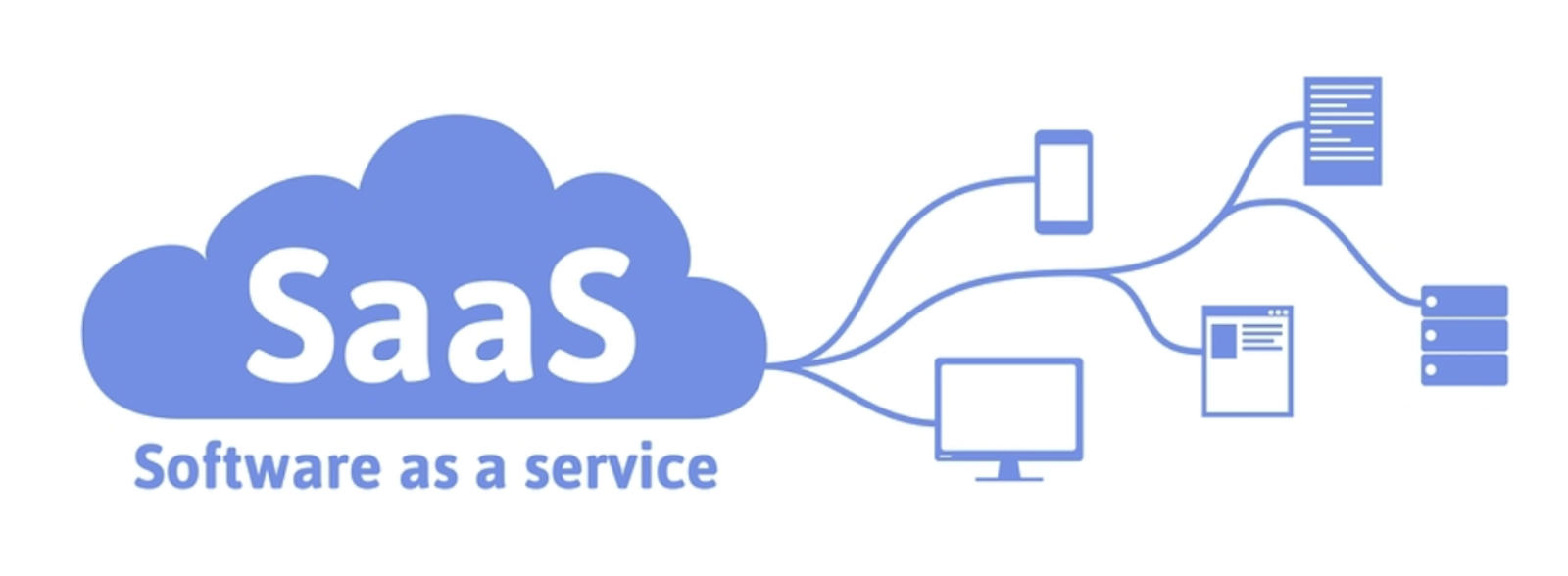
Understanding in simple words, [SaaS](https://en.wikipedia.org/wiki/Software_as_a_service) is a medium through which software applications can be delivered online. It puts the days of the traditional client-server model of computing to an end. The software can be maintained on-site either on your personal workstation or on a server.
SaaS is often referred to as a web-based, hosted or on-demand software. The software runs through the server of the SaaS provider. You will be able to access it if you have a good internet connection. Hardware management and security updates are all taken care of by the SaaS provider. Let’s move on to some of the advantages of SaaS.

## 1. Easy to access and use
One of the standout benefits of SaaS is the requirements that make it easy to access and use. The only thing you need on your computer is an internet connection. This enables you to access it anytime, anywhere. You can use it on any device or computer which runs the web and has an internet connection. As a result, you can be productive anywhere with the aid of SaaS, be it inside or outside the office.
SaaS applications are also extremely user-friendly. If you know how to work your way around the internet, you will be good to go. Moreover, the intense competition among SaaS providers has made them put user experience or UX as one of their top priorities. As a result, everyone is working towards making SaaS easy to use.

## 2. Vendor accountability
SaaS offers a high level of vendor accountability. This accountability is made possible due to it being subscription-based. Any customer who is dissatisfied with the service can simply choose not to renew or cancel their subscription. As a result, vendors are bound to provide outstanding service; otherwise, they will lose customers.
Vendor accountability is also set on high par due to the brutal competition that exists in the SaaS market. In order to provide excellent services, vendors work on providing good experiences that disrupt the existing ecosystem of tools and products. Consequently, SaaS providers put all their focus on responsive customer support and constantly improving their experiences.
In order to provide consistently good experiences, SaaS products are repeatedly tested. Similar to all other software, bugs and glitches are not foreign to SaaS applications. However, the whole responsibility for fixing these issues lie on the shoulders of the SaaS providers. As a result, they are constantly running alpha and beta testing programs allowing some users to test their new features and provide feedback. These features are introduced to the whole market in accordance with the success of feedback.

## 3. No burden on users
The fact that SaaS applications are hosted by the provider is an advantage for the users. This is because the user does not have to make any large upfront investments as there are no hardware requirements apart from having a computer/device and an internet connection. Most SaaS products are accessible on all kinds of computing devices, including mobiles, tablets, desktops, laptops, etc. As a result, the tasks that you once could perform from your windows workstation only can be done anywhere, anytime.
Moreover, users have no maintenance burden, as all updates are made by the SaaS provider. Since the SaaS provider hosts the application, updates for all users can be made at once without users having to manually do it themselves.
## 4. Lower costs
Traditional software comes with licensing fees, which can cost a lot. SaaS applications solve this problem since they are subscription-based and, as a result, are quite economical. Moreover, as mentioned before, SaaS applications do not require any large upfront investments as compared to traditional software packages.
## To Conclude
SaaS is becoming increasingly popular due to the benefits it brings. Businesses are preferring them over traditional software due to the ease of access and use. Moreover, they lower down the costs and provide better user experience and customer support. Applications are kept up to date, so no one is left behind in the fast-paced contemporary world.
---
**How this post looks on the live site:** Rendered in a windowed news reader inside the AWcode OS desktop, alongside other posts.
---
**Canonical HTML version:** https://awcode.com/news/introduction-to-software-as-a-service-saas
**About this document:** This is a plain-Markdown mirror of an AWcode.com page, served so that LLMs and agents can read the content without executing the site's retro-OS JavaScript UI. The HTML page at the canonical URL above carries the same content and is also fully indexable.
## Machine-readable
Resources for AI agents, LLMs and integrations:
- [https://awcode.com/llms.txt](https://awcode.com/llms.txt) — index of markdown mirrors
- [https://awcode.com/llms-full.txt](https://awcode.com/llms-full.txt) — every page + post concatenated
- [https://awcode.com/sitemap.xml](https://awcode.com/sitemap.xml) — full sitemap
- [https://awcode.com/robots.txt](https://awcode.com/robots.txt) — crawl + Content-Signal policy
- [https://awcode.com/ai.txt](https://awcode.com/ai.txt) — AI access policy
- [https://awcode.com/openapi.json](https://awcode.com/openapi.json) — OpenAPI 3.1 spec
- [https://awcode.com/.well-known/api-catalog](https://awcode.com/.well-known/api-catalog) — RFC 9264 / 9727 link set
- [https://awcode.com/.well-known/mcp.json](https://awcode.com/.well-known/mcp.json) — MCP discovery
- [https://awcode.com/mcp](https://awcode.com/mcp) — MCP server endpoint (POST JSON-RPC 2.0)
- [https://awcode.com/.well-known/agent-skills/index.json](https://awcode.com/.well-known/agent-skills/index.json) — Agent Skills index
### Public API — concrete examples
- [GET https://awcode.com/api/posts](https://awcode.com/api/posts) — list recent published posts
- [GET https://awcode.com/api/posts/is-wordpress-still-the-go-to-for-budding-startups-in-2026](https://awcode.com/api/posts/is-wordpress-still-the-go-to-for-budding-startups-in-2026) — fetch one post
- [GET https://awcode.com/api/pages/about](https://awcode.com/api/pages/about) — fetch the about page
### Markdown mirrors — concrete examples
- [https://awcode.com/index.md](https://awcode.com/index.md) — homepage
- [https://awcode.com/about.md](https://awcode.com/about.md) — about page
- [https://awcode.com/news/is-wordpress-still-the-go-to-for-budding-startups-in-2026.md](https://awcode.com/news/is-wordpress-still-the-go-to-for-budding-startups-in-2026.md) — one news post
---
# Hiring a Start-Up Development Agency | AWcode
**Published:** 2021-02-28
> Hiring a Start-Up Development Agency Hunting down the right developer for your startup can be very overwhelming. Many founders have mentioned that it is a tougher job than even raising finances. In the world of digitization, hiring and sourcing the perfect tech team for yourself is a significant challenge on its own. Today's fast-paced world
# Hiring a Start-Up Development Agency
Hunting down the right developer for your startup can be very overwhelming. Many founders have mentioned that it is a tougher job than even raising finances. In the world of digitization, hiring and sourcing the perfect tech team for yourself is a significant challenge on its own.
Today's fast-paced world runs extensively on code; that is why developers hold a secure place in the market. The top talent developers can be found in big tech industries such as Google and Facebook. They also offer them hefty salaries. However, the competition in smaller-scale markets is robust. This makes it very hard for one to hire the right kind of developer for your startup.
If you want to know some actionable tips to help you hire the right start-up developer for yourself, then these are the things you should keep an eye on as you begin your search:

## 1.Right talent at the right place:
Many of the talented software engineers and developers are hired at other firms. That is the reason they are not available to you. Even if you have posted a job description, they will not come to you because they already have found work.
In this case, you must look for passive talent and hire them so that they can work on your given project. So, you don't have to call the developers to you, but you have to go to them, and this is how you do that:
### ● Events:
Developers have many activities, such as conferences, tech events, and hackathons. When you visit these events, you can find a myriad of talents. Pitch in and let them know what you have at hand and what you are willing to offer for their expertise. Once you have started a conversation, you are at your first step in finding the desired developer for your startup.
### ● Online presence:
Many online communities provide you with verified developers. On these platforms, such as GitHub, and Stack Overflow, developers keep their profiles updated, which can give you a great insight into their work and of how clean their coding methods are.

The best way to get a developer to work with you honestly is to give them respect. They work hard, and sometimes they can't find the right place to work at, it would be encouraging for them if you offer them with recognition. This will help them to work with freedom on what they love as well as help them build their portfolio and learn more during the working process. This will give them a chance to pick you over already established businesses.
## 2. Request them to work on a real-life issue:
To start with the work, give them a problem that they can solve. You won't be able to understand their expertise. If you give them hypothetical situations to work on, it is always better to start with the problem that is present in the present moment.
The developer's approach will give you great insight into how they tackle situations and what their reaction is. Not only will you understand them better, but also they would get a solid insight into what kind of work they should be looking forward to and which type of tech they will be working on.

### Endnote:
You should also take a look at the price that they are willing to work at, and dirt cheap developers might not be as good as you expect them to be. Moreover, many developers are self-taught, so a resume will not tell you much about their work; however, the experience will.
We hope these tips were helpful, and you find the right developer for your startup.
---
**How this post looks on the live site:** Rendered in a windowed news reader inside the AWcode OS desktop, alongside other posts.
---
**Canonical HTML version:** https://awcode.com/news/hiring-a-start-up-development-agency
**About this document:** This is a plain-Markdown mirror of an AWcode.com page, served so that LLMs and agents can read the content without executing the site's retro-OS JavaScript UI. The HTML page at the canonical URL above carries the same content and is also fully indexable.
## Machine-readable
Resources for AI agents, LLMs and integrations:
- [https://awcode.com/llms.txt](https://awcode.com/llms.txt) — index of markdown mirrors
- [https://awcode.com/llms-full.txt](https://awcode.com/llms-full.txt) — every page + post concatenated
- [https://awcode.com/sitemap.xml](https://awcode.com/sitemap.xml) — full sitemap
- [https://awcode.com/robots.txt](https://awcode.com/robots.txt) — crawl + Content-Signal policy
- [https://awcode.com/ai.txt](https://awcode.com/ai.txt) — AI access policy
- [https://awcode.com/openapi.json](https://awcode.com/openapi.json) — OpenAPI 3.1 spec
- [https://awcode.com/.well-known/api-catalog](https://awcode.com/.well-known/api-catalog) — RFC 9264 / 9727 link set
- [https://awcode.com/.well-known/mcp.json](https://awcode.com/.well-known/mcp.json) — MCP discovery
- [https://awcode.com/mcp](https://awcode.com/mcp) — MCP server endpoint (POST JSON-RPC 2.0)
- [https://awcode.com/.well-known/agent-skills/index.json](https://awcode.com/.well-known/agent-skills/index.json) — Agent Skills index
### Public API — concrete examples
- [GET https://awcode.com/api/posts](https://awcode.com/api/posts) — list recent published posts
- [GET https://awcode.com/api/posts/is-wordpress-still-the-go-to-for-budding-startups-in-2026](https://awcode.com/api/posts/is-wordpress-still-the-go-to-for-budding-startups-in-2026) — fetch one post
- [GET https://awcode.com/api/pages/about](https://awcode.com/api/pages/about) — fetch the about page
### Markdown mirrors — concrete examples
- [https://awcode.com/index.md](https://awcode.com/index.md) — homepage
- [https://awcode.com/about.md](https://awcode.com/about.md) — about page
- [https://awcode.com/news/is-wordpress-still-the-go-to-for-budding-startups-in-2026.md](https://awcode.com/news/is-wordpress-still-the-go-to-for-budding-startups-in-2026.md) — one news post
---
# Beginners Overview of Linux | AWcode
**Published:** 2021-01-24
> Beginners Overview of Linux If you are planning to use Linux for the first time, there are some things you need to know first. What is Linux? Linux is the most used operating system today. From smartphones and laptops to cars, home appliances, and computer networks, Linux is everywhere. In many ways, it is similar
# **Beginners Overview of Linux**
If you are planning to use Linux for the first time, there are some things you need to know first.

## **What is Linux?**
Linux is the most used operating system today. From smartphones and laptops to cars, home appliances, and computer networks, Linux is everywhere.
In many ways, it is similar to other operating systems such as Windows, iOS, OS X, and others. Like these operating systems, Linux has types of software and graphical interface you are accustomed to using.
[Programmers](https://awcode.com/pattaya-web-design-and-development/) designed Linux to be complementary to Unix (an operating system developed in the 1970s). Both operating systems have similar programming tools, layouts, and other components. However, over the years, Linux has managed to rise and be one of the most successful systems, surpassing its predecessors in both quality and popularity.
Despite these similarities, Linux is different from other operating systems in many ways.
First, it is opensource software. The code is free, and you can view, edit, or modify according to your needs.
Another difference is in the core pieces of the Linux system. Many distributions offer different software options. The Linux operating system is customizable, and users can choose the user-interface components.

## **Advantages of Linux**
The best valuables of the Linux operating system when compared to others are its price, reliability, and the customizability it provides you.
**Free to Use**
One of the significant advantages of the Linux operating system is that you can use it for free. You can download the Linux distributions from the Web and install it on your laptop or PC.
**Security**
In comparison to other operating systems, Linux is more secure to use. Every program requires authorization from the administrator.
**Software Updates**
When using Linux, you will encounter lots of software updates. The good thing is that these updates are faster than any updates in other operating systems.
**Community Support**
Forums and support groups online can help solve any problems you face. There are a lot of programmers who can assist you with your problem.
**High Performance**
Linux provides excellent performance on various workstations, networks, and [web servers](https://awcode.com/hosting-services/). A large number of users can work simultaneously without any complications.

## **Downsides of Linux**
Although a large community of people (beginners and professionals) swears by Linux, there are some downsides to using it.
**Complex to Use**
The best way to put it is that Linux is not as easy to use as Mac or Windows. It demands a broader knowledge and experience than other operating systems, and this can be challenging for beginners.
**Unavailability of Some Hardware Drivers**
Some hardware drivers are not available for the Linux operating system, and this is one of the most significant issues Linux users face.
The hardware companies usually make drivers for Mac or Windows because they have more users.
**Non-compatible Software**
Some programs can’t run on Linux. For example, if you are used to Photoshop or other software, you may have to find another, Linux-compatible option.
Although there are hundreds of options when it comes to programs, a lot of times, the user interface is different.
You will have to do extra searching for programs and apps until you find the one that suits your needs.

## **Popular Linux Distros**
Here are some of the most popular Linux distros that beginners may find helpful.
**Elementary OS**
Based on Ubuntu, Elementary OS is one of the most popular Linux distros. Designed for users who are new to the Linux system, Elementary was released in 2009 and allows users to change the appearance of the interface and make it look like Mac or Windows.
**Manjaro Linux**
Based on Arch Linux, Manjaro is the best fit for both beginners and advanced users. It supports three sets of repositories, including Stable, Testing, and Unstable software repositories.
**Ubuntu**
Ubuntu is the best-fitted option for beginners. It has a user-friendly interface, and the installation procedure is super simple.
Ready to install Linux?
---
**How this post looks on the live site:** Rendered in a windowed news reader inside the AWcode OS desktop, alongside other posts.
---
**Canonical HTML version:** https://awcode.com/news/beginners-overview-of-linux
**About this document:** This is a plain-Markdown mirror of an AWcode.com page, served so that LLMs and agents can read the content without executing the site's retro-OS JavaScript UI. The HTML page at the canonical URL above carries the same content and is also fully indexable.
## Machine-readable
Resources for AI agents, LLMs and integrations:
- [https://awcode.com/llms.txt](https://awcode.com/llms.txt) — index of markdown mirrors
- [https://awcode.com/llms-full.txt](https://awcode.com/llms-full.txt) — every page + post concatenated
- [https://awcode.com/sitemap.xml](https://awcode.com/sitemap.xml) — full sitemap
- [https://awcode.com/robots.txt](https://awcode.com/robots.txt) — crawl + Content-Signal policy
- [https://awcode.com/ai.txt](https://awcode.com/ai.txt) — AI access policy
- [https://awcode.com/openapi.json](https://awcode.com/openapi.json) — OpenAPI 3.1 spec
- [https://awcode.com/.well-known/api-catalog](https://awcode.com/.well-known/api-catalog) — RFC 9264 / 9727 link set
- [https://awcode.com/.well-known/mcp.json](https://awcode.com/.well-known/mcp.json) — MCP discovery
- [https://awcode.com/mcp](https://awcode.com/mcp) — MCP server endpoint (POST JSON-RPC 2.0)
- [https://awcode.com/.well-known/agent-skills/index.json](https://awcode.com/.well-known/agent-skills/index.json) — Agent Skills index
### Public API — concrete examples
- [GET https://awcode.com/api/posts](https://awcode.com/api/posts) — list recent published posts
- [GET https://awcode.com/api/posts/is-wordpress-still-the-go-to-for-budding-startups-in-2026](https://awcode.com/api/posts/is-wordpress-still-the-go-to-for-budding-startups-in-2026) — fetch one post
- [GET https://awcode.com/api/pages/about](https://awcode.com/api/pages/about) — fetch the about page
### Markdown mirrors — concrete examples
- [https://awcode.com/index.md](https://awcode.com/index.md) — homepage
- [https://awcode.com/about.md](https://awcode.com/about.md) — about page
- [https://awcode.com/news/is-wordpress-still-the-go-to-for-budding-startups-in-2026.md](https://awcode.com/news/is-wordpress-still-the-go-to-for-budding-startups-in-2026.md) — one news post
---
# Custom Software Solutions | AWcode
**Published:** 2020-11-18
> Custom Software Solutions Sometimes, a business or organization has unique needs that a commercial off the shelf software cannot meet. So, they take the route of custom software development to get a solution that satisfies their requirements and user needs. In this article, we shall define what custom software is, look at the different types
# **Custom Software Solutions**
Sometimes, a business or organization has unique needs that a commercial off the shelf software cannot meet. So, they take the route of custom software development to get a solution that satisfies their requirements and user needs. In this article, we shall define what custom software is, look at the different types of software systems, and how your company could benefit from tailor-made software solutions.

## **What is a Custom Software Solution?**
[**Custom software solutions**](https://awcode.com/custom-software-solutions/) are web-based or computer applications that are specifically developed to meet the specific demands of particular users in an organization. Such solutions have unique capabilities and functionalities that are exclusive to them, and this differentiates them from ordinary premium or commercial software. Since these solutions are unique to an organization, they can help increase productivity, streamline processes, optimize costs, and, consequently, give the firm a competitive advantage.
Unlike COTS (Commercial Off-the-Shelf Software), such as Microsoft Office and others, which are developed and sold to a broader market, custom software solutions are designed for a specific set of needs. Good examples are online banking apps, which lets customers transact right from the palm of their hands, or a booking system software, that integrates with popular website builders, multiple payment gateways, mailing list managers and CRM and accounting systems.

## **Common types of software systems**
A software system which is customized to cater to the needs of an organization could vary from another based on the technology and the practice used in the process of its development:
- **Open-source software**, which is essentially a code that is accessible to the public and the development community to use. Linux is one of the most widely known and versatile open-source software systems.
- **The cloud-based system** hosts the development environment on a cloud, thereby bringing the advantages of cloud computing to **software development**. Such a system provides the benefits of speed, agility, cost optimization, and on-demand convenience.
- **Artificial Intelligence (AI)** integrated software systems emulate human decision making and learning. AI embedded systems and applications, with the help of cloud-based services and Big Data, form the bedrock of driver-less cars, smart homes, and chatbots.
- **Blockchain technology**, which has fueled the growth of cryptocurrency, is a sequence of secure ledgers that are digitally linked, forming a chain. Blockchain is increasingly being used to build new, impregnable and safe transnational and financial applications that can free capital and accelerate business processes.
- **Analytics technologies** help end-users analyze a range of data through its predictive and analytical capabilities. Data is presented in the form of dashboards and visualizations.
- **Mobile application technology** has become a necessity for many organizations thanks to the pervasive penetration of mobile phones and the subsequent shift in buyer behaviour from visiting local brick and mortar stores to using apps to shop for products and services online.
## **How your company could benefit from bespoke software?**
A customized software, also referred to as **bespoke software**, provides significant benefits to the end-user and organization including:

- **Scalability and flexibility:** Since the software is designed to match the needs of the business, it’s easy to accommodate changes in processes, workloads, or additional integrations as and when required.
- **Low costs:** In the long run, costs associated with upgrading, licensing, and subscription, which is inherent in COTS, are absent in customized software.
- **Complete ownership:** The end-user has absolute control of the solution, its applicability, features and customisations, and the scale of development.
- **Enhanced security:** Risks of attack by hackers or any other form of cybercrime are minimized tremendously as well-known issues or vulnerabilities present in COTS are absent.
- **Competitive advantage:** A custom software is developed to best suit a company’s requirements, thereby differentiating the business itself from its competition.
---
**How this post looks on the live site:** Rendered in a windowed news reader inside the AWcode OS desktop, alongside other posts.
---
**Canonical HTML version:** https://awcode.com/news/custom-software-solution
**About this document:** This is a plain-Markdown mirror of an AWcode.com page, served so that LLMs and agents can read the content without executing the site's retro-OS JavaScript UI. The HTML page at the canonical URL above carries the same content and is also fully indexable.
## Machine-readable
Resources for AI agents, LLMs and integrations:
- [https://awcode.com/llms.txt](https://awcode.com/llms.txt) — index of markdown mirrors
- [https://awcode.com/llms-full.txt](https://awcode.com/llms-full.txt) — every page + post concatenated
- [https://awcode.com/sitemap.xml](https://awcode.com/sitemap.xml) — full sitemap
- [https://awcode.com/robots.txt](https://awcode.com/robots.txt) — crawl + Content-Signal policy
- [https://awcode.com/ai.txt](https://awcode.com/ai.txt) — AI access policy
- [https://awcode.com/openapi.json](https://awcode.com/openapi.json) — OpenAPI 3.1 spec
- [https://awcode.com/.well-known/api-catalog](https://awcode.com/.well-known/api-catalog) — RFC 9264 / 9727 link set
- [https://awcode.com/.well-known/mcp.json](https://awcode.com/.well-known/mcp.json) — MCP discovery
- [https://awcode.com/mcp](https://awcode.com/mcp) — MCP server endpoint (POST JSON-RPC 2.0)
- [https://awcode.com/.well-known/agent-skills/index.json](https://awcode.com/.well-known/agent-skills/index.json) — Agent Skills index
### Public API — concrete examples
- [GET https://awcode.com/api/posts](https://awcode.com/api/posts) — list recent published posts
- [GET https://awcode.com/api/posts/is-wordpress-still-the-go-to-for-budding-startups-in-2026](https://awcode.com/api/posts/is-wordpress-still-the-go-to-for-budding-startups-in-2026) — fetch one post
- [GET https://awcode.com/api/pages/about](https://awcode.com/api/pages/about) — fetch the about page
### Markdown mirrors — concrete examples
- [https://awcode.com/index.md](https://awcode.com/index.md) — homepage
- [https://awcode.com/about.md](https://awcode.com/about.md) — about page
- [https://awcode.com/news/is-wordpress-still-the-go-to-for-budding-startups-in-2026.md](https://awcode.com/news/is-wordpress-still-the-go-to-for-budding-startups-in-2026.md) — one news post
---
# Building An Online Store | AWcode
**Published:** 2020-10-21
> Building An Online Store Marketplaces such as Amazon, Snapdeal, and Flipkart are often preferred by most entrepreneurs who sell their products online. These established platforms are attractive, easy to use, accessible, and have credibility. However, there are many advantages to building your own online store. Once you analyze the costs and benefits of both options,
# **Building An Online Store**
Marketplaces such as Amazon, Snapdeal, and Flipkart are often preferred by most entrepreneurs who sell their products online. These established platforms are attractive, easy to use, accessible, and have credibility. However, there are many advantages to building your own online store.
Once you analyze the costs and benefits of both options, you'll likely feel eager to trade marketplace convenience for an independent online business.
With marketplaces, some policies stand to undermine your success. For example, you can't stop a customer from posting negative reviews of your product if they don't like it. This can end up having adverse effects on the sales of the product.
That said, let’s look at some important things you need to know about building an online store.

## Open Source vs Closed Platforms
If you decide to set up your shop online, one of the first things to do is to choose the right platform for your store. There are two main types of e-commerce platforms: open source and closed source.
An open-source platform gives you the freedom to modify the source code according to your needs. You have the freedom to choose your web host. Open source platforms normally don’t have any fees.
With a closed source platform, you don’t have access to the source code. That means you have limited control over the platform. You’ll need to host your store with the eCommerce platform owner.
You need to pay some fees for a closed source platform. This comes with several benefits that you'll normally not get with open source platforms. The benefits include advanced security, top-notch support, [search engine optimization](https://awcode.com/social-media-marketing/), and multiple payment gateways.
## Which platform should you choose?
If you have enough time and resources to invest in your online store or if you need to implement a lot of customizations, an open-source platform is an ideal option for you. However, if you are too busy and don’t have enough time or resources to spend on your e-commerce business, you would be better off with a closed source platform.
Shopify and WooCommerce are the two most popular e-commerce platforms. Shopify is a closed source platform while WooCommerce is open source.
## Shopify Explained
Shopify is a web application that lets you build your own online store. It offers you a wide selection of templates to choose from depending on your needs. You don't need to be skillful in designing or building websites to use this platform.
However, if you're familiar with HTML and CSS, you'll be pleased to realize that Shopify allows you to edit both. This gives you a lot of control over the template designs. It's worth noting that Shopify is a Software-as-a-Service (SaaS) tool.
Namely, you don’t own the platform. You’ll only be paying a monthly fee to use it. You won’t be required to buy [web hosting](https://awcode.com/hosting-services/) or install software anywhere. The major disadvantage of Shopify is that it can be expensive and the features are limited according to the package you choose.

## WooCommerce explained
WooCommerce is a WordPress plugin that allows you to transform your [WordPress website](https://awcode.com/web-design/) into an online store. It can turn an ordinary WordPress site into a fully operational Flipkart store, allowing you to sell physical goods or digital products.
You can also accept payments online, email receipts, manage shipping, offer discounts, etc. This platform is free to download. However, you may need to purchase various add-ons to enhance the functionality of your store.
The free version of WooCommerce is often not enough to power a fully functioning online store. You will also need to purchase a reliable website host for your store.
## Sales Optimised Functions
When choosing an e-commerce platform, you should consider features that will help optimize sales. These features include:
- **Multiple payment options**: It's important to offer several payment options. Customers in different countries normally have different checkout and payment preferences.
- **Security**: A good e-commerce platform should have reliable security monitoring and defense features to keep customers’ data safe.
- **Simplified navigation**: No one wants to rummage a complex navigation menu when they shop online. Be sure your online store has simplified navigation to ensure user-friendliness. Shortcuts to the common functions such as a shopping cart, wish list, user profile, and account management is all it takes.
---
**How this post looks on the live site:** Rendered in a windowed news reader inside the AWcode OS desktop, alongside other posts.
---
**Canonical HTML version:** https://awcode.com/news/building-an-online-store
**About this document:** This is a plain-Markdown mirror of an AWcode.com page, served so that LLMs and agents can read the content without executing the site's retro-OS JavaScript UI. The HTML page at the canonical URL above carries the same content and is also fully indexable.
## Machine-readable
Resources for AI agents, LLMs and integrations:
- [https://awcode.com/llms.txt](https://awcode.com/llms.txt) — index of markdown mirrors
- [https://awcode.com/llms-full.txt](https://awcode.com/llms-full.txt) — every page + post concatenated
- [https://awcode.com/sitemap.xml](https://awcode.com/sitemap.xml) — full sitemap
- [https://awcode.com/robots.txt](https://awcode.com/robots.txt) — crawl + Content-Signal policy
- [https://awcode.com/ai.txt](https://awcode.com/ai.txt) — AI access policy
- [https://awcode.com/openapi.json](https://awcode.com/openapi.json) — OpenAPI 3.1 spec
- [https://awcode.com/.well-known/api-catalog](https://awcode.com/.well-known/api-catalog) — RFC 9264 / 9727 link set
- [https://awcode.com/.well-known/mcp.json](https://awcode.com/.well-known/mcp.json) — MCP discovery
- [https://awcode.com/mcp](https://awcode.com/mcp) — MCP server endpoint (POST JSON-RPC 2.0)
- [https://awcode.com/.well-known/agent-skills/index.json](https://awcode.com/.well-known/agent-skills/index.json) — Agent Skills index
### Public API — concrete examples
- [GET https://awcode.com/api/posts](https://awcode.com/api/posts) — list recent published posts
- [GET https://awcode.com/api/posts/is-wordpress-still-the-go-to-for-budding-startups-in-2026](https://awcode.com/api/posts/is-wordpress-still-the-go-to-for-budding-startups-in-2026) — fetch one post
- [GET https://awcode.com/api/pages/about](https://awcode.com/api/pages/about) — fetch the about page
### Markdown mirrors — concrete examples
- [https://awcode.com/index.md](https://awcode.com/index.md) — homepage
- [https://awcode.com/about.md](https://awcode.com/about.md) — about page
- [https://awcode.com/news/is-wordpress-still-the-go-to-for-budding-startups-in-2026.md](https://awcode.com/news/is-wordpress-still-the-go-to-for-budding-startups-in-2026.md) — one news post
---
# Difference Between Web Designers and Web Developers | AWcode
**Published:** 2020-09-11
> Difference Between Web Designers and Web Developers Some people think that web designers and web developers ultimately perform the same type of job. The reality is that they're two completely different professions with distinct responsibilities. So, let's dive in and distinguish these two occupations. What do web designers do? A web designer is responsible
**Difference Between Web Designers and Web Developers**
Some people think that web designers and web developers ultimately perform the same type of job. The reality is that they're two completely different professions with distinct responsibilities. So, let's dive in and distinguish these two occupations.
**What do web designers do?**
A web designer is responsible for the way your website looks and feels to the user. They dabble in color schemes, layouts, and user design. They are visual artists who blend the visual and technical aspects that are necessary to create a beautiful, user-friendly website.
While often underrated, a web designer's role is crucial for the whole project. Their most important task is ensuring the best user experience possible. The website should grab people's attention and compel them to stay. Above all, it should be easy to navigate.
Web designers are akin to an architect, in that they are the ones responsible for the layout and blueprints of what will become the website itself. It’s this blueprint that everyone else on the team, including the developers, reference and use for the rest of the project.
Needless to say, it takes a versatile skillset to pull this task off. [Web design](https://awcode.com/pattaya-web-design-and-development/) borrows from a lot of disciplines, including graphic design, user interface design, psychology,color theory, and typography. A good web designer needs an excellent artistic eye to be successful.
A web designer's main asset is his/her portfolio. This shows off their creative and professional capabilities in web design.
**What do web developers do?**
Web developers are responsible for the functionality of a website, using a variety of software tools. They are the engineers of a website, doing the actual construction, and making the website itself work.
Web developers are further divided into two groups: front-end and back-end developers.
Front-end developers implement the web designer's blueprint and turn it into reality. They are responsible for coding the website's pages and layout, insert images, and page linking. Their primary languages of choice include Hypertext Markup Language (HTML), Cascading Style Sheets (CSS) and Javascript (JS).
Back-end developers are concerned with the way data is being handled behind the scenes. Not all websites require a back-end developer, but those that employ dynamic data need one. This usually involves connecting with a database, and it’s a back-end developer’s job to control this data and send it to the website.
Web developers, in general, are more coding-heavy roles and require technical aptitude and knowledge. Their main asset is found in their coding prowess, which can be showcased on platforms such as Github.
**Crossover between the roles**
Nowadays, there is considerable overlap in the skills and knowledge that are involved with the two disciplines. Most web designers now dabble in web development themselves. They are often more than capable of building a usable website from designing the idea all the way through executing the plan.
In a similar vein, web developers are increasingly trying to learn design principles. Front-end developers especially need to be able to know the context behind a web designer’s choice of color and layout. This requires an artistic eye or, at the very least, an understanding of visual design.
**Who to hire to build your website**
When it comes to figuring out which person to hire, you first need to know your website's requirements. Does it need a fresh look, or does the functionality need to be improved? Do you need a simple static website or an interactive one with lots of dynamic data?

For any design-related concerns, a web designer is your best choice. This is true if you need to re-design your website, improve its branding, or do simple photo editing. If you're looking into improving site functionality, creating forms or fixing technical issues, a web developer is what you're looking for.
Whatever your needs AWcode are able to help, since we have both designers and developers in our team allowing us to offer a full range of website related services. This delivers greater results than a single freelancer who may be a specialist in one area but lacking in other important skills.
---
**How this post looks on the live site:** Rendered in a windowed news reader inside the AWcode OS desktop, alongside other posts.
---
**Canonical HTML version:** https://awcode.com/news/difference-between-web-designers-and-web-developers
**About this document:** This is a plain-Markdown mirror of an AWcode.com page, served so that LLMs and agents can read the content without executing the site's retro-OS JavaScript UI. The HTML page at the canonical URL above carries the same content and is also fully indexable.
## Machine-readable
Resources for AI agents, LLMs and integrations:
- [https://awcode.com/llms.txt](https://awcode.com/llms.txt) — index of markdown mirrors
- [https://awcode.com/llms-full.txt](https://awcode.com/llms-full.txt) — every page + post concatenated
- [https://awcode.com/sitemap.xml](https://awcode.com/sitemap.xml) — full sitemap
- [https://awcode.com/robots.txt](https://awcode.com/robots.txt) — crawl + Content-Signal policy
- [https://awcode.com/ai.txt](https://awcode.com/ai.txt) — AI access policy
- [https://awcode.com/openapi.json](https://awcode.com/openapi.json) — OpenAPI 3.1 spec
- [https://awcode.com/.well-known/api-catalog](https://awcode.com/.well-known/api-catalog) — RFC 9264 / 9727 link set
- [https://awcode.com/.well-known/mcp.json](https://awcode.com/.well-known/mcp.json) — MCP discovery
- [https://awcode.com/mcp](https://awcode.com/mcp) — MCP server endpoint (POST JSON-RPC 2.0)
- [https://awcode.com/.well-known/agent-skills/index.json](https://awcode.com/.well-known/agent-skills/index.json) — Agent Skills index
### Public API — concrete examples
- [GET https://awcode.com/api/posts](https://awcode.com/api/posts) — list recent published posts
- [GET https://awcode.com/api/posts/is-wordpress-still-the-go-to-for-budding-startups-in-2026](https://awcode.com/api/posts/is-wordpress-still-the-go-to-for-budding-startups-in-2026) — fetch one post
- [GET https://awcode.com/api/pages/about](https://awcode.com/api/pages/about) — fetch the about page
### Markdown mirrors — concrete examples
- [https://awcode.com/index.md](https://awcode.com/index.md) — homepage
- [https://awcode.com/about.md](https://awcode.com/about.md) — about page
- [https://awcode.com/news/is-wordpress-still-the-go-to-for-budding-startups-in-2026.md](https://awcode.com/news/is-wordpress-still-the-go-to-for-budding-startups-in-2026.md) — one news post
---
# The Next Steps After Launching Your New Website | AWcode
**Published:** 2020-08-21
> The Next Steps After Launching Your New Website Building a website takes time and planning. So, you did the right thing and hired a web designer, and the site is fantastic. But after launching a new website, what’s the next step? Now you need to attract traffic. That means putting the right tools in place,
# The Next Steps After Launching Your New Website
[Building a website](https://awcode.com/web-design/) takes time and planning. So, you did the right thing and hired a web designer, and the site is fantastic. But after launching a new website, what’s the next step?
Now you need to attract traffic. That means putting the right tools in place, creating a strong content strategy, and promoting your site online.
## Get Reporting Tools in Place
You’ll need to establish the following:
- Who is visiting your site?
- What sites are referring to them?
- How long are they staying at your site?
- What actions are they taking on the site?

You also should understand how visitors are finding and interacting with your site. Are your traffic strategies paying off? Are customers finding the site through keyword searches organically, or through your promotional efforts?
If you don’t have these answers, how will you know what’s working and what isn’t? Fortunately, Google provides a wide range of free tools. Register your site with Google Analytics, get the Google Console, and start to monitor its performance.
## Submit Your Sitemap to Google
With a new site, you have two options – submit your sitemap to Google, or wait for the search engine to find and crawl your site. It’s best to do the former because you never know how long Google will take to crawl your site on its own.
In the future, if you change the structure of your site, you should do the same thing again. It’s a quick and simple process:
- Go through to your Console home page and choose the site you want to submit
- Click on the Sitemaps tab on the left of the screen
- Your domain name will appear on the right side of the screen
- In the field next to it, type in sitemap.xml and click “submit”

## Promote on Social Media
According to [HubSpot](https://www.hubspot.com/marketing-statistics), 74% of us use Facebook for business. Social media is useful for a lot more than just funny memes; it’s also great for promoting your business. Here’s how.
## Where Does Your Target Audience Hang Out?
Which social media sites does your target audience use most often? If you’re a B2B marketer, it’s probably LinkedIn. If your target audience consists of mostly millennials, Instagram’s a good site to check out. Have an older audience? Try Facebook.
## Why Not Just Join All?
While it seems like a good idea to have a presence on every [social media](https://awcode.com/social-media-marketing/) site, it becomes impractical. For a social media strategy to be effective, you’ll have to post regularly and engage with followers.
The more company pages you maintain, the harder it becomes to manage. Consider how many posts you could reasonably create in a day, week, month, and so on. It’s far better to have a strong presence on one or two sites and manage them effectively.
Master one or two sites, and then perhaps add others. LinkedIn isgood forbusiness users because it builds a professional image and connects you to thought leaders and other industry experts.
According to [Statista](https://www.statista.com/statistics/272014/global-social-networks-ranked-by-number-of-users/), as of July 2019, Facebook was the most popular site in terms of the number of active users; YouTube comes in second. Just remember, it’s not about the numbers as much as where your target audience hangs out.
## Plan Your Ongoing Content Strategy
Content marketing gets as much as [three times the number of leads](https://www.hubspot.com/marketing-statistics) that paid advertising does. It’s an effective strategy because it’s more about building your brand than selling your product. A good content strategy provides value to the person consuming it.
Think in terms of thought leadership articles, tutorials, and so on. Why? Because people are less likely to trust paid advertising. Think about it – when last did you click on a paid search result when doing research?
Set up a content strategy at least a month in advance. That way, you can develop themes along the way and produce valuable content that establishes your company as an industry expert.
### Final Notes
The internet is a crowded place. If you want your site to be noticed, you have to make that happen. We’ve given you some concise tips—all that’s left is for you to implement them.
Or if you prefer to leave all these tasks to the experts, contact us here at AWcode. We can provide ongoing [website management](https://awcode.com/hosting-services/) either as a monthly service or by task/project.
---
**How this post looks on the live site:** Rendered in a windowed news reader inside the AWcode OS desktop, alongside other posts.
---
**Canonical HTML version:** https://awcode.com/news/the-next-steps-after-launching-your-new-website
**About this document:** This is a plain-Markdown mirror of an AWcode.com page, served so that LLMs and agents can read the content without executing the site's retro-OS JavaScript UI. The HTML page at the canonical URL above carries the same content and is also fully indexable.
## Machine-readable
Resources for AI agents, LLMs and integrations:
- [https://awcode.com/llms.txt](https://awcode.com/llms.txt) — index of markdown mirrors
- [https://awcode.com/llms-full.txt](https://awcode.com/llms-full.txt) — every page + post concatenated
- [https://awcode.com/sitemap.xml](https://awcode.com/sitemap.xml) — full sitemap
- [https://awcode.com/robots.txt](https://awcode.com/robots.txt) — crawl + Content-Signal policy
- [https://awcode.com/ai.txt](https://awcode.com/ai.txt) — AI access policy
- [https://awcode.com/openapi.json](https://awcode.com/openapi.json) — OpenAPI 3.1 spec
- [https://awcode.com/.well-known/api-catalog](https://awcode.com/.well-known/api-catalog) — RFC 9264 / 9727 link set
- [https://awcode.com/.well-known/mcp.json](https://awcode.com/.well-known/mcp.json) — MCP discovery
- [https://awcode.com/mcp](https://awcode.com/mcp) — MCP server endpoint (POST JSON-RPC 2.0)
- [https://awcode.com/.well-known/agent-skills/index.json](https://awcode.com/.well-known/agent-skills/index.json) — Agent Skills index
### Public API — concrete examples
- [GET https://awcode.com/api/posts](https://awcode.com/api/posts) — list recent published posts
- [GET https://awcode.com/api/posts/is-wordpress-still-the-go-to-for-budding-startups-in-2026](https://awcode.com/api/posts/is-wordpress-still-the-go-to-for-budding-startups-in-2026) — fetch one post
- [GET https://awcode.com/api/pages/about](https://awcode.com/api/pages/about) — fetch the about page
### Markdown mirrors — concrete examples
- [https://awcode.com/index.md](https://awcode.com/index.md) — homepage
- [https://awcode.com/about.md](https://awcode.com/about.md) — about page
- [https://awcode.com/news/is-wordpress-still-the-go-to-for-budding-startups-in-2026.md](https://awcode.com/news/is-wordpress-still-the-go-to-for-budding-startups-in-2026.md) — one news post
---
# 3 Tips for Writing Content for Your Website | AWcode
**Published:** 2020-07-15
> 3 Tips for Writing Content for Your Website Content is king in the online world. There is no way you can get a favorable page ranking and be able to drive organic traffic to your site unless you have high-quality, valuable content. Here are three useful content writing tips to get you started in creating
# 3 Tips for Writing Content for Your Website
Content is king in the online world. There is no way you can get a favorable page ranking and be able to drive organic traffic to your site unless you have high-quality, valuable content. Here are three useful content writing tips to get you started in creating great website content.
## Keyword and competitor research
Your competitors are a goldmine of information that you can use to create valuable website content. Hence, you need to understand what keywords your competitors are targeting. That’s where competitive keyword analysis comes in.

Competitive keywords analysis is one of the most effective techniques to compete in the crowded online market and gain a critical advantage over other businesses in your field. There are several tools you can use to find those keywords that your competitors are targeting in their [content marketing](https://awcode.com/social-media-marketing/) campaigns.
These tools include BuzzSumo, SEM Rush, and SpyFu. You can then add the keywords in your content writing.
## Decide a goal-oriented title

The titles of your web pages are essential as they determine whether your audience will read the rest of your content. The titles should make your audience curious to read more. If the title doesn’t spark interest, evoke emotion, or encourage a reader want to learn more about the topic, there’s little chance that the content will deliver the desired results.
Ideally, people should come to your website, look at the headline, and understand the content of the web page. By merely reading the title, they should be able to tell the kind of information they can expect to find on the page.
With this in mind, crafting goal-oriented and interest-provoking titles will help make your content more informative. Using these kinds of headlines in your content writing will also help improve the engagement and conversion rates of your web pages.
## Research, then write
Content for websites should be informative. Do proper research before you write your website content. You want your website to offer exciting and valuable information to the visitors.
It is imperative that you have vast knowledge on the topic about which you are writing. This is especially true if you are in the B2B market. You should be able to provide data, metrics, and statistics to support your claims and establish credibility.
It is also essential to understand your target audience. You want to know the questions that they are likely to ask and answer them in your content. They might not get the chance to ask the questions themselves.
By doing that, you are showing your readers that you understand their pain points and that you are willing to help them find a solution. This is also an excellent way to make your content more engaging and actionable. Be sure that every piece of information in your material is accurate and current.
Featuring outdated information or bygone facts in your content can hurt your credibility. Moreover, your content should be original. While you are free to use research materials, you have to avoid plagiarism.
Besides promoting your credibility, having fresh content on your site is also a great SEO booster. It’s advisable to set aside enough time for content writing to ensure you produce new, high-quality content.
## Final Thoughts
When you are building your [business website](https://awcode.com/pattaya-web-design-and-development/), one of the essential things to have is the content. Regardless of your industry, you will need some high-quality content that will not only wow your audience but also make the search engines notice your website. The above three tips will take you a long way into creating that kind of content.
---
**How this post looks on the live site:** Rendered in a windowed news reader inside the AWcode OS desktop, alongside other posts.
---
**Canonical HTML version:** https://awcode.com/news/3-tips-for-writing-content-for-your-website
**About this document:** This is a plain-Markdown mirror of an AWcode.com page, served so that LLMs and agents can read the content without executing the site's retro-OS JavaScript UI. The HTML page at the canonical URL above carries the same content and is also fully indexable.
## Machine-readable
Resources for AI agents, LLMs and integrations:
- [https://awcode.com/llms.txt](https://awcode.com/llms.txt) — index of markdown mirrors
- [https://awcode.com/llms-full.txt](https://awcode.com/llms-full.txt) — every page + post concatenated
- [https://awcode.com/sitemap.xml](https://awcode.com/sitemap.xml) — full sitemap
- [https://awcode.com/robots.txt](https://awcode.com/robots.txt) — crawl + Content-Signal policy
- [https://awcode.com/ai.txt](https://awcode.com/ai.txt) — AI access policy
- [https://awcode.com/openapi.json](https://awcode.com/openapi.json) — OpenAPI 3.1 spec
- [https://awcode.com/.well-known/api-catalog](https://awcode.com/.well-known/api-catalog) — RFC 9264 / 9727 link set
- [https://awcode.com/.well-known/mcp.json](https://awcode.com/.well-known/mcp.json) — MCP discovery
- [https://awcode.com/mcp](https://awcode.com/mcp) — MCP server endpoint (POST JSON-RPC 2.0)
- [https://awcode.com/.well-known/agent-skills/index.json](https://awcode.com/.well-known/agent-skills/index.json) — Agent Skills index
### Public API — concrete examples
- [GET https://awcode.com/api/posts](https://awcode.com/api/posts) — list recent published posts
- [GET https://awcode.com/api/posts/is-wordpress-still-the-go-to-for-budding-startups-in-2026](https://awcode.com/api/posts/is-wordpress-still-the-go-to-for-budding-startups-in-2026) — fetch one post
- [GET https://awcode.com/api/pages/about](https://awcode.com/api/pages/about) — fetch the about page
### Markdown mirrors — concrete examples
- [https://awcode.com/index.md](https://awcode.com/index.md) — homepage
- [https://awcode.com/about.md](https://awcode.com/about.md) — about page
- [https://awcode.com/news/is-wordpress-still-the-go-to-for-budding-startups-in-2026.md](https://awcode.com/news/is-wordpress-still-the-go-to-for-budding-startups-in-2026.md) — one news post
---
# What is Involved in Building a New Website | AWcode
**Published:** 2020-06-11
> What is Involved in Building a New Website So, you want to build a new website? Well, you've come to the right place. Read on to find out just what it’s going to take to get cracking on building a website. Choosing a Domain Name Choosing a domain name is both deceptively hard yet very
# What is Involved in Building a New Website
So, you want to build a new website? Well, you've come to the right place. Read on to find out just what it’s going to take to [get cracking on building a website](https://awcode.com/pattaya-web-design-and-development/).
## Choosing a Domain Name
Choosing a domain name is both deceptively hard yet very easy. It is easy because more often than not, your domain name is just the name of your company or the brand you are trying to build. Simple enough, right? If you are really at a loss for ideas, you can always get a website such as www.yourname.com.
Well, it is not that simple. Unless your actual name or the brand name you want is unique, the chances are someone with a similar name already owns the domain name. Worse, there are a lot of unsavoury people who buy domain names in hopes of selling them to someone else for a profit.
These cyber-squatters can get bad in anticipation of something big that will come out. Let’s say that a major tech company creates a new product that will revolutionise the industry. There is a high chance that cyber-squatters will eat up online domain names related to the name of this new gadget in hopes of making these large firms pay big bucks for the domain.
Give this some thought and don’t be surprised if someone already owns the domain name you want. If so, think again, you’ll get the right name eventually.
## Style and Appearance (based on brand, target audience, and company messaging)

Here is where web design 101 comes into play. You need to choose a style and appearance that conform to your brand and target audience. It must be suited to broadcast your company’s message.
Style and appearance get tricky when we consider that the design has to be unique enough to stand out from the crowd but, at the same time, familiar so as not to alienate your target audience.
Carefully tread this path of web design “do’s and don’ts” by doing careful research on what are the standard styles and appearances in the market you want to enter.
## Context (text and images)

When it comes to sending a message, context is critical. A critical rule among content creators is "content is king, context is god." Making content for the sake of content is fantastic, but keep in mind that the context of your information is also essential. Be very careful to make sure readers or viewers cannot misinterpret your content.
An excellent example of how the public can misunderstand content is the pictures of Prince Harry seemingly giving people the middle finger that went viral. After some time, another image of the same event showed that Prince Harry was making the 'Ok' hand gesture and the angle of the shot obstructed his other fingers.
## Decide hosting provider and package.

There are plenty of [web hosting](https://awcode.com/hosting-services/) services that have website builder apps as a value-added proposition. Shopping for the service that makes building a website easy is probably the right place to start. Remember to consider the value provided by the hosting service compared to how much you are going to spend to start and maintain your website.
## Keep the Site Updated
Finally, make sure your website is frequently updated. Google and other search engines tend to reward engagement, and if people visit your site multiple times, it raises the profile of the website to other users. However, if it has the same boring, stale content from 2018 with outdated info, what are the chances that anyone will want to revisit it?

Fresh content drives new visits and new engagement. If you want your new website to survive, make sure you have something new for repeat visitors. Building a website is simple, but you have to keep it fresh.
---
**How this post looks on the live site:** Rendered in a windowed news reader inside the AWcode OS desktop, alongside other posts.
---
**Canonical HTML version:** https://awcode.com/news/what-is-involved-in-building-a-new-website
**About this document:** This is a plain-Markdown mirror of an AWcode.com page, served so that LLMs and agents can read the content without executing the site's retro-OS JavaScript UI. The HTML page at the canonical URL above carries the same content and is also fully indexable.
## Machine-readable
Resources for AI agents, LLMs and integrations:
- [https://awcode.com/llms.txt](https://awcode.com/llms.txt) — index of markdown mirrors
- [https://awcode.com/llms-full.txt](https://awcode.com/llms-full.txt) — every page + post concatenated
- [https://awcode.com/sitemap.xml](https://awcode.com/sitemap.xml) — full sitemap
- [https://awcode.com/robots.txt](https://awcode.com/robots.txt) — crawl + Content-Signal policy
- [https://awcode.com/ai.txt](https://awcode.com/ai.txt) — AI access policy
- [https://awcode.com/openapi.json](https://awcode.com/openapi.json) — OpenAPI 3.1 spec
- [https://awcode.com/.well-known/api-catalog](https://awcode.com/.well-known/api-catalog) — RFC 9264 / 9727 link set
- [https://awcode.com/.well-known/mcp.json](https://awcode.com/.well-known/mcp.json) — MCP discovery
- [https://awcode.com/mcp](https://awcode.com/mcp) — MCP server endpoint (POST JSON-RPC 2.0)
- [https://awcode.com/.well-known/agent-skills/index.json](https://awcode.com/.well-known/agent-skills/index.json) — Agent Skills index
### Public API — concrete examples
- [GET https://awcode.com/api/posts](https://awcode.com/api/posts) — list recent published posts
- [GET https://awcode.com/api/posts/is-wordpress-still-the-go-to-for-budding-startups-in-2026](https://awcode.com/api/posts/is-wordpress-still-the-go-to-for-budding-startups-in-2026) — fetch one post
- [GET https://awcode.com/api/pages/about](https://awcode.com/api/pages/about) — fetch the about page
### Markdown mirrors — concrete examples
- [https://awcode.com/index.md](https://awcode.com/index.md) — homepage
- [https://awcode.com/about.md](https://awcode.com/about.md) — about page
- [https://awcode.com/news/is-wordpress-still-the-go-to-for-budding-startups-in-2026.md](https://awcode.com/news/is-wordpress-still-the-go-to-for-budding-startups-in-2026.md) — one news post
---
# Benefits of a Startup Studio | AWcode
**Published:** 2019-05-21
> Benefits of a Startup Studio Are you looking for diversity and growth in your business? Would you relish the chance to spin multiple plates and try out a whole host of new ideas and opportunities? A startup studio could be precisely the opportunity you need. What is a startup studio? Also known as a 'startup
# Benefits of a Startup Studio
Are you looking for diversity and growth in your business? Would you relish the chance to spin multiple plates and try out a whole host of new ideas and opportunities? A [startup studio](https://awcode.com/grow/) could be precisely the opportunity you need.
## What is a startup studio?
Also known as a 'startup factory,' or 'venture builder,’ a startup studio operates with the aim of building multiple businesses one after the other. This process allows innovation and creativity to rule and offers operators the chance to dabble in a whole host of challenges and industries, helping them to develop and grow until they are finally ready to fly from the nest.
This type of working allows founders to enjoy a deeper and more meaningful equity stake in the projects, and this is not only creatively rewarding, but it also offers a slight economic benefit for investors.
## Building multiple ideas simultaneously
One of the key benefits of a studio is the opportunity to take ideas further each time. A regular startup will give you the chance to pursue a good idea, and there is every chance you will be able to make this a success.
A studio, however, allows you to take this good idea, and be working on the next stage at the same time. This means that any improvements or necessary changes will be noticed quickly, and the 'good' idea can be rapidly discarded in favour of something great. Not only will this increase the chances of financial and economic success, but it also allows you to develop and enjoy your full range of creativity, always striving and pushing to build a new idea and meet a new challenge.
## Core and shared resources
Statistics show that many startups are doomed to fail, and sadly, that is the inevitability of the market. Looking more closely, however, it becomes clear that many of these failures result from owners and founders making the same mistakes, usually due to inexperience within the field.
In a simple startup, the entrepreneur will likely give up and move onto a new project, without sharing this experience with anyone. A studio, however, combines resources, knowledge, and experience, and allows these simple mistakes to be avoided. Similarly, successes and secrets can also be shared by those who have worked in different areas, and this offers a fast-track blueprint, which helps to eliminate losses of time and money.
## Risk-free “quit, pivot, or continue” decisions
A startup foundry provides opportunities to work on various ideas and projects simultaneously. If you found a single startup, you are running the risk of putting all your eggs in one basket. A studio, however, offers the challenge and benefits of working on a startup –the studio itself— while also allowing you to generate income and equity in a range of companies. This versatility increases your chances of success –you have plenty of options if one company were to falter.
## Spinoff and repeat
The beauty of shared resources is that they can easily be emulated and repeated once the winning formula is discovered. The studio can take a recipe which is known to be a success, and use this to spinoff into another company to build and nurture. This second company then leads to the creation of a third, and the process can be repeated with the founders reasonably confident of success.
This is also great for investors; they know there is a proven track record of profit, and that this is a tried-and-tested model which usually results in a successful business. Furthermore, the founders of the studio can have justifiable pride and confidence, knowing they have created a successful strategy.
---
**How this post looks on the live site:** Rendered in a windowed news reader inside the AWcode OS desktop, alongside other posts.
---
**Canonical HTML version:** https://awcode.com/news/benefits-of-a-startup-studio
**About this document:** This is a plain-Markdown mirror of an AWcode.com page, served so that LLMs and agents can read the content without executing the site's retro-OS JavaScript UI. The HTML page at the canonical URL above carries the same content and is also fully indexable.
## Machine-readable
Resources for AI agents, LLMs and integrations:
- [https://awcode.com/llms.txt](https://awcode.com/llms.txt) — index of markdown mirrors
- [https://awcode.com/llms-full.txt](https://awcode.com/llms-full.txt) — every page + post concatenated
- [https://awcode.com/sitemap.xml](https://awcode.com/sitemap.xml) — full sitemap
- [https://awcode.com/robots.txt](https://awcode.com/robots.txt) — crawl + Content-Signal policy
- [https://awcode.com/ai.txt](https://awcode.com/ai.txt) — AI access policy
- [https://awcode.com/openapi.json](https://awcode.com/openapi.json) — OpenAPI 3.1 spec
- [https://awcode.com/.well-known/api-catalog](https://awcode.com/.well-known/api-catalog) — RFC 9264 / 9727 link set
- [https://awcode.com/.well-known/mcp.json](https://awcode.com/.well-known/mcp.json) — MCP discovery
- [https://awcode.com/mcp](https://awcode.com/mcp) — MCP server endpoint (POST JSON-RPC 2.0)
- [https://awcode.com/.well-known/agent-skills/index.json](https://awcode.com/.well-known/agent-skills/index.json) — Agent Skills index
### Public API — concrete examples
- [GET https://awcode.com/api/posts](https://awcode.com/api/posts) — list recent published posts
- [GET https://awcode.com/api/posts/is-wordpress-still-the-go-to-for-budding-startups-in-2026](https://awcode.com/api/posts/is-wordpress-still-the-go-to-for-budding-startups-in-2026) — fetch one post
- [GET https://awcode.com/api/pages/about](https://awcode.com/api/pages/about) — fetch the about page
### Markdown mirrors — concrete examples
- [https://awcode.com/index.md](https://awcode.com/index.md) — homepage
- [https://awcode.com/about.md](https://awcode.com/about.md) — about page
- [https://awcode.com/news/is-wordpress-still-the-go-to-for-budding-startups-in-2026.md](https://awcode.com/news/is-wordpress-still-the-go-to-for-budding-startups-in-2026.md) — one news post
---